The moment the doctor closed the office door, I knew something was terribly wrong.
He didn’t sit down immediately. Instead, he stood beside his desk, staring at the computer screen with an expression I had never seen on a medical professional before.
My best friend Emily was squeezing my hand so tightly that my fingers had started to hurt.
Neither of us said anything.
Finally, the doctor turned toward us.
“Before I explain these results, I need you both to answer one question honestly. Are you absolutely certain that the same sperm donor was used for both pregnancies?”
“Yes,” Emily answered immediately.
I nodded.
“Of course. We selected him together. We went through the entire process together.”
The doctor looked back at his computer.
Then he whispered something that made my stomach drop.
“Oh, my God.”
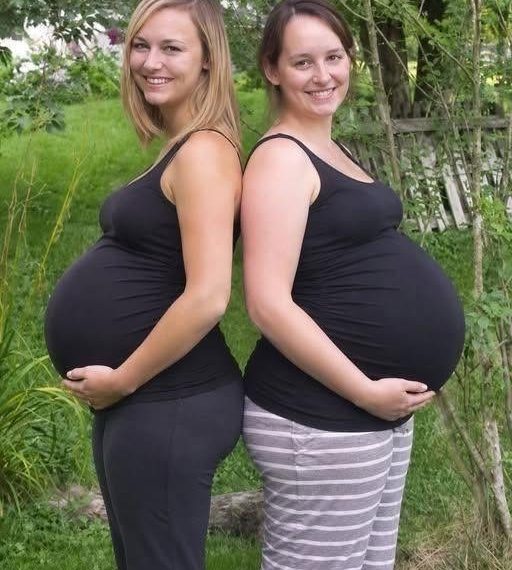
I was 32 years old, five months pregnant, and sitting beside the woman I had considered my sister for almost my entire life.
But what we were about to discover was something neither of us could have imagined.
Twenty-five years earlier, Emily and I had been two little girls who believed we would never be separated.
We had grown up on the same street, attended the same elementary school, shared our lunches, and spent almost every weekend at one another’s houses.
If I had a birthday party, Emily was there.
If Emily was sick, I was the first person to visit her.
Our mothers used to laugh whenever they saw us walking together.
“Those two are practically sisters,” they would say.
We never disagreed.
In fact, we loved calling each other sisters.
What neither of us knew was that the truth was much closer than anyone could have imagined.
My name is Sarah, and my childhood was not particularly easy.
My mother, Mary, died in a car accident when I was six years old. I still remember the night my father sat beside my bed, holding my little hand and trying to explain why Mommy would never come home again.
I was too young to understand death.
For months, I waited for her.
I would hear a car stopping outside and run toward the front door, convinced she had returned.
But she never did.
My father, George, raised me alone. He was a quiet man who worked long hours, cooked simple meals, and did everything he could to make sure I never felt completely alone.
He rarely spoke about my mother’s past.
Whenever I asked questions, he would smile sadly and change the subject.
At the time, I assumed it was because remembering her hurt too much.
Emily, on the other hand, had grown up with a completely different childhood.
She had been adopted when she was very young by a loving couple, Robert and Linda.
They gave her everything they could. She had a comfortable home, a good education, and parents who attended every school event.
They loved her deeply.
But Emily always carried one unanswered question in her heart.
Who were her biological parents?
Her adoptive parents had never hidden the fact that she was adopted. They had simply explained that her birth mother had been very young and unable to raise a child at the time.
Emily had asked a few questions over the years, but she never pushed too hard.
She didn’t want her adoptive parents to feel that she loved them any less.
As we grew older, we became even closer.
We survived our teenage years together, helped each other through university, celebrated our first jobs, and cried over relationships that ended badly.
When I got married at 24, Emily was my maid of honor.
She stood beside me in a beautiful blue dress, smiling as I exchanged vows.
She was also the first person I called when my marriage began falling apart.
My husband and I divorced five years later.
It wasn’t one dramatic betrayal or one terrible argument. It was years of disagreements, disappointment, and gradually realizing that we wanted different things from life.
I had hoped to build a family, but my marriage ended before that dream could become reality.
Emily had her own disappointments.
She had dated several men, including one she genuinely believed she would marry. But every relationship seemed to end with the same painful realization: the person she trusted wasn’t ready to build the future she wanted.
One evening, we were sitting in my kitchen, drinking coffee and discussing our lives.
Emily was looking through photographs on her phone.
“Look at this,” she said, showing me a picture from our university graduation.
We were standing together, laughing, with our arms around each other.
“We were so young.”
“We thought we knew everything,” I replied.
She laughed.
Then her expression became serious.
“Sarah, do you still want children?”I looked at her.
“Of course. More than anything.”
“Even if you never meet the right man?”
I shrugged.
“I don’t know. Maybe. I’ve thought about becoming a mother on my own.”
Emily put her phone down.
“Me too.”
We spent the next hour discussing something we had both been secretly considering for months.
We wanted children.
We didn’t necessarily want another relationship just to achieve that dream.
We wanted to be mothers, and we wanted to be present in our children’s lives.
Then Emily said something that initially sounded ridiculous.
“What if we had children using the same sperm donor?”
I stared at her.
“You’re serious?”
“Think about it. Our children would have the same biological father. They would be related. They could grow up together, just like we did.”
I laughed.
“So you’re suggesting we create a little family of our own?”
“Exactly.”
We talked about it for weeks.
We discussed the practical responsibilities, finances, medical appointments, childcare, and what would happen if one of us eventually met someone and got married.
We knew it wasn’t a decision to make impulsively.
Eventually, after consulting medical professionals and discussing the process with our families, we decided to move forward.
We contacted a fertility clinic and learned about the donor selection process.
There were profiles containing medical histories, family backgrounds, physical characteristics, and personal information.
After careful consideration, we selected a donor named Daniel.
He was 35 years old, had a university education, and had provided an extensive medical history.
The clinic assured us that the available screening information did not reveal any significant inherited conditions.
We completed the required paperwork and began treatment.
It wasn’t easy.
There were injections, blood tests, appointments, and days when one of us felt discouraged.
Sometimes Emily would call me after a difficult appointment.
“I don’t think I can do this anymore,” she would say.
“Then we’ll take a break,” I would tell her. “There’s no race. We’re doing this together.”
Other days, I was the one who needed encouragement.
But eventually, everything changed.
I was sitting in my car outside the clinic when my doctor called.
The test was positive.
I started crying before he had even finished speaking.
Emily was the first person I called.
She screamed so loudly that I had to move the phone away from my ear.
Two weeks later, she called me with news of her own.
She was pregnant too.
Three weeks separated our pregnancies.
We were going to become mothers.
The following months were some of the happiest of our lives.
We went shopping for baby clothes together.
We argued playfully over which names sounded better.
Emily wanted a short name for her daughter.
I wanted something traditional for my son.
We visited furniture stores and compared baby beds.
We even joked about buying a house together one day so our children could grow up under the same roof.
Every appointment became an event.
When we heard the first heartbeats, we cried.
When we saw the ultrasound images, we sent them to each other immediately.
We created a group chat called “Our Little Family.”
Everything seemed perfect.
Until the fifth month.
It began with an ordinary phone call.
We were both at home when the fertility clinic contacted us.
The nurse sounded unusually formal.
“Sarah, we need you and Emily to come in as soon as possible. Dr. Harris would like to discuss some findings from your recent genetic screening.”
I immediately felt nervous.
“What kind of findings?”
“I can’t discuss the details over the phone. The doctor will explain everything when you arrive.”
I hung up and looked at Emily.
She had already received the same call.
Neither of us needed to say anything.We both knew something was wrong.
The following morning, we arrived at the clinic together.
Dr. Harris welcomed us into his office, but his expression was serious.
He had worked in genetics for 27 years. He was the kind of doctor who usually explained everything calmly and never made patients unnecessarily anxious.
That morning, however, he seemed unusually cautious.
He opened the test results on his computer.
Then he asked us whether the same donor had been used for both pregnancies.
We confirmed it.
He asked for the donor’s identification number.
We gave it to him.
He examined the information again.
Finally, he turned toward us.
“Your initial tests haven’t identified a serious condition in either baby,” he explained. “However, something unusual has appeared in the genetic information.”
My mouth went dry.
“What is it?”
He took a moment before answering.
“Some of the genetic markers suggest that you two may be much more closely related than previously understood.”
Emily frowned.
“What do you mean by closely related?”
“I mean that you may share biological relatives.”
I looked at Emily.
She looked at me.
We both laughed nervously because the alternative seemed impossible.
“Doctor, we’ve known each other since we were children,” I said. “We grew up together. Our families knew each other.”
“That doesn’t answer my question,” he replied gently.
He turned toward me.
“Sarah, your mother passed away when you were six, correct?”
I nodded.
“And Emily, you were adopted?”
“Yes.”
He leaned back in his chair.
“Then I need to ask something more personal. Do either of you know anything about your biological family history beyond what you’ve already told us?”
Emily shook her head.
“Not really.”
The doctor explained that the preliminary findings suggested a possible maternal relationship between us.
He wanted additional testing before drawing any conclusions.
“But what does this mean for our babies?” I asked.
“At this stage, we haven’t identified a serious problem. Being biologically related does not automatically mean your children will have a genetic disorder. We need to establish exactly what the relationship is and evaluate the relevant risks.”
I felt tears gathering in my eyes.
“Please, Doctor. Just tell us whether our babies are safe.”
“We’re doing everything we can to establish that. I don’t want to frighten you with an incomplete result.”
He ordered additional genetic tests for both of us.
The next six days felt like six years.
I barely slept.
Every time my baby moved, I placed my hand on my stomach and whispered that everything would be okay.
I began searching my memories for clues.
My mother’s face.
Her voice.
The stories my father used to tell.
Why had he always avoided discussing her childhood?
Why had he never mentioned any relatives on her side of the family?
And why did Emily and I look so much alike?
One evening, Emily came over with two cups of tea.
She looked exhausted.
“I’ve been thinking about something,” she said.
“What?”
“Do you remember when we were teenagers and your father saw us standing together in the garden?”
I nodded.
“He said something strange. He told us we had the same eyes.”
I smiled faintly.
“Yes. He said we both had your mother’s eyes, even though he’d barely known your biological family.”
Emily looked down at her tea.
“My adoptive mother used to say the same thing. She always told me that my smile reminded her of someone she had never met.”
We sat quietly.
Then Emily asked:
“Sarah, did your mother ever have another child?”
I felt my stomach tighten.
“I don’t know.”
“Did your father ever mention it?”
“No. Whenever I asked whether I had brothers or sisters, he always said I was his greatest treasure.”
Emily looked at me.
“But that isn’t the same as saying you were his only child.”
Her words stayed with me long after she left.
That night, I couldn’t sleep.
I opened an old box containing photographs and documents from my childhood.
Most of the photographs were familiar.
There was my mother holding me as a baby.
My parents on their wedding day.
My sixth birthday.
But at the bottom of the box, I found an old photograph I had never paid much attention to.
My mother was standing outside what looked like a small hospital.
She was holding a baby.
A newborn.
I turned the photograph over.
There was a date written in my father’s handwriting.
It was three years before I was born.
And beneath the date were four words.
“My Mary and her little girl.”
I stared at the photograph for several minutes.
Who was that baby?
Why had my father kept the picture?
And why had he never told me?
I called Emily immediately.
She answered on the second ring.
“Sarah?”
“I found something.”
I explained the photograph.
There was a long silence.
Then she whispered:
“Do you think that baby could have been me?”
I didn’t know what to say.
The next morning, we received another call from Dr. Harris.
“The additional results are ready. I would like both of you to come in.”
We arrived together.
This time, he greeted us with a reassuring smile.
“First, I want you to take a deep breath. Both babies are developing well. The additional screening has not identified any serious genetic condition, and we’ve also confirmed that neither of you is biologically related to the sperm donor.”
Emily closed her eyes and began crying.
I felt an enormous weight lift from my chest.
But then Dr. Harris became serious again.
“There is one more finding.”
He turned his computer toward us.
“Your genetic results confirm that you are biological sisters.”
For a moment, I couldn’t understand the words.
I stared at him.
“What?”
“You share the same biological mother.”
Emily covered her mouth.
“No. That can’t be right.”
The doctor explained that the genetic evidence showed a very close maternal relationship, and the additional confirmation established that we were full biological sisters.
I started shaking.
Twenty-five years.
Twenty-five years of friendship.
Twenty-five years of birthday celebrations, holidays, sleepovers, arguments, laughter, and tears.
We had called each other sisters for as long as I could remember.
And now we were discovering that we really were.
Emily began sobbing.
“Who was she?” she whispered. “Who was my mother?”
I looked at the doctor.
“Her name was Mary,” I said quietly. “My mother was Mary.”
Emily looked at me.
Then she began crying even harder.
We left the clinic holding each other.
But neither of us could stop thinking about the same question.
Why had our families allowed us to grow up without knowing the truth?
I drove directly to my father’s house.
He was 74 years old and had been living alone since my mother’s death.
When he opened the door, he smiled.
“Sarah! What a surprise.”
But his smile disappeared when he saw Emily standing behind me.
He looked at her for several seconds.
Then his eyes filled with tears.
I knew immediately.
He already knew.
“Dad,” I said, trying to keep my voice steady. “We went to the clinic. The genetic results came back.”
He slowly nodded.
“Come inside.”
We sat in the living room.
My father removed his glasses and placed them on the table.
For a long time, he couldn’t speak.
Finally, I asked:
“Dad, is Emily my sister?”
He closed his eyes.
“Yes.”
Emily began crying.
My father looked at her.
“Your mother was Mary. She loved you more than you could ever imagine.”
Emily leaned forward.
“Then why did she give me away?”
My father took a deep breath.
“Because she was very young, sweetheart. And because life was much harder for her than you can imagine.”
He began telling us the story.
Before my mother met my father, she had been living in a small town with very little money.
She had fallen in love with a young man who promised to marry her.
When she became pregnant, he disappeared.
Mary was barely an adult.
Her family had little money, and she had no stable home.
She struggled to find work while caring for a newborn baby.
She tried to make things work.
She really did.
But every day became harder.
Eventually, a family offered to adopt her daughter.
They promised to provide the child with a safe home, education, and opportunities that Mary could not afford.It was the most painful decision she had ever made.
She signed the adoption papers while holding her little girl for the last time.
That little girl was Emily.
Years later, Mary met my father.
He knew about her past.← Previous Page
He knew she had a daughter somewhere.
And when they eventually married, she told him that she still dreamed of finding her child.
A few years later, I was born.
My mother loved me, but she never stopped thinking about Emily.
My father reached into a drawer and pulled out an old envelope.
Inside were several photographs and letters.
“Your mother kept these for years,” he said.
He handed one of the letters to Emily.
The handwriting was delicate and familiar.
Emily unfolded it with trembling fingers.
The first line read:
“My darling little girl, if you ever read this, please understand that giving you away was never the same as not loving you.”
Emily pressed the paper against her chest.
My father continued.
“Your mother used to write letters to you. She never knew whether you would ever receive them. Sometimes she would sit at the kitchen table for hours, writing about what she hoped your life would become.”
“Why didn’t she look for me?” Emily asked.
“She tried,” he replied. “But the adoption records were complicated. She was afraid of disrupting the life you had been given. She wanted you to have stability.”
Emily wiped her cheeks.
“Did she know where I was?”
My father shook his head.
“Not at first. Later, we learned that you had been adopted by a wonderful family. Your mother was relieved when she heard that you were loved.”
He looked at me.
“And then you two became friends.”
I stared at him.
“You knew?”
“At first, I wasn’t certain. But the resemblance was difficult to ignore. Your mother noticed it before I did.”
“Then why didn’t you tell us?”
My father’s eyes filled with tears.
“Because I was afraid.”
“Afraid of what?”
“Afraid of making a mistake. Afraid of hurting your family. Afraid that Emily’s adoptive parents would think we were trying to take her away. And, most of all, afraid of explaining why we had remained silent for so many years.”
He lowered his head.
“Every year I told myself I would find the right moment. Then another year passed. And another.”
I felt anger rising inside me.
“You allowed us to spend our entire lives together without knowing the truth.”
“I know.”
“You watched us call each other sisters.”
“I know, Sarah.”
“How could you keep something like this from us?”
He began to cry.
“Because I was wrong. I thought silence would protect everyone. Instead, I let the secret grow until it became something much bigger than I could control.”
For a while, nobody spoke.
Then Emily asked the question that changed the atmosphere in the room.
“Did my mother love me?”
My father immediately reached for her hand.
“She loved you every single day of her life.”
He paused.
“She kept your first baby bracelet. She kept your hospital photograph. And she kept a small blanket she had wrapped around you when you were born.
Emily covered her face.
“I spent my entire childhood wondering why I had been given away.”
My father shook his head.
“You were never unwanted. You were loved by a young woman who believed she couldn’t give you the life you deserved.”
Emily stood up and walked toward the window.
I followed her.
We stood together in silence.
For the first time in our lives, we understood why our friendship had always felt so natural.
It wasn’t just because we shared interests.
It wasn’t just because we had grown up together.
We had been connected long before we ever met.
The following afternoon, Emily and I visited her adoptive parents.
We knew we had to tell them the truth.
Linda opened the door.
She immediately noticed our red eyes.
“Girls, what’s happened?”
Emily began crying before she could finish her first sentence.
“Mom, I found my biological family.”
Linda froze.
Then she looked at me.
I explained everything.
The genetic tests.
The clinic.
The doctor.
My mother’s name.
The photograph.
When I finished, Linda sat down slowly.
For a moment, she looked devastated.
Then she reached for Emily’s hand.
“Oh, sweetheart.”
Emily began sobbing.
“Mom, I’m still your daughter.”
Linda pulled her into an embrace.
“I know. Nothing changes that.”
Robert joined them.
He had tears in his eyes too.
“We always hoped that one day you would find the answers you were looking for,” he said. “We just never imagined your sister would be standing right beside you.”
Emily hugged both of them.
That evening, something beautiful happened.
Our two families sat together for dinner.
My father brought photographs of Mary.
Emily’s adoptive parents brought photographs from her childhood.
We compared birthdays, old stories, and little details.
Someone noticed that Emily and I both tilted our heads when we laughed.
Someone else noticed that we had the same habit of touching our hair when we were nervous.
We laughed until our stomachs hurt.
And for the first time, the story of Emily’s adoption no longer felt like an unanswered question.
It had become part of a family history we could finally understand.
A few weeks later, my father gave Emily another surprise.
He handed her a small wooden box.
Inside was a silver bracelet with a tiny heart-shaped pendant.
Emily recognized it immediately from the old hospital photograph.
“Your mother bought this for you,” he said. “She wanted you to have it when you were old enough.”
Emily held it carefully.
“Can you help me put it on?”
My father fastened the bracelet around her wrist.
Then he kissed her forehead.
“Welcome home, sweetheart.”
I had never seen my father cry like that.
Not even at my wedding.
Not even at my mother’s funeral.
But that day, he cried because a part of the family he thought had been lost forever was finally sitting in front of him.
Three months later, Emily went into labor.
I was in the waiting room when her adoptive mother called to tell me that the baby had arrived.
It was a girl.
Healthy, beautiful, and loud enough to make everyone laugh.
Emily named her Mary.
When I entered the room, she was holding the baby against her chest.
Her face was exhausted, but she was smiling.
“Come and meet your niece,” she whispered.
I approached the bed and looked at the tiny face.
“She’s beautiful.”
Emily smiled.
“I wish our mother could see her.”
I gently touched the baby’s little hand.
“Maybe she can, in some way.”
Three weeks later, I gave birth to my son, Noah.
The delivery was difficult, and I was exhausted.
But the moment they placed him in my arms, everything else disappeared.
I looked at his tiny fingers, his peaceful face, and his dark hair.
I began crying.
My father stood beside the bed, smiling through his tears.
Emily was there too, holding Mary.
Two sisters.
Two babies.
One family that had finally found its way back together.
When Dr. Harris visited us later, he congratulated us and reassured us that the genetic evaluations had not identified any serious concerns for either child.
He also reminded us that the children would each have their own unique genetic makeup.
We were relieved.
But more importantly, we were grateful.
Not because everything had happened exactly as we planned.
But because we had finally discovered the truth.
Today, Mary and Noah are growing up together.
They visit each other regularly.
They share toys, birthday parties, family dinners, and countless little adventures.
Sometimes they fight over the same toy.
Sometimes one refuses to share.
And sometimes they fall asleep beside each other after playing all afternoon.
Watching them makes me think about how strangely life works.
Emily and I had originally planned to give our children the same biological father so they would share a special connection.
We never imagined that we ourselves would discover an even deeper connection.
My best friend was my sister.
The little girl my mother had lost was the woman who had spent 25 years beside me.
And the family we had dreamed of creating was already there, waiting for us to discover it.
One evening, several months after the children were born, Emily and I sat together in the garden.
The babies were sleeping inside.
My father was visiting, and Linda had brought us homemade cake.
We were looking at an old photograph of our mother.
Emily gently traced Mary’s name on the back of the picture.
“Sarah?”
“Yes?”
“Do you ever wonder what would have happened if we had never become friends?”
I thought about it.
“Maybe we would have spent our entire lives wondering where our sister was.”
She smiled sadly.
“Imagine that. Walking past each other in the street without knowing.”
I reached for her hand.
“But we found each other.”
She nodded.
Then she looked toward the house.
“Do you know what I want?”
“What?”
“I want Mary and Noah to grow up knowing that family isn’t always as simple as people think. Sometimes people make painful decisions. Sometimes secrets are kept for the wrong reasons. But love can survive things that seem impossible.”
I smiled.
“Then we’ll make sure they know.”
A little later, Emily leaned against my shoulder.
“Sarah, there’s something I’ve wanted to tell you for years.”
“What is it?”
“Whenever people asked me whether I had a sister, I always said no.”
She paused.
“Now I can’t believe I spent so many years answering that question without knowing the truth.”
I squeezed her hand.
“Well, you have one now.”
She laughed.
“Unfortunately for you, you’re stuck with me.”
I laughed too.
“You’re not getting rid of me that easily.”
We sat together until the evening grew dark.
For years, I had believed that the greatest tragedy of my childhood was losing my mother.
But now I understood something I had never considered.
My mother had lost a daughter too.
And although she had never lived long enough to see us discover the truth, she had somehow left behind the connection that brought us back together.
We had planned for our children to become siblings.
We had imagined them growing up together, sharing the same father, and building memories that would last a lifetime.
But we had never imagined that their mothers would share the same mother.
Sometimes, when I watch Mary and Noah playing together, I think about the doctor who once looked at our genetic results and turned pale.
I remember how terrified we were.
I remember thinking that the future of our babies might be in danger.
But the truth he uncovered was something none of us had expected.
The greatest surprise wasn’t that our children would share a biological connection.
It was that two little girls who had grown up calling each other sisters had actually been sisters all along.
And perhaps the most beautiful part of the entire story is this:
We spent 25 years building a friendship without knowing we were building a family.
We thought we were bringing two families together.
In reality, we were finally bringing one family back home.