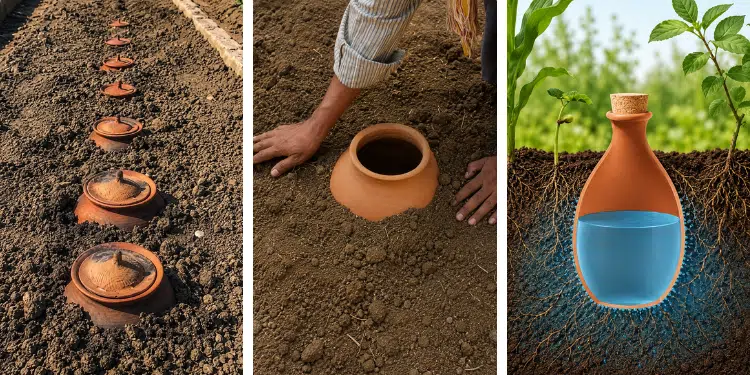
If you walk into a beautifully manicured garden, you might notice something unusual buried right up to its neck in the soil: an unglazed clay pot covered with a simple lid.
It looks like a forgotten piece of pottery, but it is actually one of the most efficient, ancient, and brilliantly simple gardening hacks ever invented.
This technique is called an Olla (pronounced “oy-yah”).
Originating thousands of years ago in ancient China and Northern Africa, an olla is an unglazed terracotta pot that is buried beneath the earth and filled with water.
Because unglazed clay is naturally porous, water doesn’t run out of it; instead, it slowly seeps through the clay walls at a microscopic level, offering a localized, self-regulating irrigation system right at the plant’s root zone.
Whether you are looking to slash your water bill, save your garden during a scorching heatwave, or find an easy way to keep your tomatoes thriving while you go on vacation, burying a terracotta pot is a total game-changer.
Here are 7 compelling reasons why you should introduce an olla to your garden beds this season.
The Mechanics of an Olla: How It Works
Before looking at the benefits, it helps to understand the physical science behind why a simple buried clay pot is so smart.
When you bury an unglazed terracotta pot, fill it with water, and cap the top, you create a closed hydration system.
The water inside doesn’t just empty into the ground all at once. Instead, it relies on a principle called soil moisture tension.
When the surrounding soil is dry, it creates a gentle suction that pulls water through the porous walls of the clay pot.
Once the soil becomes perfectly damp, the suction stops, and the water stays inside the pot. Your plants essentially take exactly what they need, exactly when they need it, creating a perfect, self-regulating equilibrium.
7 Reasons to Bury a Terracotta Pot in Your Garden
1. Drastic Water Savings (Up to 70% Less Waste)
Conventional top-watering methods – like using a garden hose, a watering can, or an overhead sprinkler – are incredibly inefficient.
When you spray water onto the surface of the soil, a massive percentage of it evaporates into the air or runs off into areas without plants before it ever reaches the roots.
Because an olla is buried entirely underground, 100% of the water goes directly into the soil substrate.
There is zero evaporation from wind or sun, allowing you to use up to 70% less water while keeping your plants healthier than traditional surface watering.
2. Encourages Deep, Resilient Root Systems
When you water your garden lightly from above, the moisture stays in the top couple inches of soil. This coaxes your plants into developing shallow, weak root systems that stay near the surface to catch the water.
Unfortunately, shallow roots leave your plants highly vulnerable to drying out and dying during a sudden heatwave.
An olla releases moisture deep underground. Seeking out this reliable water source, your plants will grow deep, robust, vertical root systems that anchor them firmly and make them incredibly resilient to harsh weather.
3. Eliminates Fungal Diseases and Leaf Blight
Many of the most common backyard garden headaches – like powdery mildew, leaf spot, and tomato blight – are fungal infections triggered by wet foliage.
When you water your garden from above, splash back from the dirt lands on the lower leaves, spreading disease-causing spores rapidly across your crop.
Burying a terracotta pot eliminates this risk entirely. The surface of your soil stays completely dry, and your plant leaves never get wet, creating a hostile environment for destructive fungi.
4. It Is a Hands-Off, Self-Regulating System
One of the hardest parts of gardening is finding the right balance between underwatering and overwatering.
Overwatering suffocates roots and causes root rot, while underwatering stunts growth and causes blossom end rot in vegetables like peppers and tomatoes.
Because an olla responds dynamically to soil moisture tension, it is physically impossible to overwater or underwater your plants.
If it rains, the soil stays wet, and the olla holds onto its water. If a heatwave strikes, the soil dries out, and the olla steps up its release. It acts as a passive autopilot for your garden.
5. Prevents Surface Weeds from Sprouting
Weed seeds are everywhere in your garden soil, just waiting for a splash of water and sunlight to germinate. When you blanket-water a garden bed with a hose, you are inadvertently feeding every hidden weed seed in the vicinity.
When you use a buried terracotta pot, the moisture is concentrated 6 to 12 inches below the surface, directly around your target plant’s roots.
The top inch of garden soil stays bone dry, which starves shallow weed seeds of the hydration they need to sprout. Your weeding chores will drop dramatically.
6. Keeps Earthworms Happy and Soil Microbes Thriving
Healthy soil is a living ecosystem filled with beneficial bacteria, mycorrhizal fungi, and earthworms that break down nutrients for your plants. This subterranean life requires stable, consistent moisture to thrive.
The cyclical shock of traditional watering – where the soil swings violently from muddy saturation to bone-dry baking -can decimate these beneficial organisms.
An olla creates a permanent, stable microclimate of moisture beneath the surface. Earthworms and helpful microbes will actively gather around the buried pot, creating a hyper-fertile zone of living soil right where your plants need it most.
7. Perfect Vacation Insurance for Your Plants
Depending on the size of your buried terracotta pot and the heat of the summer, a single filling can provide consistent hydration to your plants for anywhere from 3 to 7 days.
This makes ollas the ultimate low-tech solution for weekend getaways. Instead of begging your neighbors to water your prized tomato plants or setting up a complicated, leaky electronic drip system, you can simply fill your buried pots to the brim, pop the lids on, and go on vacation with total peace of mind.
How to Install a DIY Terracotta Olla in 4 Easy Steps
You can buy beautiful, custom-made ceramic ollas online, but you can easily build a highly effective version yourself using a standard, inexpensive unglazed terracotta flower pot from your local garden center.
1.Plug the Bottom Drainage Hole: Preparation.
Standard terracotta pots have a hole in the bottom for drainage. To turn it into an olla, you must seal this hole completely.
Use a 100% silicone caulk, a heavy-duty cork, or a piece of plumbers putty to plug the hole tightly. Let it cure completely so it is watertight.
2.Dig a Hole and Bury the Pot: Placement.
Dig a hole in your garden bed deep enough to accommodate the pot. Lower the pot in, leaving just the top 1 to 2 inches of the rim sticking out above the soil line. This small lip prevents dirt and mulch from washing inside when it rains.
3.Position Your Crops Around the Rim: Planting.
Pack your garden soil firmly back around the sides of the pot. Plant your seeds or transplants directly into the surrounding soil, roughly 6 to 18 inches away from the pot’s perimeter, depending on the root spread of the specific plant variety.
4.Fill with Water and Cover the Top: Operation.
Fill the buried pot to the top with fresh water from your hose. Critically, cover the open top of the pot. You can use the matching terracotta saucer turned upside down, a flat stone, or a decorative lid.
Covering it is essential to prevent mosquitoes from breeding in the standing water and to keep dirt out.
Burying an unglazed terracotta pot in your garden bed is a masterclass in working smarter, not harder.
By taking inspiration from ancient agricultural practices, you can protect your plants from diseases, encourage deep and resilient roots, keep your vital soil ecosystem thriving, and save massive amounts of water in the process.