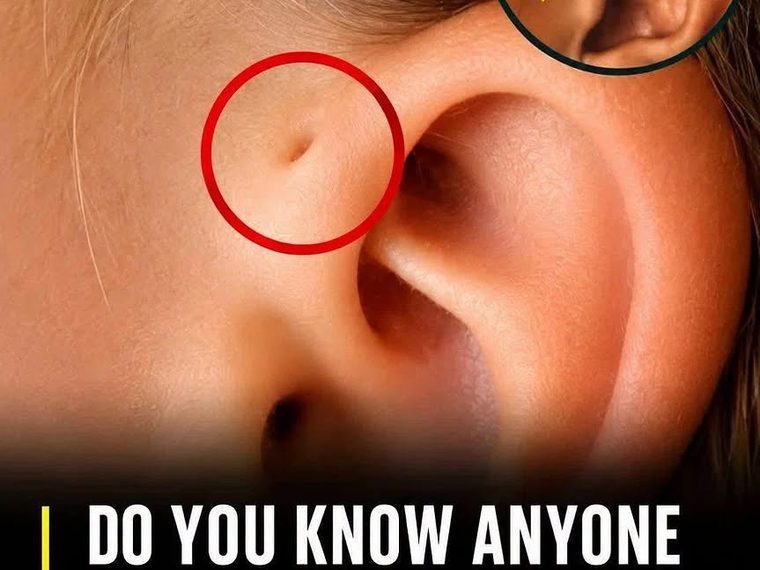
The feature is medically known as a preauricular pit or preauricular sinus. It is a small opening that appears on the skin vin front of the ear, usually at the point where the front of the ear meets the face . The name comes from “pre” (before) and “auricular” (relating to the ear).
What makes this feature more than just a surface dimple is that it is not simply a hole. The pit opens into a narrow tunnel, or tract, that runs underneath the skin. This tract can be shallow or deep, and in some cases, it may branch out like a tiny root system . This hidden tract is the reason the pit can sometimes become a source of problems, even though it appears harmless on the surface.
Why Does It Happen?
Preauricular pits form during fetal development. The ear begins to develop from several small bumps of tissue called auditory hillocks. If these tissue structures fail to fuse together perfectly during early pregnancy, a small gap or tract can remain, creating the pit .
The exact cause is not fully understood, but genetics appear to play a role. The condition can run in families, and it is present from birth . It is estimated to affect somewhere between 0.1% and 10% of the population, depending on the region and ethnic background. It is more commonly seen in people of Asian and African descent .
What Does It Mean for Your Health?
For the vast majority of people, a preauricular pit has no impact on health whatsoever. The majority of patients with preauricular sinuses are asymptomatic and require no treatment . Most people with the feature are otherwise completely healthy, and the pit is often discovered incidentally during a routine examination or noticed by a parent .
The Risk of Infection
The main concern with a preauricular pit is that it can sometimes become infected. Because the pit opens into a tract beneath the skin, dead skin cells, oils, and bacteria can become trapped inside. This creates an environment where germs can multiply, leading to an infection .
Signs that a pit has become infected include:
Redness, swelling, or tenderness around the opening
Pain in the area
Pus or fluid draining from the pit
A small, painful lump forming near the opening (which may be a cyst or abscess)
If any of these symptoms appear, it is important to see a doctor. An infected pit is typically treated with antibiotics. If an abscess has formed, a doctor may need to drain it. In cases where the pit becomes infected repeatedly, a surgeon may recommend removing the entire tract to prevent future problems .
The Kidney Connection: What You Should Know
You may have heard claims linking preauricular pits to kidney problems. This association exists, but it is important to understand the context.
Preauricular pits are sometimes a feature of rare genetic syndromes, such as Branchiootorenal (BOR) syndrome, which can affect the development of the ears and kidneys . However, research has shown that an isolated preauricular pit—meaning one that occurs without any other physical signs or symptoms—is not a reliable indicator of kidney abnormalities. Studies comparing children with isolated pits to the general population have found no significant increase in kidney problems among those with the pits .
The current medical consensus is that if a child has a preauricular pit but is otherwise healthy and has no other concerning symptoms, extensive kidney screening is generally not necessary. However, if the pit is accompanied by other features, such as hearing loss or other physical differences, a doctor may recommend further evaluation .
What Should You Do About It?
The most important thing to do is leave it alone.
Preauricular pits should not be squeezed, picked, or probed. Attempting to clean the inside of the pit or extract anything from it can push bacteria deeper into the tract and trigger an infection . The best care is simply to keep the area clean with gentle soap and water during normal washing.
If the pit never becomes infected or causes discomfort, no medical treatment is needed. It is a benign feature that can simply be left as it is .
Conclusion
A tiny hole near the ear is a preauricular pit—a common congenital feature that forms during early development. For most people, it is a harmless curiosity that requires no attention. The key is to leave it alone, watch for signs of infection such as redness or swelling, and consult a doctor if problems arise. While the pit is sometimes linked to genetic syndromes in rare cases, an isolated pit in an otherwise healthy person is not a cause for concern about kidney health.
Frequently Asked Questions
Is a preauricular pit dangerous?
For the vast majority of people, no. It is a harmless congenital feature. The main risk is infection, which can be treated with antibiotics if it occurs .
Can I pierce or remove it at home?
No. Never attempt to pierce, cut, or remove a preauricular pit at home. This can cause severe infection and scarring. If removal is desired or medically necessary due to recurrent infections, it should be done by a surgeon .
Does a preauricular pit mean my child has kidney problems?
In most cases, no. While a pit can be part of a rare syndrome that affects the kidneys, an isolated pit in an otherwise healthy child is not considered a sign of kidney disease. Your doctor can advise if any further evaluation is needed .
When should I see a doctor?
You should see a doctor if the pit becomes red, swollen, painful, or starts to drain pus. These are signs of an infection that may require treatment .