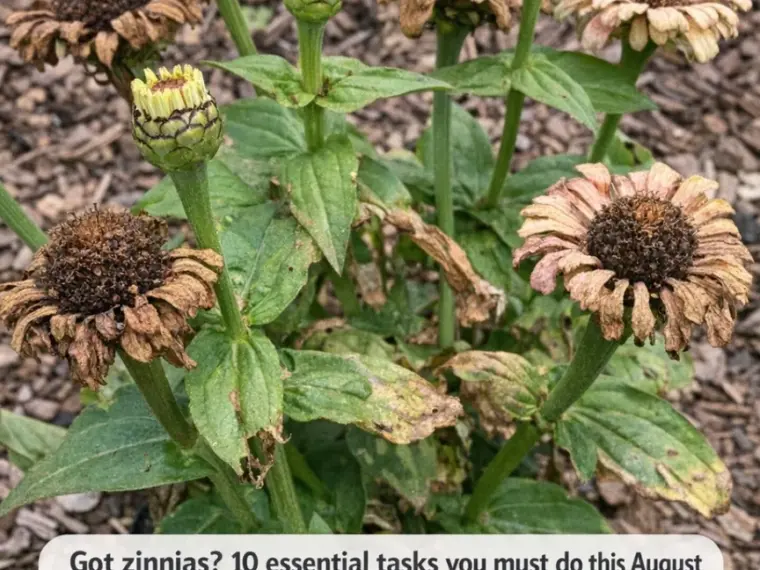
By August, my zinnias are either the stars of the garden or they’re starting to look a little tired, mildewed, and stingy with blooms. In my Midwestern garden, this is the month that decides which way it goes. The good news is that zinnias are generous plants. Give them the right care during late summer, and they’ll often reward you with bigger flowers, longer stems, and fresh color right up to the first hard frost.
If you’ve already got zinnias in the ground or in containers, August is not the time to coast. It’s the time to clean up, feed smartly, water deeply, and stay a step ahead of disease and pests. I’ve learned, after many seasons of growing everything from compact bedding zinnias to tall cut-flower types, that a handful of focused tasks can make a dramatic difference. Here are the essential jobs I tackle in August to keep zinnias blooming hard into fall.
1. Deadhead relentlessly and cut stems deeply
The single most important August job is removing spent flowers before they can set seed. Once a zinnia starts focusing on seed production, flower output slows down. I walk through my beds every 2 to 3 days with clean snips and cut off anything brown, faded, papery, or misshapen.
Don’t just pinch off the old bloom at the top. Follow the stem down to a strong pair of leaves or to a side shoot that’s ready to grow. On tall varieties, I often cut 6 to 12 inches down the stem. That deeper cut encourages branching and gives me stronger, straighter replacement stems. If you grow cut-and-come-again types like ‘Benary’s Giant’ or ‘Oklahoma,’ this one habit alone can keep the patch productive for weeks longer.
2. Harvest flowers often, even if you don’t need a bouquet
Zinnias respond beautifully to regular cutting. In August, I harvest at least twice a week, and in warm weather, every other day is even better. If I don’t need the flowers indoors, I still cut them and share them with neighbors or bring a few jars to the kitchen table. Frequent harvest acts like a signal to the plant to keep producing.
For the longest vase life, I use the “wiggle test.” If I grasp a stem about 8 inches below the bloom and the flower head flops or wobbles, it isn’t fully mature yet. If the stem feels firm and the flower stays upright, it’s ready to cut. I harvest early in the morning when stems are hydrated, and I place them straight into a bucket with 3 to 4 inches of cool water.
3. Water deeply, not lightly
August heat can be hard on zinnias, especially during stretches of 85 to 95 degrees. These plants perform best with consistent moisture, but they dislike soggy soil and they really dislike frequent shallow watering. My goal is about 1 inch of water per week from rain or irrigation, and closer to 1 1/2 inches when it’s very hot, windy, or dry.
I water at the base of the plant, not over the leaves, using a watering wand or drip irrigation. A deep soaking 1 to 2 times per week is better than a quick sprinkle every day. In sandy soil, you may need to water more often; in heavier loam, less often. I check moisture by pushing my finger 2 inches into the soil. If it’s dry at that depth, it’s time to water. Wet foliage overnight can invite powdery mildew and leaf spot, so morning watering is best.
4. Feed lightly with a low-nitrogen fertilizer
TO CONTINUE READING THE ARTICLE PLEASE SEE PAGE 2