Why Do Visual Perceptions Vary So Much?
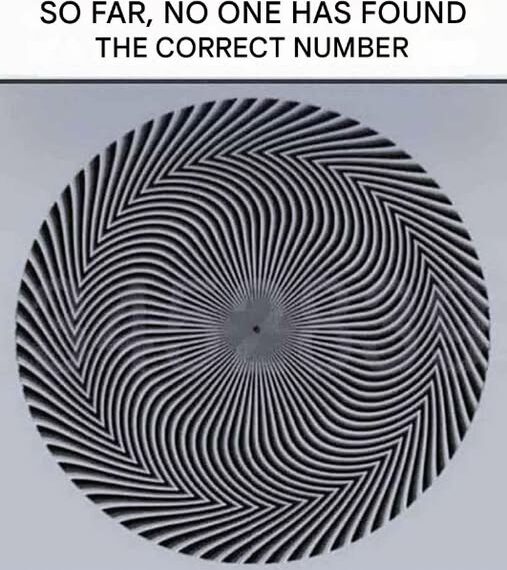
At first glance, the image seems to present a simple challenge: recognize a number. But interpretations vary wildly. Some people see “528,” while others identify a longer sequence like “45283.”
The real answer, however, is surprising: the full hidden number in the illusion is 3,452,839!
This wide range of perceptions is explained by our sensitivity to contrast. This ability helps us detect elements even in visually complex situations — think of spotting a road sign in the fog. The image in question plays with this concept: digits in the center, where contrast is higher, are more easily visible. Meanwhile, those on the edges, where the contrast is lower, can be nearly invisible to some viewers.
A Simple Test of Your Visual Acuity A Simple Test of Your Visual Acuity
If you were able to instantly identify the full number, congratulations! You have a highly developed sensitivity to contrast.
If you only saw part of the sequence, don’t worry — it doesn’t mean your vision is poor. It simply means your eyes respond differently to certain levels of shading.
Did you know this type of illusion can help detect visual anomalies? Eye care professionals sometimes use contrast sensitivity tests to diagnose conditions like myopia, astigmatism, or other visual impairments.
Can You Improve Your Contrast Sensitivity?
Can You Improve Your Contrast Sensitivity?
Good news — contrast sensitivity can be improved! Here are a few tips to sharpen this skill:
Practice visual exercises: Optical games and perception tests can boost your visual focus.
Adjust lighting: Poor lighting can strain your eyes and reduce your ability to spot details.
Slightly squint: This natural reflex enhances outlines and helps differentiate contrast better.
Visit your eye doctor regularly: Routine check-ups can help optimize your visual correction if needed.
A Fun Game — or a Window Into Your Perception?
Optical illusions like this one aren’t just entertaining — they highlight how our brain and environment shape what we see.
Next time you come across a visual brain teaser, take your time to observe, analyze, and explore different angles. Who knows? Your eyes might uncover details you didn’t expect!