The peace lily, known for its elegant white blooms and lush green leaves, is a favorite among indoor plant enthusiasts. However, maintaining the plant’s vitality and ensuring that its leaves remain plump and glossy can sometimes be a challenge. Many factors can contribute to limp or droopy leaves, leading plant owners on a quest for the perfect solution.
One promising approach lies in the careful use of mineral supplements to enrich the soil and provide the plant with essential nutrients. By pouring a specially formulated mineral mixture into the soil, you can potentially revive your peace lily, giving it a robust and healthy appearance. This article delves into the reasons behind limp leaves and reveals how a particular mineral concoction can enhance the plant’s overall health.
1. Why Peace Lily Leaves Go Limp, Dull, or Droopy
Peace lilies are sensitive to changes in their environment, and several factors can cause their leaves to become limp or droopy. One common reason is improper watering. Overwatering can lead to root rot, while underwatering deprives the plant of necessary moisture, both scenarios resulting in droopy leaves. Ideally, the soil should be kept consistently moist but not soggy.
Another factor might be inadequate lighting. Peace lilies thrive in bright, indirect light, and insufficient light can lead to dull and limp leaves. Additionally, nutrient deficiencies, particularly in magnesium and iron, can cause the leaves to lose their vibrant green color and become limp. It’s crucial to ensure that the plant is receiving a balanced supply of nutrients to maintain its health and vitality.
2. The One Mineral Mixture That Triggers Leaf-Plumping Power
The key to revitalizing your peace lily lies in a mineral mixture that includes Epsom salts (magnesium sulfate) and chelated iron. Magnesium plays a vital role in photosynthesis, helping the plant to produce chlorophyll, which is essential for maintaining green, healthy leaves. Chelated iron is more easily absorbed by plants than regular iron and helps prevent yellowing of the leaves.
By combining these minerals in a soil drench, you can provide an immediate boost to the plant’s nutrient uptake, leading to visibly plumper and more vibrant leaves. This mixture works by enhancing the plant’s ability to retain moisture and nutrients, effectively reversing the effects of limpness and dullness.
3. The Science: How This Mineral Boosts Cell Turgor and Glossy Growth
At the cellular level, the addition of magnesium and iron helps in maintaining cell turgor, which is the pressure of the cell contents against the cell wall. This pressure is crucial for keeping the plant upright and its leaves firm. Magnesium acts as a central element in chlorophyll molecules, facilitating the process of photosynthesis and energy production.
Iron, on the other hand, is a catalyst in the production of chlorophyll and other essential plant functions. By ensuring that these minerals are adequately supplied, the peace lily can maintain optimal cell turgor, resulting in lush, glossy leaves. The improved nutrient absorption also aids in the overall growth and resilience of the plant.
4. Exact Ingredients and Ratios for the Leaf-Plumping Mineral Mix
To prepare the leaf-plumping mineral mix, you’ll need the following ingredients: 1 tablespoon of Epsom salts (magnesium sulfate) and 1 teaspoon of chelated iron per gallon of water. This ratio ensures that the plant receives an effective concentration of both magnesium and iron without risking nutrient burn.
It’s important to dissolve the Epsom salts and chelated iron thoroughly in water before applying the mixture to the soil. This ensures even distribution and absorption of the minerals by the plant’s roots.
5. How to Prepare the Mixture Safely in Just a Few Minutes
Start by filling a clean watering can or container with one gallon of room-temperature water. Add 1 tablespoon of Epsom salts and 1 teaspoon of chelated iron to the water. Stir the mixture thoroughly until both the salts and iron are completely dissolved.
Ensure that the mixture is homogenous to avoid any concentrated spots that might lead to nutrient burn. Once the solution is prepared, it’s ready to be applied to your peace lily’s soil.
6. The Right Way to Pour It Into Peace Lily Soil for Maximum Uptake
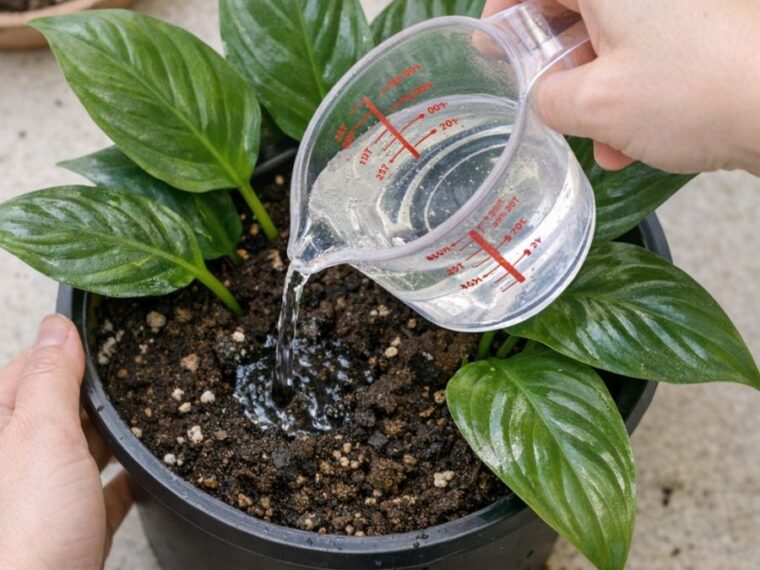
Water your peace lily thoroughly with plain water first to ensure that the soil is evenly moist. This step helps prevent nutrient shock when applying the mineral mixture. After the initial watering, slowly pour the mineral mixture into the soil around the base of the plant, ensuring even distribution.
Allow the mixture to soak into the soil, avoiding direct contact with the leaves, as this can cause leaf burn. The goal is to help the roots absorb the nutrients efficiently, promoting healthier, plumper leaves.
7. How Often to Use the Mixture Without Overloading Your Plant
To avoid overloading your peace lily with nutrients, apply the mineral mixture once every four to six weeks. This frequency ensures that the plant receives a steady supply of magnesium and iron without causing nutrient toxicity.
Keep an eye on your plant’s response after each application. If you notice any signs of nutrient burn, such as browning leaf tips or edges, reduce the frequency of application to once every eight weeks.
8. Visual Signs It’s Working: From Limp to Lush, Step by Step
After applying the mineral mixture, you should start to see noticeable improvements in your peace lily within a week. Initially, the leaves will appear more vibrant and have a firmer texture. Over the following weeks, the plant’s overall posture should improve, with the leaves standing more upright and appearing plumper.
Additionally, you may notice an increase in new growth, indicating that the plant is responding positively to the enhanced nutrient availability. The glossy sheen of the leaves is a good indicator that the peace lily is thriving.
9. Common Mistakes to Avoid With This Mineral Hack
One common mistake is applying the mineral mixture too frequently, which can lead to nutrient burn and damage the plant. It’s essential to adhere to the recommended application schedule. Another mistake is failing to water the plant before applying the mixture, which can cause uneven distribution and absorption of the nutrients.
Additionally, avoid pouring the mixture directly onto the leaves, as this can cause leaf burn. Always apply the solution to the soil to ensure that the roots can absorb the nutrients efficiently.
10. Extra Care Tweaks That Supercharge the Leaf-Plumping Effect
To enhance the leaf-plumping effect, consider adjusting other care routines for your peace lily. Ensure that the plant is receiving adequate indirect sunlight, which is crucial for photosynthesis and overall health. You might also want to increase humidity levels around the plant, as peace lilies thrive in humid environments.
Misting the leaves regularly or placing a humidifier nearby can help maintain optimal humidity. Additionally, rotate the plant every few weeks to ensure even light exposure and promote balanced growth.
11. When to Skip the Mix and Try a Different Fix for Your Peace Lily
There are situations where the mineral mixture might not be the best solution. If your peace lily is exhibiting signs of over-fertilization, such as yellowing leaves or a white crust on the soil surface, it’s best to skip the mixture and focus on flushing the soil with plain water to remove excess salts.
In cases where the plant is suffering from severe root rot due to overwatering, addressing the root health by repotting in fresh, well-draining soil is crucial before considering any nutrient application. Always assess the specific needs and condition of your plant before deciding on a treatment approach.