Soap or shampoo
Laundry detergent
Plants or grass
Fabrics or metals
This can sometimes appear as a ring or patch and may expand if exposure continues.
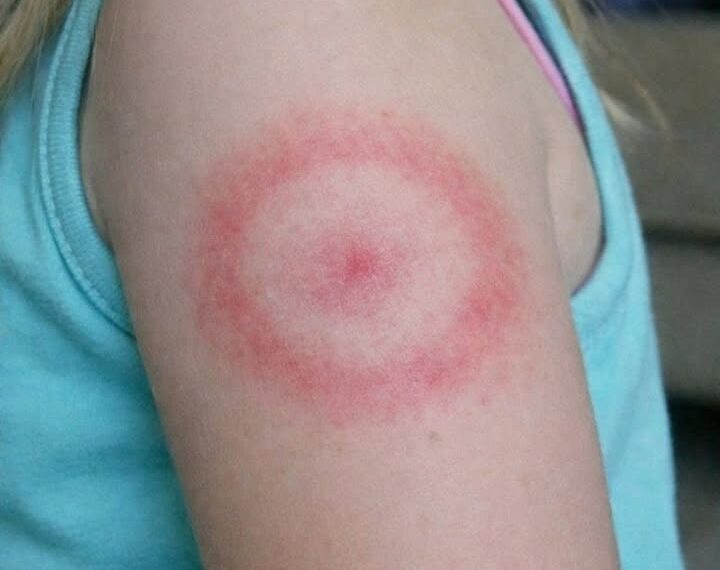
4. Erythema Migrans (Lyme Disease Rash)
In certain geographic areas where ticks are common, doctors watch for a specific type of expanding red ring called erythema migrans.
This rash:
Often expands over time
May look like a “bull’s-eye” pattern
Is usually not itchy or painful
Can appear days after a tick bite
If this is a possibility, medical evaluation is important because early treatment is very effective.
5. Other Skin Conditions
Less commonly, similar-looking rashes can come from:
Eczema flare-ups
Heat-related irritation
Mild bacterial skin infections
Autoimmune skin reactions (rare in children)
What Matters Most: The Behavior of the Rash
Doctors usually care less about how it looks at one moment and more about how it behaves over time.
Key things to observe:
Is it growing?
A spreading ring deserves attention.
Is the border becoming more defined?
Fungal infections often expand outward with a clearer edge.
Is there pain, fever, or swelling?
These may suggest infection beyond the skin surface.
Has there been possible insect or tick exposure?
This helps narrow down causes significantly.
Are there multiple spots?
Multiple lesions can suggest a contagious skin condition.
When You Should Seek Medical Care
You don’t necessarily need to rush to the emergency room for every rash—but you should seek prompt medical advice if:
The rash is expanding noticeably
It has a ring or bull’s-eye appearance
Your child has fever or fatigue
The area becomes warm, painful, or swollen
You suspect a tick bite
The rash appears on multiple areas of the body
It does not improve within a few days
In many cases like this, a pediatrician or urgent care visit within 24–48 hours is appropriate.
When It Might Be Less Urgent
It may be less urgent if:
The rash is small and not growing
Your child feels completely well otherwise
There is no fever or discomfort
It remains stable for several days
Even then, monitoring is still important.
What You Can Do Right Now
While waiting for medical advice, here are safe steps:
Take clear photos of the rash (for tracking changes)
Gently clean the area with mild soap and water
Avoid applying random creams or home remedies unless advised
Prevent scratching or irritation
Note any recent insect exposure, outdoor activity, or new products
Avoid starting strong steroid creams without medical guidance, as they can sometimes worsen fungal infections.
Why Online Reassurance Can Be Misleading
It’s very common for parents to search symptoms online and find alarming or overly vague explanations. The problem is that many skin conditions look similar in photos but have very different causes.
A ring-shaped rash, for example, can be:
Harmless irritation
A fungal infection needing simple treatment
A tick-related rash needing antibiotics
That’s why doctors rely on physical examination, history, and sometimes tests—not appearance alone.
The Bottom Line
A red, spreading ring-shaped rash in a child is not something to ignore, but it is also not automatically an emergency.
The most important clue is that you’ve noticed it changing. That alone is a good reason to have it checked by a healthcare professional soon—ideally within a day or two—especially to rule out treatable infections.
A Calm Next Step
If your daughter is otherwise well, the safest approach is:
Monitor it closely today
Take photos for comparison
Arrange a pediatric visit or urgent care check
And if any new symptoms appear—fever, fatigue, rapid spreading, or pain—seek care sooner.