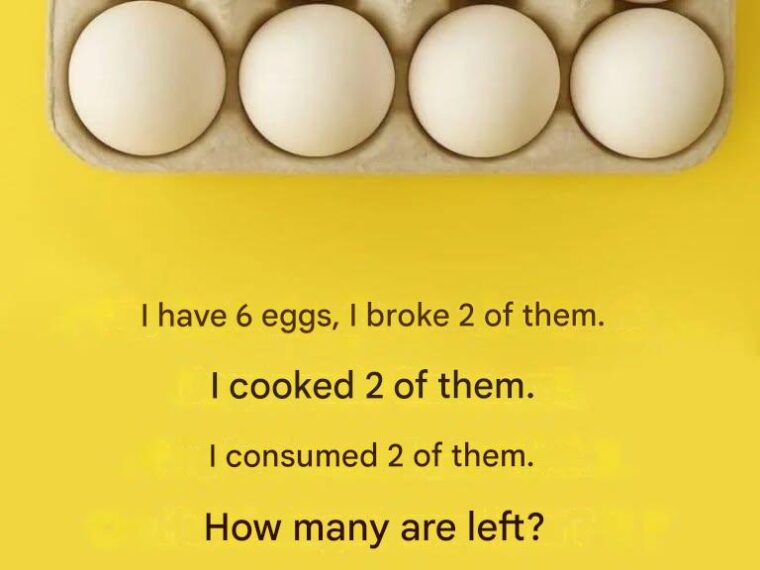
“I have 6 eggs. I cracked 2. I fried 2. I ate 2. How many eggs do I have left?” At first glance, we think: it’s easy. In a few seconds, we give an answer, almost automatically. And yet… most people are wrong. Why? Because this riddle plays with our reflexes and our way of analyzing. Come on, let’s analyze it together?
The puzzle in question: complicated or ingenious?
This little riddle is circulating on social media, and it’s easy to see why: it seems obvious, but it reveals a lot about our logic . Here’s the meaning:
“I have 6 eggs. I broke 2. I fried 2. I ate 2. How many eggs do I have left?”
Nothing complicated. No hidden puns, no visual traps. And yet… many fall for it.
Did your brain skip a step?

Most people read quickly, summarize the actions, and conclude:
“6 – 2 – 2 – 2 = 0… so more eggs?”
Incorrect reasoning. It assumes that each action involves different eggs. However, this is not what the sentence says.
What the text actually says:
- You start with 6 eggs.
- You break 2 of them .
- Fry 2 eggs (and to fry them… you have to break them, of course).
- You eat 2 eggs (probably the ones you just fried).
In other words, the same two eggs were cracked, boiled, and then eaten .
So there are still four unused eggs .
The correct answer is… 4 eggs!
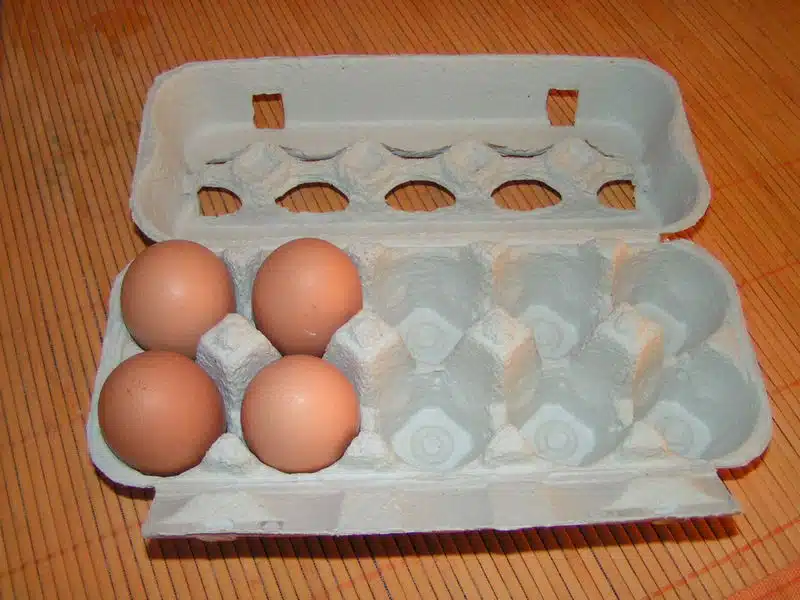
Yes! You have four eggs left. This puzzle is based on the accumulation illusion: our brain automatically puts actions together, as if they always involve different elements . But here, everything could very well be about the same two eggs .
This is not a math problem. It’s a little test of logic and attention .
Why are so many people getting trapped?
Because our brains like to move quickly. When presented with simple information, they automatically fill in the unclear areas. Here, we imagine that broken, fried, and eaten eggs are all different. But nothing in the sentence confirms this. And it’s this vagueness that makes the riddle so effective.
A clever little challenge to share without moderation
This type of puzzle is excellent mental gymnastics. It invites us to:
- Read carefully (not diagonally )
- Questioning our automatisms
- Stimulate our logic without stress
So, did you succeed on your first try? Or were you fooled like so many others? Either way, this is the perfect opportunity to share it with those around you : smiles and discussions are guaranteed!
Logic is like a muscle: the more you use it, the sharper it becomes.