Many gardeners dream of replacing part of their lawn with a vibrant wildflower meadow filled with color, pollinators, and natural beauty.
Traditional lawn care often requires constant mowing, watering, and fertilizing, while a wildflower meadow can provide ecological benefits and require far less maintenance once established.
However, one of the biggest barriers to creating a meadow is removing existing grass. Digging up turf is labor-intensive, time consuming, and often discourages gardeners from starting the project.
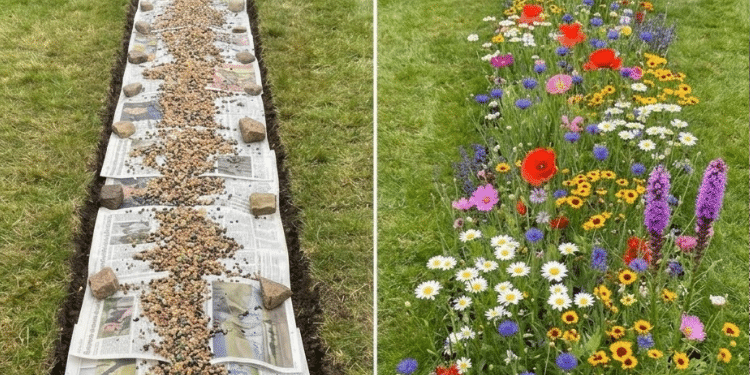
Fortunately, there is a much easier method. The no-dig meadow technique allows you to transform a lawn into a flourishing wildflower habitat without turning over the soil.
Wildflowers such as Papaver rhoeas, Leucanthemum vulgare, and Centaurea cyanus thrive in meadow environments and attract pollinators such as bees and butterflies.
Why Replace a Lawn With a Wildflower Meadow?
Lawns are common in many landscapes, but they often provide little ecological value. Traditional lawns consist of a few types of grass that require regular mowing and irrigation.
Wildflower meadows, on the other hand, support biodiversity and provide important habitat for pollinators.
Benefits of creating a wildflower meadow include:
• attracting bees, butterflies, and beneficial insects
• reducing water usage
• eliminating frequent mowing
• improving soil health
• creating seasonal color and natural beauty
Because many wildflowers are adapted to local climates, they often thrive with minimal care once established.
The Problem With Digging Up Lawns
Converting grass into a flower meadow traditionally involves removing turf using shovels or mechanical tools.
This process can be exhausting because grass roots are dense and tightly woven.
Digging also disturbs soil structure and can bring buried weed seeds to the surface.
Another disadvantage of digging is that it disrupts soil organisms such as earthworms and beneficial microbes.
For gardeners who want a simpler solution, the no-dig method offers a more sustainable approach.
What Is the No-Dig Meadow Method?
The no-dig method works by smothering existing grass instead of removing it.
Rather than turning over the soil, gardeners cover the lawn with layers of organic material that block sunlight from reaching the grass.
Without sunlight, the grass gradually dies and decomposes.
Over time, the decomposing grass becomes organic matter that enriches the soil.
Once the lawn has broken down, wildflower seeds can be planted directly into the prepared area.
This technique requires patience but dramatically reduces physical labor.
Why the No-Dig Method Improves Soil Health
Healthy soil is full of microorganisms, fungi, and earthworms that support plant growth.
Digging disturbs this delicate ecosystem by exposing deeper layers of soil to sunlight and air.
The no-dig approach keeps the soil structure intact.
As organic layers break down on the surface, earthworms pull the material into the soil and convert it into nutrients.
This natural process creates fertile soil without disturbing underground life.
Because the soil remains undisturbed, moisture retention also improves, making it easier for wildflowers to establish.
When to Start a Wildflower Meadow
The best time to start the no-dig process is either early spring or autumn.
Spring preparation allows seeds to germinate as temperatures rise.
Autumn preparation gives organic layers time to break down over winter so that seeds can be planted in spring.
If you begin the process several weeks before planting seeds, the lawn has enough time to weaken and decompose.
Starting early also helps prevent aggressive grasses from regrowing.
Step-by-Step Guide to the No-Dig Lawn Conversion
Turning a lawn into a meadow using the no-dig technique is surprisingly simple.
Follow these steps to create the ideal conditions for wildflowers.
Step 1: Mow the Lawn Short
Before covering the lawn, mow the grass as short as possible.
Short grass decomposes more quickly and allows organic layers to sit closer to the soil.
Removing thick clippings also prevents excessive moisture buildup.
This step prepares the surface for the next layers.
Step 2: Lay Down Cardboard or Newspaper
The key to the no-dig method is blocking sunlight.
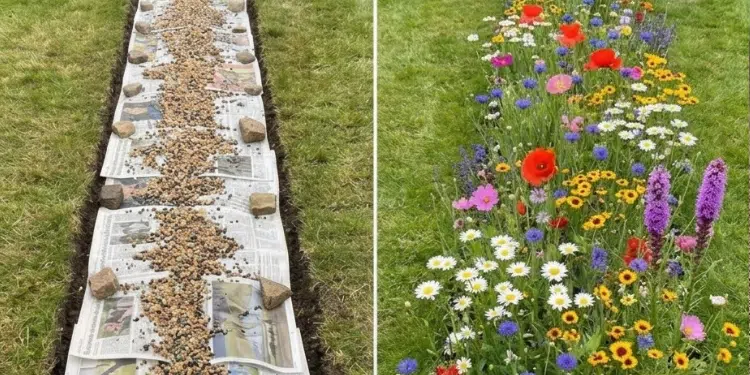
Cover the entire lawn area with cardboard sheets or several layers of newspaper.
These materials prevent grass from receiving light while still allowing water and air to pass through.
Make sure the sheets overlap so that no grass is exposed.
Cardboard eventually decomposes and becomes part of the soil.
Avoid cardboard with glossy coatings or heavy inks.
Step 3: Add a Thick Layer of Organic Material
After covering the lawn, add a thick layer of organic matter on top.
This layer acts as both mulch and soil improvement.
Common materials include:
• compost
• leaf mulch
• straw
• wood chips
• aged manure
A layer about 10–15 cm thick helps accelerate decomposition and prevents grass from pushing through.
Over time, this material breaks down into nutrient-rich soil.
Step 4: Allow the Lawn to Decompose
Once the layers are in place, nature begins doing the work.
Microorganisms and earthworms start breaking down the cardboard, grass, and organic materials.
During this period, the lawn gradually disappears beneath the new soil layer.
Depending on conditions, this process may take several weeks to a few months.
Moist conditions help decomposition occur faster.
Step 5: Sow Wildflower Seeds
After the surface layer has begun breaking down, wildflower seeds can be scattered over the prepared area.
Choose a mix of native wildflowers suited to your climate.
Many gardeners prefer seed mixes that include both annual and perennial species.
Annual flowers provide quick color during the first season, while perennials return year after year.
Lightly press seeds into the soil but avoid burying them deeply, as many wildflowers need sunlight to germinate.
Choosing the Best Wildflowers for Your Meadow
Selecting the right plants is essential for a successful meadow.
Native species are usually the best choice because they are adapted to local soil and climate conditions.
Some popular wildflowers for meadows include:
• poppies
• cornflowers
• daisies
• yarrow
• black-eyed Susan
• lupine
Planting a diverse mix ensures flowers bloom at different times throughout the season.
This provides continuous nectar for pollinators.
Watering the Meadow During Establishment
Wildflower seeds require consistent moisture to germinate.
During the first few weeks, water the area lightly if rainfall is insufficient.
Once seedlings become established, most wildflower meadows require very little watering.
Many meadow species are naturally drought tolerant.
Allowing plants to adapt to natural rainfall encourages stronger root systems.
Managing Weeds Naturally
Some weeds may appear during the early stages of meadow development.
Because the soil has not been disturbed, the number of weed seeds brought to the surface is usually limited.
If weeds appear, removing them by hand before they set seed helps maintain the meadow.
Over time, wildflowers fill the space and compete with weeds.
Dense plant growth eventually reduces weed problems naturally.
Maintaining a Wildflower Meadow
Once established, wildflower meadows require far less maintenance than lawns.
Most meadows only need to be cut once or twice per year.
Cutting the meadow after flowering helps distribute seeds and encourage new growth.
Allowing seed heads to mature also supports birds and wildlife that feed on them.
This minimal maintenance makes wildflower meadows ideal for gardeners seeking a more natural landscape.
Supporting Pollinators and Wildlife
Wildflower meadows play an important role in supporting pollinators.
Bees, butterflies, and other insects rely on nectar and pollen from flowering plants.
A meadow with diverse species provides food sources throughout the growing season.
These pollinators also benefit nearby vegetable gardens and fruit trees by improving pollination rates.
Creating even a small meadow patch can significantly improve local biodiversity.
Environmental Benefits of Meadow Gardening
In addition to supporting wildlife, wildflower meadows offer environmental benefits.
They require less water than traditional lawns.
Reduced mowing lowers fuel consumption and emissions.
Deeper root systems help prevent soil erosion and improve soil structure.
Over time, the meadow becomes a self-sustaining ecosystem that requires minimal human intervention.
By using the no-dig method, gardeners can smother grass, enrich the soil naturally, and create the perfect environment for wildflowers to grow.