March is a month that often conjures images of new beginnings as winter slowly fades into spring. It is during this transitional period that flea markets come alive with vendors eager to showcase their eclectic wares. The muddy paths and brisk air only add to the charm, creating a treasure hunt atmosphere that beckons collectors and curious shoppers alike.
It was on just such a muddy March morning that an intriguing find emerged from a cluttered stall. For a mere two dollars, a curious item with numbered notches and a rotating top plate found its way into the hands of an intrigued buyer. With no visible means of attachment, the mystery of its purpose deepened, prompting a journey into the world of agricultural history to uncover its identity.
1. The Muddy March Flea Market Mystery
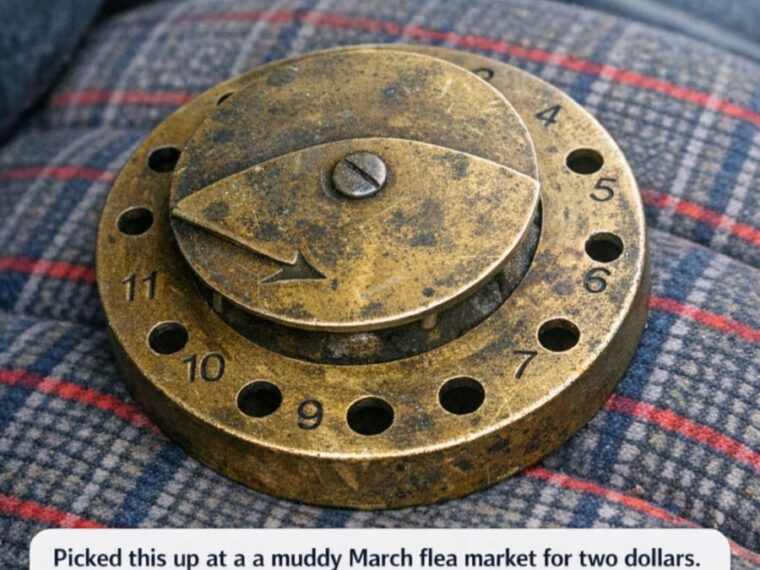
The flea market was bustling with activity, the ground still soggy from recent rains. Among the tables laden with trinkets and oddities, one particular artifact caught the eye. It was a small object, crafted from brass, weathered by time, yet retaining a certain allure. Measuring about 5 inches in diameter, it was light enough to hold comfortably in one hand.
The item featured a series of numbered notches around its circumference and a central rotating plate. Its enigmatic design hinted at a specific function, yet there were no visible hooks or brackets to suggest how it might be secured or utilized. This enigma only heightened the curiosity of its new owner, setting the stage for an exploration into its past.
2. First Clues: Brass, Numbers, And A Rotating Top Plate
The choice of brass as the primary material was the first clue. Known for its durability and resistance to corrosion, brass has been a favored material in various industries, particularly in agriculture and nautical applications. The presence of numbers suggested a need for precision, perhaps in measurement or calibration.
The rotating top plate was meticulously crafted, fitting smoothly over the base. This design hinted at an adjustable function, likely related to aligning the numbers with specific markers or settings. This combination of features pointed toward a tool of some sort, yet its exact role remained elusive.
3. Why It Doesn’t Attach To Anything: A Handheld Farm Tool
The absence of any attachment points was initially perplexing. However, this feature soon revealed itself to be a deliberate design choice. Unlike many agricultural tools that are mounted or affixed to larger equipment, this item was intended to be handheld.
In the fields, farmers often relied on portable tools that could be easily carried and used without the need for complex installation. This portability was key to its function, allowing the user to make necessary adjustments on the fly, directly in the field where conditions could vary significantly.
4. Meet The Vintage Brass Seed Dial
The mystery item was identified as a vintage brass seed dial, a tool once essential to the practice of precision farming. These dials were used to calibrate seed planters, ensuring that seeds were dispensed at the correct rate and depth.
Seed dials played a critical role in maximizing crop yields by allowing for the careful control of seed distribution. By adjusting the dial to align with specific notches, farmers could calibrate their equipment to suit different types of seeds and planting conditions.
5. How Farmers Used Seed Dials To Calibrate Planters
Farmers would use seed dials by aligning the rotating plate with the numbered notches, which corresponded to various seed sizes and planting depths. This simple yet effective mechanism allowed for quick adjustments in the field.
Once set, the dial would guide the planter’s seed dispenser, ensuring consistent application. This precision was vital, as different crops required different planting densities for optimal growth. The seed dial was an early example of precision agriculture, helping to improve efficiency and yields long before the advent of modern technology.
6. Decoding The Numbered Notches And Seed Settings
Each notch on the seed dial corresponded to a specific setting, often marked by a number or symbol. These notches were carefully calibrated to match common seed sizes and planting requirements.
Understanding the notches required familiarity with the specific dial’s design, as manufacturers often had their own systems. However, a common approach was to use larger numbers for larger seeds or greater planting depths, providing a logical and intuitive way for farmers to use the tool effectively.
7. Variations In Seed Dials: Crops, Makers, And Eras
Seed dials varied widely depending on their intended use, the manufacturer, and the era in which they were produced. Some dials were designed for specific crops, such as corn or wheat, while others offered more general use.
Different manufacturers might include additional features or markings unique to their brand, making each dial a unique artifact of its time. Collectors often seek out these variations, looking for rare models or those associated with particular agricultural developments.
8. How To Tell If Your Seed Dial Is Complete And Original
Determining the completeness and originality of a seed dial involves examining several key features. The presence of all numbered notches and a smoothly rotating top plate is essential.
Originality can often be confirmed by looking for maker’s marks or engravings, which are common on vintage tools. Wear and patina consistent with age can also indicate authenticity, as can the quality of the brass used in its construction.
9. What A Two-Dollar Find Like This Is Really Worth
The value of a vintage seed dial can vary significantly based on its condition, rarity, and historical significance. While a common model might fetch modest sums, rarer examples from notable manufacturers or with unique features can be quite valuable.
For a two-dollar investment, the find could be worth anywhere from a few dollars to several hundred, particularly if it is in good condition and has historical relevance. Regardless of monetary value, the cultural and educational worth of such a tool is significant, offering a tangible connection to agricultural history.
10. Cleaning, Preserving, And Displaying A Brass Seed Dial
Proper care of a brass seed dial involves gentle cleaning to preserve its patina while removing any dirt or corrosion. A soft cloth and mild cleaner are often sufficient, avoiding abrasive materials that could damage the surface.
To display the dial, consider a stand that allows easy viewing of its features. Shadow boxes or wall mounts can provide attractive options, ensuring the dial is both protected and showcased as a piece of history.
11. Why Obscure Farm Gadgets Keep Turning Up At Flea Markets
Flea markets are treasure troves for obscure farm gadgets because they serve as repositories for items that have fallen out of everyday use. As farming technology advanced, many older tools were retired, ending up in barns, sheds, and eventually flea markets.
These markets offer a glimpse into the past, where collectors and enthusiasts can find items that tell the story of agricultural development. The availability of such gadgets reflects a broader interest in preserving history and the stories of those who worked the land with these tools.