Rosemary is one of the most beloved herbs in home gardens. Its evergreen needles, woody stems, and powerful fragrance make it a staple in both ornamental and edible landscapes.
Whether growing in a garden bed, raised planter, or container on a balcony, rosemary rewards gardeners with year-round greenery and flavorful leaves.
The plant known as Salvia rosmarinus (formerly called Rosmarinus officinalis) originates from the Mediterranean region. Because of this heritage, rosemary prefers sunny conditions, well-drained soil, and mild temperatures.
Early spring – especially the weeks leading up to April – is a critical time for rosemary care. After winter dormancy, the plant begins preparing for its most active growing period.
The care you provide during this stage can determine how healthy, productive, and aromatic your rosemary plant will be for the rest of the season.
Why Early Spring Rosemary Care Matters
Rosemary is technically an evergreen shrub, meaning it does not completely die back in winter like many herbs. However, growth slows significantly during cold months.
As temperatures rise in early spring, rosemary begins producing fresh shoots and new foliage.
This is the moment when gardeners should inspect, shape, and nourish the plant so it enters the growing season in optimal condition.
Early-spring maintenance helps:
- stimulate new growth
- prevent woody overgrowth
- improve airflow
- reduce disease risk
- increase leaf production
Taking time to care for rosemary before April ensures the plant remains healthy throughout the year.
1. Prune Your Rosemary for Fresh Growth
One of the most important early-spring tasks is pruning.
Rosemary naturally grows into a woody shrub. Without pruning, it can become leggy and produce fewer fresh leaves.
Pruning encourages the plant to develop new shoots, which are the most flavorful and aromatic parts of the herb.
How to prune rosemary
Start by examining the plant for any dead, damaged, or weak stems. These should be removed first.
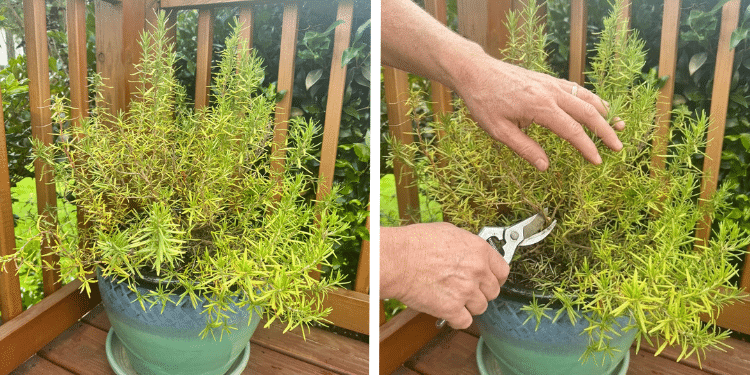
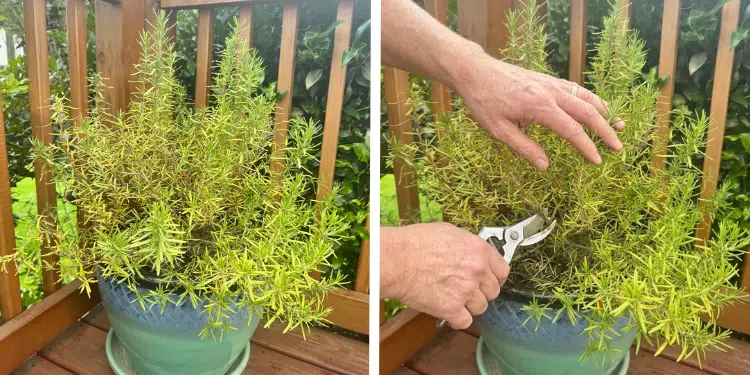
Next, trim back long branches to encourage bushier growth. Use clean pruning shears and cut just above a leaf node, which is the point where new shoots emerge.
Avoid cutting into the thick, woody base of the plant. Rosemary does not always regenerate from old wood.
Instead, focus on trimming the softer green growth. Pruning before April allows the plant to respond quickly with fresh spring growth.
2. Refresh the Soil Around the Plant
Healthy soil is essential for rosemary growth.
Because rosemary prefers well-drained soil, compacted or heavy soil can cause problems such as root rot. Early spring is the ideal time to refresh the soil around the plant.
If rosemary is growing in the ground, gently loosen the soil around the base of the plant to improve aeration.
Adding a small amount of compost helps replenish nutrients without making the soil too rich. For container plants, consider replacing part of the potting mix with fresh soil.
Rosemary grows best in soil that drains quickly but retains enough moisture for steady growth.
3. Check for Winter Damage
Cold weather can sometimes damage rosemary, especially in regions with freezing temperatures.
Before April arrives, inspect the plant carefully for signs of winter stress.
Look for:
- brittle stems
- gray or brown leaves
- branches that snap easily
Damaged stems should be pruned back to healthy growth.
If entire branches appear dead, remove them completely.
Clearing away winter damage allows the plant to direct its energy toward producing new shoots rather than trying to sustain unhealthy branches.
4. Ensure Proper Sunlight Exposure
Rosemary thrives in full sunlight.
To grow strong and produce aromatic leaves, the plant needs at least six hours of direct sunlight each day.
Early spring is a good time to evaluate whether the plant’s location still provides adequate sunlight.
Trees or nearby plants may have grown and begun casting shade on the rosemary. If the plant is growing in a container, moving it to a sunnier location can improve its health significantly.
Adequate sunlight encourages vigorous growth and enhances the flavor of rosemary leaves.
5. Begin Light Fertilization
Rosemary does not require heavy feeding, but providing light nutrients in early spring can support new growth.
A balanced organic fertilizer or compost tea works well.
Avoid high-nitrogen fertilizers, which can cause excessive leafy growth and reduce the concentration of aromatic oils.
Instead, choose a mild fertilizer that supports steady development.
Applying fertilizer once in early spring is usually sufficient for the entire season. Too much fertilizer can actually weaken rosemary by encouraging overly soft growth.
6. Protect the Plant From Excess Moisture
Although rosemary needs water to grow, it is highly sensitive to waterlogged soil.
One of the most common causes of rosemary decline is excessive moisture around the roots. As spring rains increase, it is important to ensure the plant has proper drainage.
If rosemary is planted in heavy soil, consider adding sand or gravel around the base to improve drainage.
For container plants, confirm that the pot has drainage holes and that excess water can escape easily. Water the plant only when the soil surface begins to dry.
Maintaining balanced moisture helps prevent fungal diseases and root rot.
Growing Rosemary in Containers
Many gardeners prefer growing rosemary in containers because it allows greater control over soil and drainage.
Container rosemary should be planted in a well-draining potting mix that includes sand or perlite.
Terracotta pots are often recommended because they allow moisture to evaporate through the sides of the container.
During early spring, container plants may need more frequent watering as temperatures rise. However, the soil should always dry slightly between watering sessions.
Harvesting Rosemary Throughout the Season
Proper early-spring care ensures rosemary produces abundant foliage that can be harvested throughout the year.
Harvesting rosemary regularly actually encourages the plant to grow more vigorously.
When harvesting, cut small sprigs from the outer parts of the plant. Avoid removing more than one-third of the plant at a time.
This allows rosemary to continue growing while maintaining its shape. Fresh rosemary leaves can be used in cooking, herbal teas, and natural home remedies.
Common Rosemary Problems to Watch For
Even though rosemary is generally hardy, it can still experience a few common issues. Overwatering is the most frequent problem.
Too much moisture can lead to root rot and yellowing leaves. Poor airflow around the plant can also cause fungal diseases.
Pruning and proper spacing help prevent these issues. Insects such as aphids or spider mites occasionally appear but are usually easy to manage with natural pest control methods.
Monitoring the plant regularly allows problems to be addressed early.
Why Rosemary Is a Valuable Garden Herb
Rosemary is prized not only for its culinary uses but also for its ornamental beauty. The plant’s evergreen foliage provides year-round greenery in gardens.
Its small blue or purple flowers attract pollinators such as bees.
Because rosemary tolerates drought once established, it is also a popular choice for low-maintenance gardens. With proper care, rosemary plants can live for many years and grow into large shrubs.
Rosemary is one of the most rewarding herbs to grow, offering both beauty and flavor throughout the year.
However, early spring care plays a crucial role in keeping the plant healthy and productive.