As the winter months approach, many of us start cranking up the heat in our homes to combat the chill. However, improper thermostat settings can lead to skyrocketing energy bills and less than comfortable living conditions. Understanding how to set your thermostat correctly can make a significant difference.
While it might be tempting to keep your home toasty warm all winter long, adjusting your thermostat to optimal settings can save you money and ensure your home remains cozy. Let’s explore the right way to set your thermostat this winter to balance comfort and efficiency.
1. The Importance of Proper Thermostat Settings
Setting your thermostat correctly is crucial for maintaining a comfortable indoor environment and reducing energy consumption. The U.S. Department of Energy suggests that for each degree you lower the thermostat over an eight-hour period, you can save about 1% on your heating bill. This means that strategic adjustments can lead to significant savings over the course of a winter season.
Proper thermostat settings also ensure that your heating system operates efficiently, reducing wear and tear and potentially extending its lifespan. By understanding the importance of these settings, you can enjoy a warm home without the worry of excessive energy costs.
2. Optimal Daytime Temperature: 68°F
For optimal comfort during the day, set your thermostat to 68°F. This temperature strikes a balance between keeping your home warm and minimizing energy use. It’s a comfortable setting for most people when they are active around the house, allowing you to layer clothing if additional warmth is needed.
Keeping your thermostat at 68°F during the day ensures that your heating system isn’t working harder than necessary. This temperature is particularly effective if you have good insulation and draft-proof windows and doors, which help maintain warmth within your home.
3. Nighttime Adjustments: Lower to 62°F
When you go to bed, lower your thermostat to around 62°F. This cooler temperature is ideal for sleeping as it aligns with the body’s natural drop in core temperature during sleep. A cooler room can also promote better sleep quality.
Lowering the thermostat at night can offer a significant reduction in your heating costs, as your system doesn’t need to maintain a higher temperature when you’re snug in bed. Using programmable thermostats can automate this process, ensuring the temperature adjusts while you’re asleep and shifts back to a warmer setting before you wake up.
4. Utilize Blankets for Overnight Warmth
To stay warm during the night without cranking up the heat, use additional blankets. Layering blankets on your bed can provide the extra warmth needed without increasing your energy consumption. Materials like fleece or wool are excellent choices for retaining heat.
Consider using an electric blanket, which can provide targeted warmth at a lower cost than heating the entire house. Remember to turn it off or set it to a low setting once you’re comfortably warm to conserve energy and ensure safety.
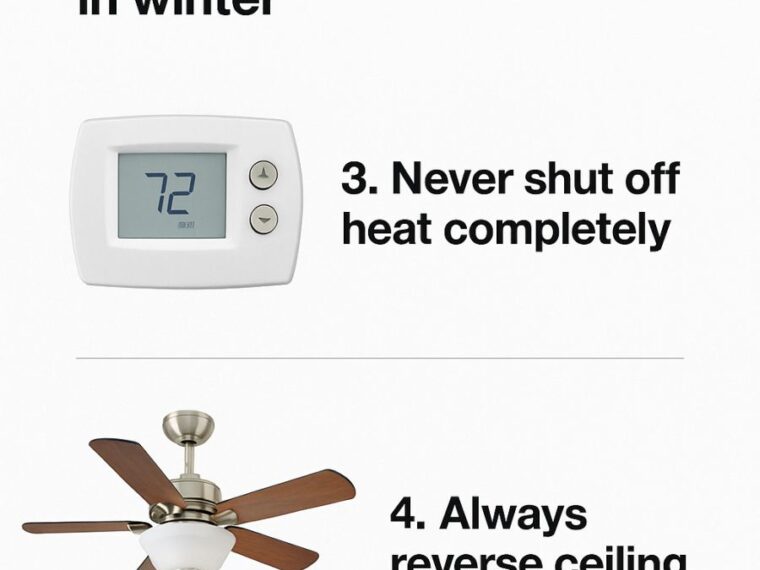
5. Avoid Turning Off the Heat Completely
Turning off your heating system completely can seem like a cost-saving measure, but it often leads to higher energy usage. When the temperature inside drops too low, your system must work harder to bring it back up, consuming more energy in the process.
Instead of turning off the heat, lower it to a minimal setting when you’re away from home. Keeping the thermostat at a low but consistent temperature helps maintain a baseline warmth, preventing pipes from freezing and reducing the workload on your heating system when you return.
6. Reverse Ceiling Fan Direction for Better Circulation
Ceiling fans aren’t just for cooling; they can be used to improve warm air circulation in the winter. By reversing the direction of your ceiling fan to clockwise at a low speed, you can help distribute warm air that rises to the ceiling back down into the living space.
This simple adjustment can make rooms feel warmer and more comfortable without adjusting the thermostat, further enhancing energy efficiency. Make sure your ceiling fan has this reversible feature, which is typically controlled by a switch on the fan body.
7. The Impact of Thermostat Settings on Energy Bills
Your thermostat settings have a direct impact on your energy bills. Keeping your thermostat too high during winter can significantly increase your heating costs. The Energy Information Administration reports that heating accounts for nearly 42% of home energy consumption, making it one of the largest energy expenses.
By optimizing your thermostat settings, you can keep these costs in check. For instance, lowering your thermostat by 10°F for eight hours a day can save up to 10% a year on heating. These savings can add up, especially in areas with long, harsh winters.
8. How Thermostat Settings Affect Indoor Air Quality
Thermostat settings not only influence energy efficiency but also indoor air quality. If your home is too warm, it can lead to dry air, which may cause respiratory issues, dry skin, and discomfort. Conversely, a home that is too cold might promote dampness, leading to mold growth.
Maintaining an optimal temperature helps to balance humidity levels, which is essential for healthy indoor air quality. Using a humidifier alongside proper thermostat settings can further enhance comfort and air quality during the dry winter months.
9. Modern Thermostat Technology and Smart Controls
Modern thermostats offer advanced features that can optimize heating efficiency. Smart thermostats, like those from Nest or Ecobee, learn your habits and adjust temperatures automatically, providing comfort and savings without manual intervention.
These devices often come with mobile apps, allowing you to control your home’s temperature remotely. Smart thermostats can also provide detailed energy usage reports, helping you understand and optimize your energy consumption further.
10. Common Mistakes to Avoid When Setting Your Thermostat
One common mistake is setting the thermostat higher than desired to heat the home faster. Heating systems work at a constant rate, so a higher setting only results in overshooting the target temperature and wasting energy.
Another mistake is neglecting to adjust the thermostat when away from home. Investing in a programmable or smart thermostat can automate this process, ensuring energy is not wasted heating an empty home. Also, avoid placing heat-generating appliances near the thermostat, as they can cause false readings, leading to inefficient heating cycles.
11. Tips for Maintaining Consistent Home Comfort
To maintain consistent comfort, ensure your home is well-insulated. Seal drafts around windows and doors to prevent heat loss. Regularly service your heating system to keep it running efficiently and check that your thermostat is in a location that accurately reflects your home’s temperature
Consider using zone heating if you have larger spaces, where you can set different temperatures for different areas of your home. This approach ensures that you are only heating the spaces you are using, further optimizing energy use and maintaining comfort.