The humble dryer vent is an often overlooked component of our laundry routine, yet it plays a crucial role in ensuring our dryers operate efficiently and safely. Many homeowners underestimate the importance of regular dryer vent maintenance, leading to longer drying times and potential safety hazards.
In this article, we’ll explore the common mistakes people make when cleaning their dryer vents and provide a comprehensive guide on how to do it right. By following these tips, you can improve your dryer’s performance and reduce the risk of fire hazards in your home.
1. The Importance of a Clean Dryer Vent
A clean dryer vent is essential for both safety and efficiency. According to the U.S. Fire Administration, clothes dryers cause over 2,900 home fires each year, resulting in deaths, injuries, and millions in property loss. The leading cause of these fires is the failure to clean dryer vents.
Additionally, a clogged dryer vent can significantly increase drying times, causing your dryer to work harder and consume more energy. This not only increases your utility bills but also shortens the lifespan of your appliance. A clean vent ensures optimal airflow, which helps your dryer run efficiently and safely.
2. Common Missteps in Dryer Vent Cleaning
Many people think that simply removing the lint from the lint screen is enough to keep their dryer vent clean. However, this is far from sufficient. Lint can build up within the ductwork and vent, leading to blockages that aren’t visible to the naked eye.
Another common mistake is using the wrong tools. Some people attempt to clean their vents with makeshift tools like coat hangers, which can damage the ductwork and push lint further into the vent, exacerbating the problem instead of solving it.
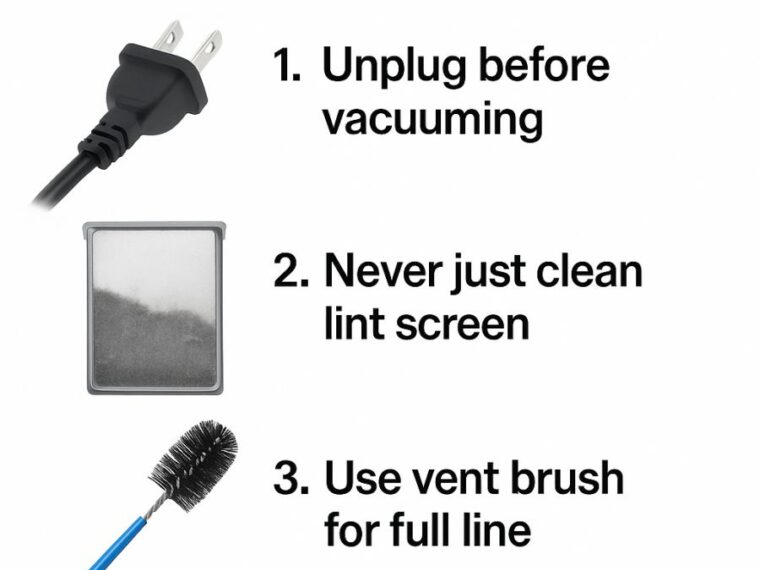
3. Unplug Before Vacuuming for Safety
Before starting any cleaning process on your dryer, it’s important to unplug it from the wall outlet. This simple step ensures your safety by eliminating the risk of electric shock while you work on the appliance.
Once unplugged, you can proceed to vacuum around the lint trap and any visible areas where lint might accumulate. Using a vacuum with a hose attachment makes it easier to reach into tight spaces and remove more lint effectively.
4. Never Just Clean the Lint Screen
While cleaning the lint screen is important, it’s just the first step in a thorough dryer maintenance routine. The real issue lies within the dryer vent, where lint, dust, and debris can accumulate over time.
To effectively clean the vent, you’ll need to detach the dryer from the wall and access the vent duct. This allows you to remove any obstructions that might be impeding airflow and posing a fire risk.
5. Use a Vent Brush for a Thorough Clean
A vent brush is a specialized tool designed to reach deep into the vent ductwork and remove lint buildup. These brushes usually have long, flexible handles that allow you to navigate the twists and turns of the vent.
Using a vent brush regularly can help prevent lint from accumulating to dangerous levels. It is recommended to brush out the vent from both the inside and the outside to ensure a comprehensive clean.
6. The Risks of Neglecting Regular Cleaning
Neglecting regular dryer vent cleaning can lead to several risks, both immediate and long-term. In the short term, you may notice your dryer taking longer to dry clothes, which is a sign of restricted airflow.
In the long term, the risks include increased energy consumption due to inefficient operation, shortened appliance lifespan, and the most serious risk of all: fire. Lint is highly flammable, and a blocked vent creates the perfect conditions for a fire to start.
7. How Often Should You Clean Your Dryer Vent?
The frequency of dryer vent cleaning depends on several factors, including the size of your household and how often you use your dryer. A good rule of thumb is to clean the lint screen after every load and to clean the vent system at least once a year.
For larger households that do multiple loads of laundry per day, more frequent cleanings—perhaps every six months—may be necessary to prevent lint buildup and maintain dryer efficiency.
8. Special Considerations During Winter Months
During winter months, dryer vents can become blocked by snow or ice, particularly if the vent exhausts to the exterior of your home. This can exacerbate lint buildup and restrict airflow even further.
It’s important to keep the area around the exterior vent clear of snow and ice. Additionally, the cold weather can cause ducts to contract, making them more prone to cracks and leaks, which can further impede dryer performance.
9. Popular Viral Hacks: What Works and What Doesn’t
In recent years, numerous viral hacks have circulated online claiming to offer quick and easy solutions for cleaning dryer vents. While some of these tips can be helpful, others are ineffective or even potentially damaging.
For instance, using a leaf blower to clear a dryer vent might seem like a good idea, but it can actually blow lint further into the ductwork if not performed carefully. It’s always best to rely on tried-and-tested methods like using a proper vent brush and vacuum.
10. Tools You Need for Effective Cleaning
Having the right tools makes all the difference in cleaning your dryer vent effectively. Essential tools include a vacuum with a hose attachment, a vent brush with a long, flexible handle, and a screwdriver for removing any panels or grilles.
It’s also helpful to have a flashlight to inspect the inside of the vent and ensure that all lint has been removed. Some homeowners may also find a dryer vent cleaning kit useful, as it typically includes multiple tools designed specifically for this purpose.
11. Signs It’s Time to Clean Your Dryer Vent
There are several telltale signs that indicate it’s time to clean your dryer vent. One of the most common is when clothes take longer than usual to dry, even on the highest heat setting.
Another sign is if the dryer feels unusually hot to the touch or if you notice a burning smell during operation. Additionally, if lint is accumulating around the dryer’s opening or vent area, it’s a clear signal that cleaning is overdue.