Vacuuming is one of those household chores that many of us perform without much thought. After all, how complicated can it be to push a machine back and forth across a floor? However, there is more to effective vacuuming than meets the eye. Most people are unaware that there are optimal techniques and methods that can make vacuuming more efficient and effective.
In this article, we’ll explore some of the most common mistakes people make while vacuuming and offer insights into how to correct them. From the speed at which you vacuum to the order in which you tackle rooms, these tips will help you maximize the cleanliness of your home while minimizing the effort required.
1. Slow and Steady: The Right Speed for Vacuuming
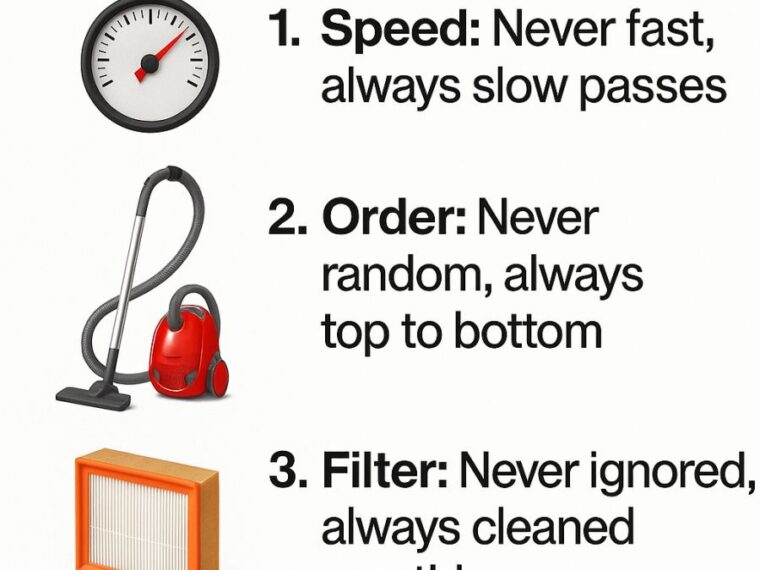
Many people make the mistake of vacuuming too quickly, believing that speed will help them finish the chore faster. However, vacuuming at a steady, moderate pace allows the machine to effectively pick up dirt and debris. Ideally, you should aim to cover about one square foot per second. This ensures that the vacuum has enough time to agitate the carpet fibers and suck up all the hidden particles.
Moving too quickly means that the vacuum’s suction power isn’t fully utilized, leaving dirt behind. Take your time, and you’ll notice a significant improvement in the cleanliness of your floors.
2. Top to Bottom: The Correct Order for Vacuuming
Vacuuming should be approached in a top-to-bottom manner, especially if you’re cleaning an entire room. Start by dusting surfaces higher up, such as shelves and windowsills, before moving to the floor. This way, any dust or debris that falls will be picked up when you vacuum the floor.
Once you’ve dusted the upper surfaces, begin vacuuming at the farthest corner of the room and work your way toward the door. This ensures you don’t step on freshly vacuumed areas, maintaining the cleanliness you’ve achieved.
3. Monthly Maintenance: Cleaning Your Vacuum Filter
For your vacuum cleaner to operate at peak efficiency, it’s essential to clean or replace its filter regularly. Most manufacturers recommend cleaning or replacing the filter every three months, but if you have pets or allergies, a monthly schedule is advisable.
To clean the filter, remove it from the vacuum and gently tap it over a trash can to remove loose debris. For washable filters, rinse them under cool water and let them air dry completely before reinserting. A clean filter ensures optimal suction power and prolongs the life of your vacuum.
4. Half Full: When to Replace the Vacuum Bag
A common error is waiting until the vacuum bag is completely full before replacing it. For optimal performance, replace the bag when it’s about half to two-thirds full. This prevents reduced suction power and ensures your vacuum can effectively pick up dust and debris.
If your vacuum uses a bagless system, empty the dustbin once it reaches the same level. Keeping the bag or bin from overfilling helps maintain the vacuum’s efficiency.
5. Pre-Clean Prep: Declutter Before You Vacuum
Before you even turn on your vacuum, it’s crucial to declutter the area you’re planning to clean. Pick up toys, clothes, and other small items from the floor, as these can obstruct the vacuum’s path and potentially damage the machine.
This preparation step not only protects your vacuum but also allows it to clean more effectively, as it can move unimpeded across the floor. Spending a few minutes decluttering can save you time and hassle in the long run.
6. The Art of Edging: How to Clean Along Walls and Corners
Many vacuums have attachments designed specifically for cleaning along edges and in corners. Use the crevice tool to reach into tight spaces and ensure that dust doesn’t accumulate along walls.
When vacuuming, make a habit of using the edging tool every other session to keep these areas as clean as the rest of your floor. This attention to detail will prevent dirt from building up in hard-to-reach places.
7. Carpet Care: Adjusting the Vacuum Height
To effectively clean different types of flooring, it’s important to adjust the height of your vacuum cleaner. Most vacuums have height settings for low, medium, and high pile carpets. Ensure the vacuum’s base is set at the correct height to maximize suction power.
For low pile carpets, set the vacuum to the lowest setting, and for high pile carpets, use a higher setting. This adjustment helps the vacuum glide smoothly while maintaining contact with the carpet fibers.
8. Attachments Matter: Using the Right Tools for Different Surfaces
Vacuum attachments are there for a reason, and using them correctly can enhance the cleaning process. For example, the upholstery tool is perfect for furniture, while the dusting brush attachment can be used on curtains and blinds.
Regularly switch out attachments to match the surface you’re cleaning. This not only ensures better results but also prevents damage to delicate surfaces by using the appropriate tool for each task.
9. Timing is Key: Vacuuming at the Right Frequency
How often you should vacuum depends on various factors, such as the amount of foot traffic and the presence of pets. High-traffic areas like living rooms and hallways might require vacuuming two to three times a week, while less frequented areas can be cleaned once a week.
If you have pets that shed, consider vacuuming daily to keep hair and dander at bay. Regular vacuuming not only keeps your home clean but also extends the life of your carpets by preventing dirt from settling deep into the fibers.
10. Avoiding Overlap: How to Vacuum Without Repeating
To avoid vacuuming the same area multiple times, use a systematic approach by vacuuming in straight lines. Once you reach the end of a row, turn the vacuum and slightly overlap the previous path by a few inches. This ensures complete coverage without unnecessary repetition.
By following a consistent pattern, you’ll save time and energy, making your vacuuming routine more efficient.
11. Never Too Fast: Why Slow Vacuuming is More Effective
Vacuuming too quickly can lead to missed spots and inefficient cleaning. By moving slowly, you allow the vacuum to agitate the carpet fibers and thoroughly lift dirt and debris. This method is especially important for high-pile carpets, where dirt can become deeply embedded.
A slow, deliberate pace ensures that every inch of your floor receives adequate attention, resulting in a cleaner home and a more effective vacuuming session.