As winter approaches and the leaves begin to fall, many gardeners are faced with the task of managing piles of autumn leaves. While the instinct might be to bag them up and send them off to the landfill, this approach is not only wasteful but also a missed opportunity for your garden. Leaves are a valuable resource, rich in nutrients and beneficial for various gardening purposes.
In this article, we will explore the right ways to use leaves in your winter garden. From mulch to compost, and even as a habitat for wildlife, leaves have a multitude of uses. Let’s dive into how you can transform these natural resources into a powerful ally for your gardening efforts.
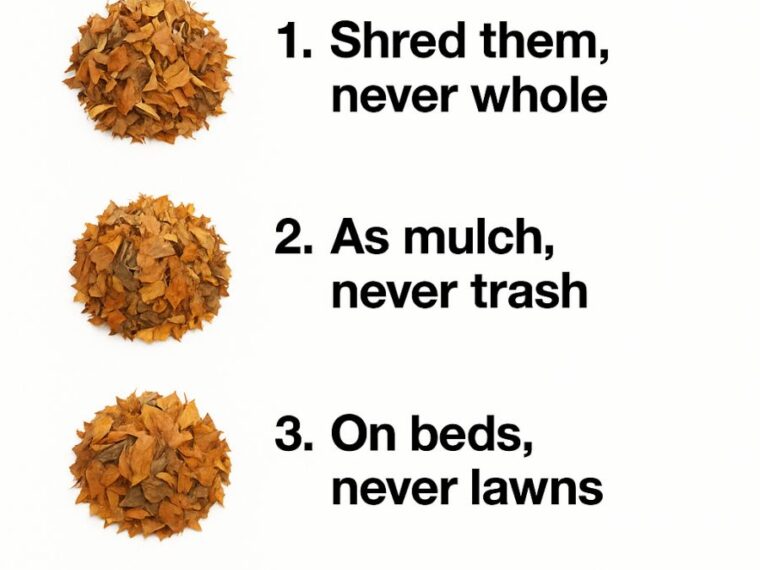
1. Shred Leaves, Never Use Them Whole
One of the biggest mistakes gardeners make is using whole leaves in their gardens. Whole leaves can mat together, creating a barrier that blocks air and water. This can suffocate the soil and plants beneath. Instead, shred your leaves before using them. Shredding can be done with a lawn mower or a leaf shredder, reducing the leaves to smaller pieces that decompose faster.
By shredding leaves, you increase their surface area, allowing them to break down more efficiently. A layer of shredded leaves about 2-3 inches thick is ideal for mulching purposes. This allows for good air circulation and moisture retention while preventing weed growth.
2. Utilize Leaves as Mulch, Not Trash
Leaves make excellent mulch for your garden beds. They help retain moisture, suppress weeds, and add nutrients back into the soil as they decompose. To use leaves as mulch, spread a layer of shredded leaves around your plants and over garden beds. Aim for a thickness of 2-4 inches, which is sufficient to provide insulation without smothering your plants.
Mulching with leaves not only recycles a natural resource but also enhances soil health. As the leaves decompose, they release essential nutrients like potassium and phosphorus, enriching the soil and supporting plant growth throughout the winter months.
3. Apply Leaves to Garden Beds, Not Lawns
While it might be tempting to leave a blanket of leaves on your lawn, this can actually harm the grass by blocking sunlight and trapping moisture. Instead, collect the leaves and apply them to your garden beds where they can provide more benefits. In garden beds, leaves act as a natural mulch, protecting the soil and improving its structure.
For lawns, it’s better to use a mulching mower to chop the leaves finely and leave them on the grass. This helps the leaves decompose quickly, providing a natural fertilizer without suffocating the lawn.
4. Mix Leaves with Compost, Avoid Bagging Up
Instead of sending leaves to the landfill, mix them into your compost pile. Leaves are a great source of carbon, which is essential for creating a balanced compost mix. Combine shredded leaves with nitrogen-rich materials like vegetable scraps or grass clippings to speed up the decomposition process.
Maintain a good balance by using about three parts leaves to one part green material. Turn your compost pile regularly to ensure even decomposition and to prevent any foul odors. Over time, the leaves will break down and contribute to a rich, nutrient-dense compost that can be used to enhance your garden soil.
5. Create Leaf Mold for Soil Improvement
Leaf mold is a fantastic soil conditioner that improves soil structure and water retention. To create leaf mold, simply pile up your leaves in a corner of your garden and let them decompose naturally. This process can take six months to a year, but the result is worth the wait.
Once the leaves have broken down into a dark, crumbly material, you can use it to improve garden soil, mix it into potting soil, or spread it over garden beds. Leaf mold increases the soil’s ability to hold moisture and provides a habitat for beneficial soil organisms.
6. Protect Delicate Plants with Leaf Insulation
Leaves can be used to insulate and protect delicate plants from harsh winter conditions. Cover the base of tender perennials or young shrubs with a thick layer of shredded leaves. This acts as a natural blanket, keeping the soil temperature stable and reducing the risk of frost damage.
Ensure that the leaves do not touch the stems or trunks of the plants to prevent rot. This method is particularly useful for protecting root systems and conserving soil moisture during dry winter months.
7. Enhance Garden Pathways with Leaf Coverage
Leaves can also be used to cover garden pathways, providing a natural and aesthetic ground cover. Spread a thick layer of shredded leaves along your garden paths to create a soft, cushioned walking surface. This not only makes your garden look neat but also prevents soil erosion and compaction.
As the leaves break down, they will add organic matter to the soil beneath, improving its structure and fertility over time. You may need to replenish the leaf layer periodically to maintain the coverage.
8. Use Leaves for Winter Wildlife Habitats
Leaves provide essential habitat for wildlife during the winter months. Piles of leaves can offer shelter for insects, small mammals, and even some birds. Consider creating a designated area in your garden for leaf piles to encourage biodiversity and support local wildlife.
These habitats can be particularly beneficial for beneficial insects like ladybugs and ground beetles, which contribute to natural pest control in your garden. By fostering a healthy ecosystem, your garden will thrive year-round.
9. Transform Leaves into Natural Fertilizer
Leaves can be a source of natural fertilizer when they break down and release nutrients back into the soil. To create a simple leaf fertilizer, collect fallen leaves and place them in a large container or a burlap sack. Add water to the container or sack and let the leaves steep for several weeks.
The resulting liquid, known as leaf tea, can be diluted with water and used as a liquid fertilizer for your plants. This nutrient-rich solution provides a boost of potassium, magnesium, and other minerals essential for plant health.
10. Recycle Leaves in Water Retention Strategies
Leaves can play a crucial role in water retention strategies for your garden. By using leaves as mulch, you can reduce evaporation and conserve soil moisture, which is particularly important during dry spells or in regions with limited rainfall.
Another strategy is to use leaves to create swales or berms that direct and retain water in specific areas of your garden. This helps manage water flow, prevents runoff, and ensures that your plants receive adequate moisture throughout the winter.
11. Employ Leaves in DIY Garden Projects
Leaves can be a versatile material for various DIY garden projects. Consider using leaves to create decorative garden features like leaf-shaped stepping stones or natural art installations. You can also use leaves in crafts like making leaf prints or pressed leaf art
For a practical project, try using leaves to create a natural dye for fabrics or paper. Boil leaves in water to extract the pigment, then use the dye for eco-friendly crafts. These creative uses for leaves not only enhance your garden’s aesthetic but also promote sustainable gardening practices.