Honey has been celebrated for centuries not only as a natural sweetener but also as a potent healing agent. While many of us enjoy honey in our tea or on toast, not everyone is aware of its full range of health benefits. From soothing a sore throat to healing wounds, honey has a place in your medicine cabinet as well as your kitchen. However, to truly harness its healing power, it’s crucial to use honey correctly.
Many people may unknowingly use honey in ways that diminish its effectiveness. It’s not just about slathering it on a wound or mixing it into a hot drink. Understanding the specific types of honey and the best methods of application can unlock its full potential. Here’s how to use honey the right way to maximize its healing benefits and improve your health.
1. Understanding the Healing Properties of Honey
Honey is a natural substance produced by bees from the nectar of flowers, and its healing properties are largely attributed to its unique composition. Honey contains glucose, fructose, vitamins, minerals, and enzymes, which collectively contribute to its therapeutic effects. One of the most important components is hydrogen peroxide, a by-product of honey’s glucose oxidase activity, which gives it antibacterial properties. Furthermore, honey’s low pH and high sugar content create an environment that is inhospitable to bacteria and fungi.
Research has shown that honey, particularly raw and Manuka honey, can inhibit the growth of approximately 60 species of bacteria, some fungi, and viruses. Manuka honey, produced by bees that pollinate the Manuka bush in New Zealand, is especially revered for its high levels of methylglyoxal, a compound that gives it superior antibacterial properties. To harness these benefits, it’s important to choose the right type of honey and use it appropriately for specific conditions.
2. The Right Way to Use Honey for Burns
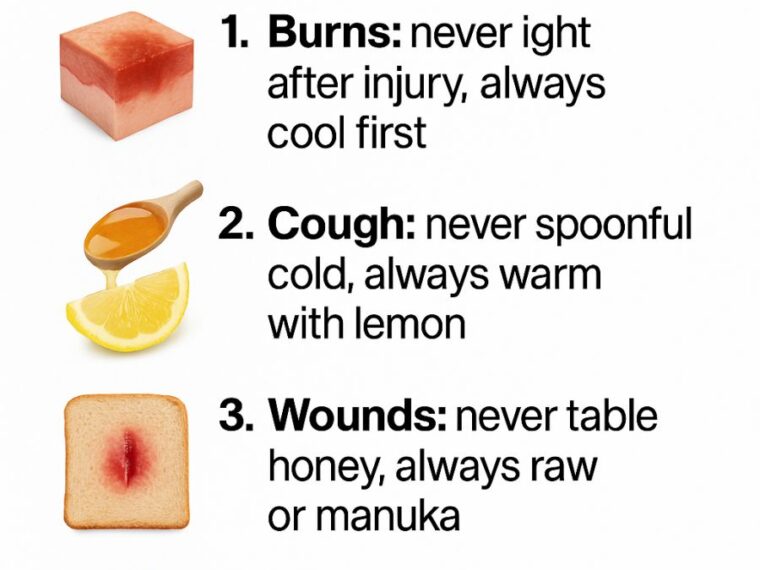
For minor burns, honey can be an effective treatment due to its soothing, antibacterial, and anti-inflammatory properties. First, cool the burn under running water for at least 10 minutes to stop the burning process. After drying the area gently, apply a thin layer of raw or Manuka honey directly onto the burn. Cover it with a sterile bandage and change the dressing every 24 hours, reapplying honey each time. This method not only helps prevent infection but also promotes faster healing by keeping the wound moist and protected.
It’s crucial not to apply honey to severe burns without consulting a healthcare professional, as these require specialized medical attention. For minor burns, however, honey can be a safe and natural alternative to over-the-counter ointments.
3. Soothe Your Cough with Honey: Warm and Infused
Honey is a well-known remedy for coughs, offering relief by coating the throat and soothing irritation. For maximum effectiveness, mix one to two tablespoons of honey with warm water or herbal tea. Adding a squeeze of lemon not only enhances the flavor but also provides additional vitamin C, which can help support the immune system. For a more potent remedy, consider infusing the honey with herbs like ginger or thyme. Simply simmer the herbs in water, strain, and mix the liquid with honey.
Studies have shown that honey can be as effective as some over-the-counter cough medicines for reducing cough frequency and severity, particularly in children over one year old. Always avoid giving honey to infants under one year due to the risk of botulism.
4. Healing Wounds: Why Raw or Manuka Honey is Essential
When it comes to wound healing, not all honey is created equal. Raw and Manuka honey are particularly effective due to their higher antibacterial activity. To treat a wound, clean the area thoroughly with water and apply a thin layer of honey. Cover with a sterile bandage and change it daily, reapplying honey each time. The antibacterial properties of honey help prevent infection, while its anti-inflammatory effects reduce swelling and pain.
Manuka honey, with its high methylglyoxal content, has been shown to accelerate healing and reduce scarring in various types of wounds, including ulcers and surgical wounds. Its ability to maintain a moist environment also supports tissue regeneration. Always ensure the honey used is medical-grade for treating wounds.
5. Improve Sleep with Honey: The Right Amount Matters
Honey can promote restful sleep by fostering the release of melatonin, the hormone responsible for regulating sleep cycles. Consuming a small amount of honey before bed can help maintain glycogen levels in the liver, preventing the brain from triggering an emergency search for fuel, which can disrupt sleep.
For optimal results, take one to two teaspoons of honey before bedtime, either straight or mixed into a warm beverage like milk or chamomile tea. This practice can enhance the quality of sleep, helping you wake up feeling more refreshed.
6. Enhancing Digestion: Honey’s Role in Gut Health
Honey is a natural prebiotic, meaning it nourishes the good bacteria in the gut. This can improve digestion and overall gut health. To use honey for digestive health, consume one tablespoon of raw honey on an empty stomach in the morning. This not only aids in the growth of beneficial bacteria but also reduces inflammation in the digestive tract.
Moreover, honey’s natural enzymes can assist in breaking down food more effectively, easing issues like indigestion and bloating. For those with mild gastrointestinal discomfort, honey can be a soothing remedy when incorporated into the daily diet.
7. Boosting Immunity: Incorporating Honey into Your Routine
Regular consumption of honey can help boost your immune system thanks to its antioxidants and antibacterial properties. To incorporate honey into your routine for immune support, try adding it to your morning smoothie, oatmeal, or yogurt. A daily intake of one to two tablespoons of honey can provide the body with important nutrients that support immune function.
For an added immune boost, consider combining honey with cinnamon, another potent natural ingredient known for its antimicrobial and anti-inflammatory effects. Mixing one tablespoon of honey with a half teaspoon of cinnamon can enhance your body’s defense mechanisms against common illnesses.
8. Honey for Skin Care: Effective Natural Remedies
Honey’s moisturizing and healing properties make it a superb natural remedy for various skin conditions. For acne-prone skin, apply a thin layer of raw honey directly onto the affected areas and leave it on for 15 to 20 minutes before rinsing off. This method helps cleanse pores and reduce inflammation without drying out the skin.
For a nourishing face mask, mix two tablespoons of honey with one tablespoon of yogurt and a few drops of lemon juice. Apply the mixture to the face, leave it on for 15 minutes, and rinse with warm water. This mask can brighten the skin and enhance its natural glow. Honey can also be used to soothe eczema and dermatitis, thanks to its ability to hydrate and repair the skin barrier.
9. Managing Allergies: Local Honey as a Potential Aid
Local honey is often touted as a natural remedy for allergies, based on the idea that it can help the body adapt to local pollen. To test this, try consuming one teaspoon of local, raw honey daily, starting a few months before allergy season. The theory is that by introducing small amounts of pollen into the body, you can build up immunity and reduce allergic reactions.
While scientific evidence on this is mixed, many people report experiencing relief from allergy symptoms. It’s important to ensure the honey is local and raw to maximize its potential benefits. Nonetheless, always consult with an allergist before using honey as part of your allergy management plan.
10. Energy Boost: Honey as a Natural Pre-Workout Snack
Honey is a quick and natural source of energy, making it an ideal pre-workout snack. Its natural sugars provide a rapid energy boost without the crash associated with processed sugars. About 30 minutes before exercising, consume one to two tablespoons of honey, either alone or spread on whole-grain toast.
For sustained energy, consider mixing honey with a small amount of peanut butter. This combination provides both immediate and long-lasting energy, helping enhance performance and endurance during workouts. Honey’s easy digestibility also makes it a great option for those with sensitive stomachs.
11. The Truth About Honey and Weight Management
While honey is a natural sugar, it can still be part of a weight management plan when used wisely. Replacing refined sugars with honey can reduce overall calorie intake and provide additional nutrients, such as amino acids, vitamins, and minerals, which support metabolism. One way to incorporate honey is by using it as a sweetener in tea or coffee instead of sugar
For those looking to manage their weight, a popular remedy is the honey and cinnamon drink. Mix one tablespoon of honey and one teaspoon of cinnamon in a cup of hot water and drink it first thing in the morning. This concoction is believed to boost metabolism and aid in fat burning. However, it’s important to consume honey in moderation due to its calorie content.