Castile soap has been around for centuries, originating from the Castile region of Spain where it was traditionally made with olive oil. Today, it’s celebrated for its versatility and eco-friendliness, making it a staple in many households. However, despite its long history, many people are still using it incorrectly, missing out on its full potential and sometimes even causing harm to their belongings or skin.
In this article, we will guide you through the correct ways to use Castile soap, ensuring you get the most out of this natural cleaner. From understanding its composition to avoiding common pitfalls, you’ll discover how to maximize the benefits of Castile soap while steering clear of common mistakes.
1. Understanding Castile Soap: A Brief Overview
Castile soap is a vegetable-based soap that is free from animal fats and synthetic ingredients. Traditionally made with 100% pure olive oil, modern versions may include other plant-based oils such as coconut, hemp, or jojoba. This makes Castile soap biodegradable and non-toxic, appealing to those looking for environmentally friendly cleaning alternatives.
One of the key features of Castile soap is its concentration. Unlike many commercial soaps, it doesn’t contain detergents or artificial foaming agents, which means it’s highly concentrated and requires dilution for most applications. This concentration allows for a wide range of uses, from personal care to household cleaning, but it also means that understanding how to properly dilute and use it is essential.
2. Why Dilution Is Key: The 1:3 Ratio Explained
One of the most important steps in using Castile soap effectively is dilution. A general guideline for dilution is a 1:3 ratio, meaning one part Castile soap to three parts water. This ratio ensures that the soap is effective while remaining gentle on surfaces and skin.
For example, when using Castile soap as a hand soap, you might mix 1/4 cup of Castile soap with 3/4 cup of water in a foaming soap dispenser. This dilution not only ensures a pleasant experience but also extends the life of your soap bottle, making it more cost-effective.
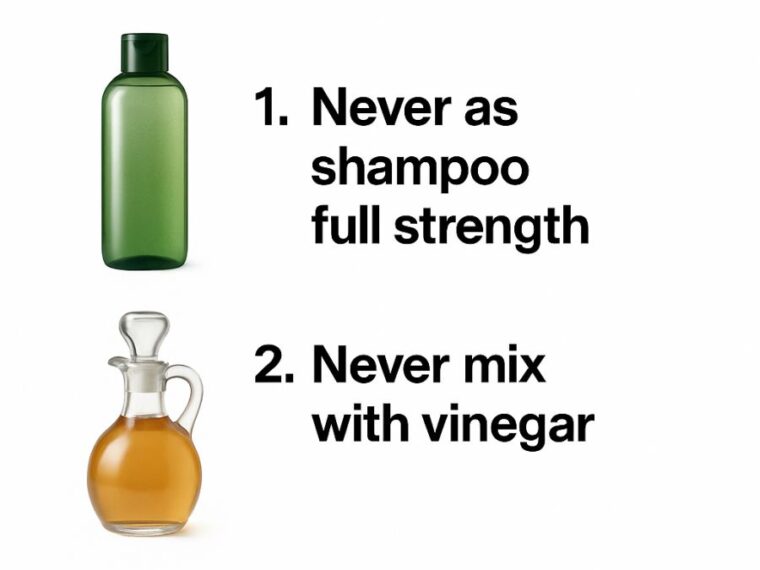
3. Common Mistakes: Why Using It Full Strength Is a No-Go
Using Castile soap at full strength is a common mistake that can lead to adverse effects, such as skin irritation or damage to surfaces. Because it’s so concentrated, full-strength Castile soap can strip natural oils from your skin or leave a residue on surfaces, particularly those that are porous.
To avoid these issues, always adhere to dilution guidelines, and when in doubt, conduct a patch test on a small area before using it more broadly. This practice helps ensure that the soap will not cause damage or irritation.
4. The Vinegar Warning: Why You Should Never Mix Them
Mixing Castile soap with vinegar might seem like a natural cleaning powerhouse, but in reality, it creates a goopy mess. The alkaline nature of Castile soap reacts with the acidic properties of vinegar, resulting in an oily film that is difficult to remove.
If you want to use both in your cleaning routine, use them separately. For instance, clean surfaces with a diluted Castile soap solution first, then follow up with a vinegar rinse to ensure the surface is residue-free and disinfected.
5. Choosing the Right Water Temperature for Best Results
The temperature of the water you use with Castile soap can impact its effectiveness. Warm water is generally ideal for most cleaning tasks, as it helps dissolve the soap more efficiently, allowing it to lather and spread more evenly.
However, for heat-sensitive surfaces or skin, lukewarm or cool water can be used to prevent any potential damage or irritation. Always adjust the water temperature based on the task at hand to optimize your cleaning results.
6. The Art of Lathering: How to Maximize Its Cleaning Power
Lathering is key to unlocking the full cleaning potential of Castile soap. To achieve a rich lather, apply a small amount of diluted soap to a wet washcloth or sponge, then rub vigorously to create bubbles.
This lathering process helps lift dirt and grime more effectively, ensuring a thorough clean. For body washing, use a loofah or washcloth to work the soap into a lather before applying it to your skin, ensuring a gentle yet effective cleanse.
7. Popular Viral Hacks: What Works and What Doesn’t
The internet is full of viral cleaning hacks using Castile soap, but not all are effective or safe. For example, using Castile soap as a pesticide spray on plants can be effective, but only when properly diluted (e.g., 1 tablespoon per quart of water).
On the other hand, using Castile soap in a dishwasher or washing machine without proper rinsing can lead to excessive suds and potential machine damage. Always verify the source and safety of any hack before trying it in your home.
8. The Right Way to Use Castile Soap as a Body Wash
To use Castile soap as a body wash, begin by diluting it with water, typically at a 1:3 ratio. Pour the diluted mixture into a reusable bottle for easy dispensing. When showering, apply the soap to a wet washcloth or loofah and lather before applying it to your skin.
This method ensures a gentle cleanse without stripping natural oils, leaving your skin feeling clean and refreshed. Because Castile soap is free from artificial fragrances, it’s an excellent choice for those with sensitive skin or allergies.
9. Effective Household Cleaning: Surfaces You Should and Shouldn’t Use It On
Castile soap is safe for many household surfaces, including countertops, floors, and bathroom fixtures. However, avoid using it on porous surfaces like unsealed marble or granite, as it can leave a residue.
For effective cleaning, dilute the soap according to the surface being cleaned. For general cleaning, mix 1/4 cup of Castile soap with one gallon of warm water. For surfaces like glass, use a more diluted solution to avoid streaking.
10. Hair Care Tips: Why Castile Soap Isn’t a Shampoo Substitute
While Castile soap can technically clean hair, its high alkalinity can disrupt the natural pH balance of your scalp and hair, leading to dryness or irritation. It lacks the conditioning agents found in shampoos, which can leave hair feeling unmanageable.
If you choose to use Castile soap for hair, follow up with an acidic rinse, such as diluted apple cider vinegar, to help restore the pH balance. However, for regular hair care, a shampoo formulated for your hair type is usually a better choice.
11. The Importance of Moisturizing: Post-Use Skin Care Advice
After using Castile soap, particularly on your skin, it’s important to follow up with a moisturizer. While Castile soap is gentle, its cleansing action can strip away some of your skin’s natural oils.
Applying a moisturizer immediately after washing helps replenish lost moisture and maintain skin health. Choose a moisturizer suited to your skin type for optimal results, ensuring your skin stays soft and hydrated after each use.