Wood chips are one of the most underrated materials in gardening. Often treated as simple yard waste or landscaping filler, wood chips are actually a powerful, multi-purpose resource that can improve soil health, regulate moisture, suppress weeds, protect roots, and even build long-term fertility when used correctly.
But there’s a catch: wood chips are not a one-size-fits-all solution. How you use them – where you place them, how deep you apply them, and what type of chips you choose – makes the difference between stronger plants and stalled growth.
Why Wood Chips Are So Valuable in the Garden
Wood chips are made from shredded branches, bark, and woody plant material. Unlike fine mulch or compost, they break down slowly. That slow decomposition is exactly what makes them useful.
When properly used, wood chips help:
- Reduce soil moisture loss
- Suppress weed germination
- Regulate soil temperature
- Prevent erosion
- Feed soil fungi
- Build long-term organic matter
- Improve soil structure
- Support beneficial microbes
They are especially powerful in natural-style and low-input gardens.
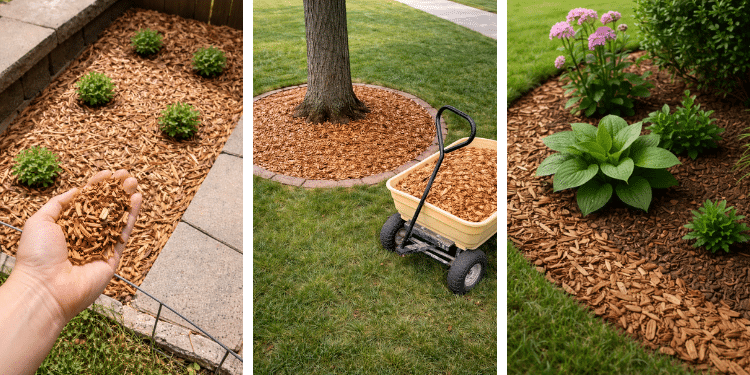
1. Use Wood Chips as Long-Lasting Mulch Around Trees
Wood chips are ideal mulch for trees and shrubs because woody plants naturally grow in fungal-rich soils fed by decaying wood.
Benefits around trees:
- Protects surface roots
- Reduces mower damage
- Holds moisture
- Encourages fungal networks
- Improves soil over time
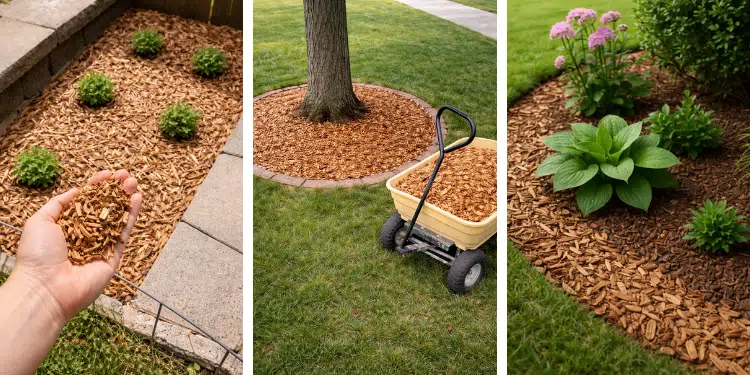
How to apply: Spread 2–4 inches deep in a wide ring – but keep chips 2–3 inches away from the trunk to prevent rot and pests.
2. Build Weed-Suppressing Garden Paths
Wood chips are one of the best materials for garden walkways.
They:
- Block light from reaching weed seeds
- Stay stable under foot
- Improve drainage
- Reduce mud
- Slowly compost into soil below
Best method: Lay cardboard first → add 4–6 inches of chips → top up annually.
3. Protect Vegetable Beds – With Proper Placement
Wood chips can be used near vegetables – but placement matters.
Best use:
- Between rows
- On paths between beds
- Around large plants like tomatoes and squash
Avoid mixing fresh chips directly into vegetable soil – that can temporarily tie up nitrogen.
4. Create Moisture Buffers in Hot Climates
In hot regions, wood chips act like a protective blanket.
They reduce:
- Evaporation
- Surface cracking
- Heat stress
- Watering frequency
This is especially useful for:
- Tomatoes
- Peppers
- Cucumbers
- Fruit trees
A 3–4 inch layer can significantly reduce irrigation needs.
5. Improve Clay Soil Over Time (Top-Down Method)
Wood chips should not be tilled into clay – but they can improve it from the top down.
As fungi and microbes break them down:
- Soil aggregates improve
- Structure loosens
- Drainage increases
- Root penetration improves
Method: Surface mulch only – let soil life pull benefits downward.
6. Build Fungal-Rich Soil for Perennials
Perennials, berries, and shrubs prefer fungal-dominant soil biology – and wood chips feed fungi directly.
Great for:
- Blueberries
- Raspberries
- Asparagus
- Rhubarb
- Fruit trees
This creates more natural soil ecology around long-lived plants.
7. Use Wood Chips for Erosion Control
On slopes and exposed soil, wood chips slow water movement and protect topsoil.
They:
- Reduce runoff speed
- Absorb rainfall impact
- Hold soil in place
- Protect young roots
Use thicker layers (4–6 inches) on slopes.
8. Insulate Plant Roots in Winter
Wood chips are excellent winter root insulation.
They buffer:
- Freeze–thaw cycles
- Sudden cold snaps
- Root temperature swings
Apply late fall mulch around:
- Roses
- Perennials
- Fruit trees
- Garlic beds
Remove or thin in spring if soil warms too slowly.
9. Build “Living Soil” Under Shrubs
Shrub borders thrive when soil is continuously covered with woody mulch.
Over time this:
- Builds humus
- Supports mycorrhizae
- Reduces fertilizer needs
- Improves water retention
Reapply annually as the layer settles.
10. Suppress Grass Around Young Trees
Grass competes heavily with young trees for water and nutrients.
Wood chip rings:
- Reduce competition
- Increase growth rate
- Improve establishment
- Reduce mower injury risk
Make rings wide – at least 2–3 feet diameter.
11. Use Aged Wood Chips in Compost Systems
Partially decomposed wood chips are excellent compost browns.
They:
- Improve airflow
- Balance nitrogen materials
- Support fungal composting
Best when mixed with:
- Grass clippings
- Kitchen scraps
- Manure
Avoid very large chips – they break down too slowly.
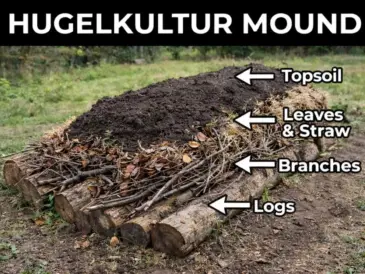
12. Create Hügel-Style Raised Beds
Wood chips can be layered into hugelkultur-style beds to create water-holding cores.
They:
- Store moisture
- Feed microbes
- Slowly release nutrients
- Improve long-term soil structure
Use as a middle layer – not the top planting layer.
Fresh vs Aged Wood Chips – What Matters
Fresh chips:
- Strong fungal activity
- Higher nitrogen draw at surface
- Best for mulch and paths
Aged chips:
- Partially decomposed
- Lower nitrogen tie-up
- Better for soil building
Both are useful – just used differently.
Nitrogen Tie-Up – The Truth
Wood chips only compete for nitrogen where they contact soil microbes – mainly at the surface layer.
They do not steal nitrogen from deep plant roots when used as surface mulch. Problems happen when chips are mixed into soil – not when laid on top.
Best Chip Types for Garden Use
Good choices:
- Mixed hardwood chips
- Tree service chips
- Ramial chips (small branch chips)
Use cautiously:
- Black walnut chips (allelopathic)
- Pressure-treated wood waste
- Painted wood chips
How Deep Should Wood Chips Be Applied?
Typical depth:
- Mulch zones: 2–4 inches
- Paths: 4–6 inches
- Slopes: 5–6 inches
Too thin = weeds return
Too thick = oxygen restriction
Common Wood Chip Mistakes
- Mixing into vegetable soil
- Piling against trunks
- Using dyed landscaping chips
- Too thin application
- Using contaminated wood waste
- Expecting instant soil change
Wood chips are far more than decorative mulch. Used correctly, they are one of the most powerful soil-building and plant-protecting materials available to gardeners.
They suppress weeds, conserve moisture, support beneficial fungi, protect roots, and gradually build richer soil from the top down.