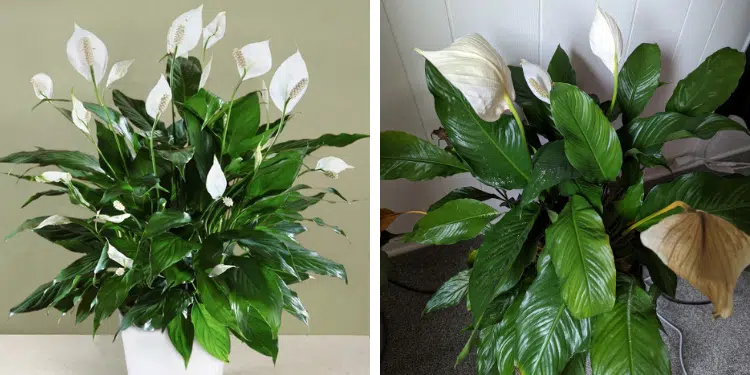
The peace lily (Spathiphyllum spp.) is one of the most beloved houseplants in the world – and for good reason.
With its elegant deep green leaves and graceful white blooms (called spathes), it brings a touch of natural serenity to any indoor space.
Even better, peace lilies are famously easy to grow, often recommended for beginners because of their resilience and low-maintenance nature.
Understanding Peace Lily Blooming
Before we dive into the mistakes, it’s helpful to understand how peace lily blooms actually work.
Unlike many flowering plants, peace lilies don’t produce flowers year-round. Their signature white “flowers” are actually modified leaves called spathes that surround a spike-like flower cluster called the spadix.
These appear naturally in spring and sometimes again in fall, but they require certain conditions to form.
In nature, peace lilies grow in the shaded forest floors of Central and South America. They receive filtered light, high humidity, consistent warmth, and nutrient-rich soil.
If any of these conditions are missing, the plant prioritizes survival over reproduction – meaning no blooms.
Now, let’s explore the most common mistakes that prevent peace lilies from flowering and how to correct them.
1. Not Enough Light
Why It Matters
The number one reason peace lilies fail to bloom is insufficient light. While they are shade-tolerant, they do need a certain amount of light energy to fuel flower production.
If your peace lily is tucked away in a dark corner or far from a window, it might survive – but it won’t thrive. Without enough light, the plant doesn’t have the energy to produce blooms and instead focuses on leaf growth.
How to Fix It
- Place your peace lily near a bright, indirect light source. East- or north-facing windows are ideal.
- Avoid harsh direct sun, which can scorch leaves. Instead, aim for 6–8 hours of bright, filtered light per day.
- If your space is naturally dark, supplement with a full-spectrum grow light for 8–12 hours daily.
- Rotate the plant every 2–3 weeks to ensure all sides receive light evenly.
Pro Tip: If your peace lily’s leaves are dark green and growing well but there are no blooms, it’s a sign it’s getting too little light. If leaves are pale or scorched, it’s too much.
2. Overwatering (or Underwatering)
Why It Matters
Peace lilies are tropical plants that like consistently moist soil – but there’s a fine line between moist and soggy.
Overwatering is one of the most common mistakes, leading to root rot, which weakens the plant and halts blooming. On the other hand, underwatering stresses the plant and forces it into survival mode.
Signs of Overwatering
- Yellowing leaves
- Mushy stems or roots
- Persistent wet soil or foul odor
Signs of Underwatering
- Wilting leaves that recover after watering
- Dry, compact soil pulling away from the pot’s sides
How to Fix It
- Water your peace lily only when the top 1–2 inches of soil feel dry.
- Use room-temperature, filtered water and water thoroughly until it drains from the bottom.
- Empty the saucer after watering to prevent root rot.
- If you’ve been overwatering, repot into fresh, well-draining soil and trim away any rotted roots.
Pro Tip: Peace lilies often “droop” slightly when they need water – this natural signal makes them easier to care for than many houseplants.
3. Incorrect Fertilizing Routine
Why It Matters
Fertilizer fuels bloom production. Without enough nutrients – especially phosphorus – your peace lily won’t have the resources to form flowers.
Conversely, over-fertilizing can burn roots and encourage excessive leaf growth instead of blooms.
How to Fix It
- Feed your peace lily every 4–6 weeks during the growing season (spring and summer) with a balanced, water-soluble fertilizer (10-10-10 or 20-20-20).
- Switch to a bloom-boosting fertilizer with higher phosphorus (like 10-30-10) in early spring to stimulate flower production.
- Flush the soil with plain water every 2–3 months to prevent salt buildup.
- Stop fertilizing entirely during fall and winter, when growth slows.
Pro Tip: If your peace lily has lush foliage but no blooms, it may be getting too much nitrogen – the “leaf growth” nutrient. Reducing nitrogen and increasing phosphorus often triggers blooming.
4. Pot Is Too Large (or Too Small)
Why It Matters
Peace lilies like to be slightly root-bound. If the pot is too large, the plant diverts energy into root growth instead of producing flowers.
But if it’s too small, roots can become cramped, and the plant will struggle to absorb water and nutrients.
How to Fix It
- Check if your plant is root-bound by gently removing it from the pot. If roots circle the edges or protrude from the drainage holes, it’s time to repot.
- Choose a pot 1–2 inches larger in diameter than the current one.
- Ensure the pot has drainage holes and use a well-draining potting mix (a mix of peat, perlite, and compost works well).
Pro Tip: Peace lilies usually bloom best when slightly snug in their pots – repotting too often can delay blooming for months.
5. Low Humidity
Why It Matters
Peace lilies are tropical plants native to rainforests – which means they love high humidity. Dry indoor air, especially in fall and winter, can cause stress and prevent blooming.
How to Fix It
- Maintain 40–60% humidity around the plant.
- Mist the leaves lightly 2–3 times a week (avoid misting flowers).
- Place the pot on a pebble tray with water or use a humidifier nearby.
- Group peace lilies with other plants to create a microclimate.
Pro Tip: Brown leaf tips or edges often indicate low humidity – a common reason peace lilies fail to bloom indoors.
6. Temperature Fluctuations
Why It Matters
Peace lilies thrive in warm, stable environments. Sudden temperature changes, drafts, or exposure to cold can shock the plant and halt blooming.
How to Fix It
- Keep your peace lily in a room between 65–80°F (18–27°C).
- Avoid placing it near doors, drafty windows, or heating/cooling vents.
- If moving the plant outdoors in summer, bring it back indoors before temperatures drop below 60°F (15°C).
Pro Tip: Even short-term exposure to cold (below 50°F / 10°C) can delay blooming for months.
7. Pruning Neglect
Why It Matters
Dead flowers and old leaves consume the plant’s resources. If you don’t remove them, the peace lily will continue trying to sustain non-productive tissue instead of channeling energy into new blooms.
How to Fix It
- Trim spent blooms at the base of the stem using sterilized scissors.
- Remove yellow, brown, or damaged leaves regularly.
- Wipe dust off leaves to improve photosynthesis.
Pro Tip: Regular pruning not only improves blooming but also enhances the plant’s overall health and appearance.
8. Skipping the Dormancy Period
Why It Matters
Peace lilies need a rest period after their active growing season to reset and prepare for another round of blooms. If you treat them the same way year-round, they may not get the signal to flower again.
How to Fix It
- Allow the plant a rest period from late fall to early spring.
- Reduce watering slightly and stop fertilizing during this time.
- Keep the plant in a bright location but avoid excessive warmth or light.
- Resume normal care in spring to trigger blooming.
Pro Tip: Mimicking the plant’s natural seasonal rhythm encourages more consistent and abundant blooms.
9. Pests and Diseases
Why It Matters
Even a mild pest infestation or fungal issue can stress your peace lily and prevent it from blooming. Common pests include spider mites, mealybugs, and aphids, while root rot is the most frequent disease caused by overwatering.
How to Fix It
- Inspect the leaves weekly for signs of pests (tiny webs, sticky residue, white cottony spots).
- Wipe pests off with a damp cloth and treat with neem oil or insecticidal soap.
- For fungal problems, repot the plant in fresh soil and improve drainage.
- Ensure good air circulation to prevent fungal growth.
Pro Tip: Healthy plants resist pests better. Regular inspections and proper care are the best preventive measures.
10. Age and Natural Blooming Cycle
Why It Matters
Young peace lilies typically won’t bloom until they’re at least 12–18 months old. Even mature plants have natural blooming cycles, usually producing flowers twice a year – in spring and sometimes again in fall.
How to Fix It
- Be patient with young plants. Focus on healthy foliage growth until they mature.
- Encourage blooming by providing ideal conditions starting in late winter – more light, regular watering, and phosphorus-rich fertilizer.
- If a mature plant hasn’t bloomed in over a year, evaluate all care factors (especially light and fertilization).
Pro Tip: Once a peace lily starts blooming, it often continues to do so regularly if conditions remain stable.
How to Encourage Blooming: A Step-by-Step Checklist
Here’s a quick action plan you can follow to bring your peace lily back into bloom:
- Light: Move to a bright, indirect light location (east or north window).
- Water: Water only when the top 1–2 inches of soil are dry. Avoid soggy soil.
- Fertilizer: Use a phosphorus-rich fertilizer (10-30-10) during the growing season.
- Humidity: Maintain 40–60% humidity with misting, trays, or a humidifier.
- Temperature: Keep between 65–80°F (18–27°C) and avoid drafts.
- Pruning: Remove dead blooms and yellow leaves promptly.
- Rest: Provide a rest period in fall and winter by reducing water and fertilizer.
- Check Pests: Inspect regularly and treat promptly.
- Repot: Use a slightly larger pot if root-bound or refresh soil if compacted.
- Patience: Remember that age and natural cycles also play a role.
Bonus Tips: Advanced Tricks to Trigger Flowering
If you’ve tried everything and still don’t see blooms, consider these expert tips:
- Mimic tropical conditions: Keep humidity near 60% and use a grow light for 12 hours daily in late winter.
- Provide a temperature drop: A slight temperature difference (about 5–7°F) between day and night can signal the plant to flower.
- Use kelp or seaweed extract: These natural fertilizers contain growth hormones that sometimes encourage blooming.
A peace lily that refuses to bloom isn’t a lost cause – it’s a plant trying to tell you that something in its environment isn’t quite right.
The key is understanding that flowering is a sign of optimal health, not just survival