Eggshells are one of the most overlooked natural resources in the home. For many people, they’re nothing more than food scraps destined for the trash.
But in reality, these fragile shells are packed with calcium and trace minerals that plants crave.
When prepared correctly, they can improve soil health, strengthen plant structure, deter pests, and even serve as eco-friendly seed starters.
The secret? Baking the eggshells before using them. This simple step transforms them from kitchen waste into a powerful gardening tool.
Why You Should Bake Eggshells Before Using Them
Many gardeners toss raw eggshells straight into the compost pile or sprinkle them directly onto soil. While that works to some extent, baking enhances their effectiveness in four important ways:
1. Sterilization
Raw eggshells may carry bacteria like Salmonella or remnants of egg white and yolk. Baking at 250°F (120°C) for 15–20 minutes kills pathogens, ensuring shells are safe for garden use.
2. Easier to Crush
Fresh shells are tough and leathery inside, making them difficult to grind. Baking dries them out, leaving them brittle and crumbly. This makes it simple to crush them into fine powder or coarse chips, depending on the use.
3. Faster Nutrient Release
Plants benefit from calcium in eggshells, but whole shells decompose very slowly. Crushing and baking increases their surface area, helping the calcium carbonate and other minerals release into the soil more quickly.
4. Odor-Free
Baking removes any lingering egg smell, making the shells pleasant to handle and easy to store in bulk.
How to Bake Eggshells
Preparing eggshells for garden use takes just a few minutes:
- Collect and Clean – Rinse shells under warm water to remove egg residue. Let them air-dry.
- Preheat Oven – Set to 250°F (120°C).
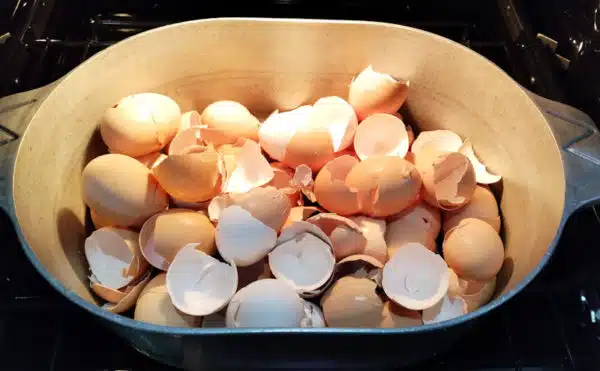
- Bake – Spread shells in a single layer on a baking sheet. Bake for 15–20 minutes until dry and brittle.
- Cool and Crush – Once cooled, crush shells using a mortar and pestle, rolling pin, blender, or food processor.
- Store – Keep crushed shells in an airtight jar or container until needed.
10 Smart Ways to Use Baked Eggshells in the Garden
1. Natural Fertilizer Rich in Calcium
Eggshells are about 95% calcium carbonate – the same compound found in agricultural lime.
Calcium is critical for strong cell walls, healthy root development, and preventing problems like blossom-end rot in tomatoes, peppers, and eggplants.
How to use: Sprinkle powdered shells around plant bases, work them into the topsoil, or mix them into compost before planting.
2. Prevent Blossom-End Rot in Tomatoes and Peppers
One of the most frustrating problems for gardeners is seeing sunken, dark spots on the bottom of otherwise healthy tomatoes or peppers.
This condition, called blossom-end rot, results from a calcium deficiency.
How to use: Mix crushed shells directly into the planting hole before transplanting seedlings. Continue adding powdered shells every few weeks around the base during the growing season.
3. Deter Slugs, Snails, and Cutworms
Sharp, jagged edges of coarsely crushed shells form a natural barrier against soft-bodied pests.
As slugs or snails attempt to crawl across, the edges irritate their bodies and discourage them from reaching plants.
How to use: Scatter a ring of shells around the base of vulnerable plants like lettuce, strawberries, and hostas. Reapply after rain or watering.
4. Balance Soil Acidity
Eggshells can gently reduce soil acidity over time, making them useful for neutralizing overly acidic soil. Unlike lime, they release calcium slowly, providing a steady adjustment.
How to use: Work powdered shells into soil before planting crops that prefer neutral pH, such as beans, peas, or brassicas.
5. Add Minerals to Compost
Eggshells enrich compost with calcium, magnesium, and trace minerals, boosting the overall nutrient content of finished compost. They also help maintain a balanced carbon-to-nitrogen ratio.
How to use: Add crushed shells regularly to your compost pile or bin. For faster breakdown, always crush finely before tossing them in.
6. Improve Soil Structure in Heavy Soils
Clay or compacted soils often suffer from poor drainage and limited aeration. Adding eggshells helps create air pockets and improves texture.
How to use: Mix crushed shells into garden beds or raised beds during soil preparation in spring.
7. Seedling Starter Pots
Eggshell halves make excellent biodegradable seed starters. They naturally provide calcium to young seedlings and can be transplanted directly into soil, reducing transplant shock.
How to use: Fill clean, baked shells with seed-starting mix, plant one seed per shell, and set them in a tray. When seedlings are ready, gently crack the shell bottom and plant it whole.
8. Boost Houseplants and Container Gardens
Potted plants often suffer from nutrient depletion because their soil isn’t replenished as easily as garden beds. Eggshells can provide a long-lasting calcium boost.
How to use: Sprinkle crushed shells over the soil surface or mix powdered shells into potting soil during repotting.
9. Feed Backyard Birds
Birds, especially laying hens and wild songbirds, need extra calcium for strong eggshells. Crushed, baked shells are an excellent supplement.
How to use: Sterilize shells in the oven, crush finely, and scatter them in bird feeders or mix with birdseed.
10. Make “Eggshell Tea” for Plants
If you prefer liquid fertilizer, you can make a simple calcium-rich plant tea.
How to use: Boil a gallon of water with a handful of crushed shells. Let steep overnight, strain, and water plants with the mineral-infused solution.
Bonus Uses Beyond the Garden
- Natural Household Cleaner – Mix crushed shells with vinegar or soap to scrub pots and pans.
- Calcium Supplement for Humans – Finely ground shells (powdered like flour) can be added to smoothies or baked goods as a natural calcium source. Always ensure shells are sterilized and prepared safely.
- Crafts and Décor – Use painted shells for mosaic art, garden decorations, or seed markers.
What many consider kitchen waste can actually become a free, sustainable, and powerful gardening resource.
By baking eggshells, you sterilize them, make them easier to crush, and ensure nutrients are released quickly into the soil.
Whether you use them to enrich compost, fertilize plants, deter pests, start seedlings, or even feed birds, baked eggshells are a gardener’s best-kept secret.