Tomatoes are among the most beloved and widely grown vegetables in home gardens. Their juicy texture, rich flavor, and versatility in cooking make them a top choice for gardeners of all experience levels.
However, growing healthy, productive tomato plants involves more than just sunshine and soil – it also requires smart planning, especially when it comes to what you grow nearby.
Companion planting is a time-tested gardening technique that involves growing different plants together for mutual benefit.
When it comes to tomatoes, the right companions can repel harmful pests, improve flavor, attract pollinators, enhance soil health, and significantly increase yield.
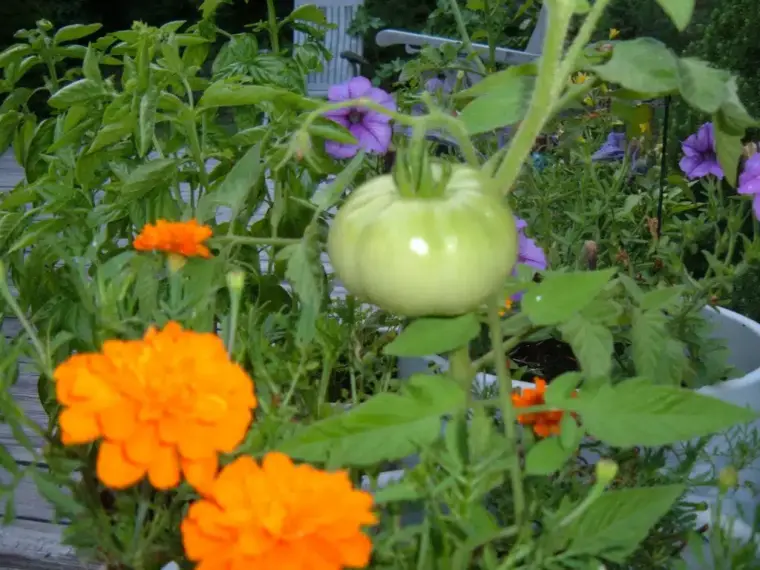
One of the top-performing companions for tomatoes is the humble marigold. But marigolds aren’t the only helpful allies.
Read on to discover why marigolds are so effective, and explore 20 more companion plants that can take your tomato crop to the next level.
Why You Should Grow Marigolds with Tomatoes
1. Natural Pest Control
Marigolds emit a strong fragrance that repels common tomato pests like aphids, thrips, whiteflies, and especially root-knot nematodes, which damage plant roots.
How it Helps: Marigolds create a living pest barrier, reducing the need for chemical sprays while keeping your tomato plants healthy and organic.
2. Improves Soil Health
French marigolds (Tagetes patula) secrete bioactive compounds that kill soil-dwelling nematodes and pathogens.
How it Helps: These natural soil-cleansing properties improve the root environment for tomatoes and help protect future crops planted in the same space.
3. Attracts Beneficial Insects
Marigolds lure in pollinators like bees and butterflies, as well as beneficial predators such as ladybugs and lacewings that feed on aphids and other soft-bodied pests.
How it Helps: Enhances pollination and pest control, which boosts tomato flowering, fruit set, and overall productivity.
4. Low Maintenance & Long-Lasting
Marigolds are drought-resistant, easy to grow, and bloom continuously throughout the season.
How it Helps: They offer season-long protection and color without demanding much care.
20 More Powerful Companion Plants for Tomatoes
1. Basil
A classic pairing, basil not only improves the flavor of tomatoes but also deters harmful insects like mosquitoes, whiteflies, and aphids. Its pungent aroma masks tomato scent from pests.
How to Plant: Interplant basil with tomatoes in full sun, spacing them to allow airflow. Regular pinching promotes bushy growth.
2. Chives
Chives produce sulfur compounds that repel aphids and deter Japanese beetles. Their shallow roots also minimize competition with tomatoes.
How to Plant: Place near tomato bases or interplant in rows. Cut regularly to stimulate new shoots.
3. Parsley
This herb attracts parasitic wasps, hoverflies, and tachinid flies – natural predators of tomato hornworms and aphids.
How to Plant: Plant parsley as a border plant or scatter among tomato rows to maximize insect attraction.
4. Mint
Highly aromatic, mint wards off ants, aphids, flea beetles, and cabbage moths. However, it spreads aggressively.
How to Plant: Keep mint contained in pots and place them near tomato beds. Cut stems often to control growth.
5. Cilantro
Cilantro flowers attract beneficial insects like lacewings, parasitic wasps, and ladybugs that help control tomato pests.
How to Plant: Allow some plants to bolt and flower. Position them near tomato plants for best results.
6. Garlic
Garlic is a natural pest repellent, deterring red spider mites, aphids, and other insects that damage tomatoes.
How to Plant: Insert garlic cloves into the soil between tomato plants or as perimeter rows.
7. Onions
Like garlic, onions emit sulfur compounds that repel aphids and beetles. They are also compact and easy to plant alongside tomatoes.
How to Plant: Grow onions in rows between or around tomato plants to maximize space and pest protection.
8. Thyme
This low-growing herb acts as a living mulch and repels cabbage worms and whiteflies. It’s also attractive to pollinators.
How to Plant: Use thyme as an edging plant around tomato beds or containers.
9. Dill
Dill attracts predatory insects like hoverflies, wasps, and spiders. However, when fully mature, it may compete with tomatoes for nutrients.
How to Plant: Grow dill a few feet away from tomatoes or in a nearby herb bed.
10. Borage
Borage is a magnet for bees and helps deter tomato hornworms. It’s believed to improve tomato growth and resilience.
How to Plant: Sow borage among tomatoes to attract pollinators and keep pests away. It self-seeds readily.
11. Calendula (Pot Marigold)
Calendula’s sticky secretions trap aphids and whiteflies while attracting pollinators and hoverflies.
How to Plant: Interplant with tomatoes or use as a colorful border plant.
12. Sunflowers
Sunflowers act as a trap crop, luring aphids and other sap-sucking insects away from tomatoes. They also attract pollinators.
How to Plant: Grow sunflowers a few feet away to avoid excessive shading.
13. Zinnias
Zinnias attract ladybugs, parasitic wasps, and butterflies—excellent allies in pest control and pollination.
How to Plant: Scatter throughout your tomato garden or place along the perimeter.
14. Nasturtiums
Nasturtiums serve as trap crops, attracting aphids, whiteflies, and beetles away from tomatoes. They also repel squash bugs.
How to Plant: Let nasturtiums sprawl at the base of tomato plants for ground-level coverage and protection.
15. Petunias
These flowering plants are natural repellents of aphids, hornworms, and leafhoppers. Their roots also exude chemicals that deter pests.
How to Plant: Use as border plants or tuck between tomato plants for beauty and utility.
16. Carrots
Carrots loosen compacted soil, making it easier for tomato roots to expand. They also fill in small spaces between plants.
How to Plant: Sow seeds directly around tomatoes and thin seedlings for airflow.
17. Lettuce
Lettuce provides ground cover, helping to retain soil moisture and suppress weeds around tomato plants.
How to Plant: Plant in between tomato rows to take advantage of the partial shade.
18. Radishes
Radishes act as decoys, luring flea beetles and other pests away from tomatoes. They grow quickly and are easy to integrate.
How to Plant: Sow radishes at the edges of beds or interspersed between tomatoes.
19. Bush Beans
Bush beans enrich the soil by fixing nitrogen and improve nearby tomato growth. They also make efficient use of garden space.
How to Plant: Plant nearby, leaving enough room to prevent crowding.
20. Cucumbers
Cucumbers share similar needs and grow well with tomatoes. Their spreading vines can shade the soil and help with moisture retention.
How to Plant: Train cucumbers to grow along the ground or up trellises alongside tomatoes.
Plants to Avoid Near Tomatoes
Some plants negatively affect tomatoes by competing for resources or attracting the same diseases and pests:
- Corn: Attracts tomato fruitworms and shares similar pests.
- Fennel: Secretes compounds that inhibit tomato growth.
- Potatoes: Related to tomatoes and prone to the same blights and pests.
- Cabbage family (Broccoli, Kale, Cabbage): Competes heavily for nutrients and water.
Healthy tomato plants flourish when grown alongside the right companions.
From repelling insects to improving soil, companion planting is a powerful, natural strategy that boosts yield and supports overall garden ecology