Gardeners have always paid close attention to small, time-tested tricks that protect plants naturally.
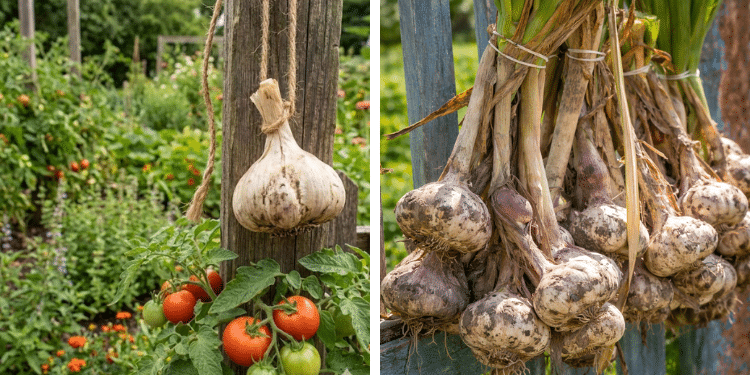
One method that’s gaining renewed attention is hanging garlic bulbs near plants – on stakes, trellises, fences, or branches.
While it may look unusual at first, this practice has deep roots in traditional gardening and is backed by solid biological reasoning.
Garlic is one of the most powerful natural protectors in the garden. Its strong sulfur compounds act as deterrents to pests, fungi, and even some animals.
By hanging garlic bulbs near plants instead of burying or spraying them, gardeners harness garlic’s benefits continuously without disturbing the soil or harming beneficial insects.
Why Garlic Is Such a Powerful Garden Ally
Garlic contains allicin and other sulfur-based compounds that give it its unmistakable smell. These compounds evolved as a natural defense mechanism against insects, fungi, and microbial threats.
To many garden pests, garlic’s scent is overwhelming and disorienting. It interferes with their ability to locate plants, follow scent trails, and establish feeding zones.
Unlike chemical pesticides, garlic does not kill indiscriminately – it simply makes the environment unpleasant for pests.
Why Hanging Garlic Works Better Than Spraying
Many gardeners are familiar with garlic sprays, but hanging whole bulbs offers several unique advantages.
When garlic bulbs are hung:
- the scent is released slowly and continuously
- protection lasts weeks instead of hours
- rain does not wash it away
- no reapplication is needed
- soil biology remains undisturbed
This passive method creates a long-lasting protective barrier that works quietly in the background.
Pests That Garlic Helps Repel
Hanging garlic bulbs near plants helps discourage a wide range of common garden pests, including:
- aphids
- whiteflies
- spider mites
- cabbage moths
- beetles
- ants (especially those farming aphids)
- slugs and snails (as a deterrent)
Garlic’s scent masks plant odors, making it harder for pests to find their target crops.
Helps Protect Plants Without Harming Pollinators
One of the biggest advantages of using garlic instead of sprays is pollinator safety. Bees, butterflies, and beneficial insects are not significantly affected by hanging garlic because it does not coat flowers or leaves.
This makes garlic ideal for:
- flowering vegetables
- fruit trees
- pollinator gardens
- organic gardens
It protects plants without disrupting the ecosystem.
Why Gardeners Use Whole Bulbs Instead of Cloves
Whole garlic bulbs dry slowly and release scent over time. Individual cloves dry out too quickly and lose effectiveness faster.
As the bulb dries, it continues to emit sulfur compounds, acting like a natural slow-release repellent. Many gardeners replace bulbs every 2–4 weeks during peak pest season.
Helps Reduce Fungal Pressure in Humid Gardens
Garlic has natural antifungal properties. While hanging garlic does not cure plant diseases, it may help reduce fungal pressure in areas prone to mildew, leaf spot, and mold by discouraging spore settlement.
This is especially helpful in:
- greenhouses
- hoop houses
- densely planted beds
- humid climates
Garlic helps create a less favorable environment for fungal growth.
Deters Small Animals by Scent
Rabbits, squirrels, and rodents rely heavily on smell. Hanging garlic bulbs near garden beds or around vulnerable plants can discourage animals from lingering or digging.
While not a guaranteed solution, many gardeners find garlic effective as part of a broader animal-deterrent strategy.
Where to Hang Garlic for Best Results
Garlic bulbs are typically hung:
- on garden stakes near plant clusters
- on trellises or tomato cages
- from low branches near beds
- along fences or raised bed corners
Position bulbs at plant height so the scent spreads evenly across the growing area.
Best Plants to Protect With Hanging Garlic
This method works particularly well for:
- tomatoes
- peppers
- cabbage and brassicas
- lettuce and leafy greens
- roses
- herbs
- strawberries
Plants that attract soft-bodied insects benefit most.
Fresh vs. Dried Garlic Bulbs
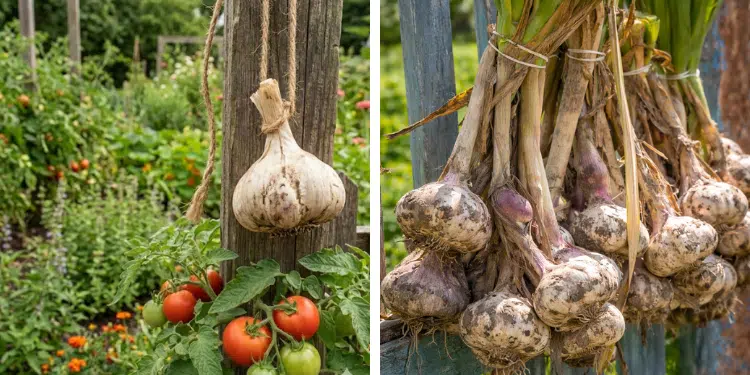
Both fresh and cured garlic bulbs can be used, but dried bulbs are preferred because they:
- last longer
- mold less easily
- release scent steadily
- require less maintenance
Fresh bulbs should be monitored closely in humid conditions.
How Long Garlic Bulbs Remain Effective
Most gardeners replace hanging garlic every few weeks. If the bulb has completely dried and no longer emits scent, its effectiveness drops.
Crushing the bulb slightly can refresh the aroma temporarily, but replacement works best.
Why This Old Practice Is Making a Comeback
As more gardeners move away from chemical pesticides, they are rediscovering low-impact, traditional methods that protect plants while preserving soil health and biodiversity.
Hanging garlic bulbs:
- costs almost nothing
- uses a common kitchen ingredient
- aligns with organic principles
- requires no spraying or mixing
- works quietly and continuously
It’s a perfect example of old wisdom fitting modern gardening needs.
Hanging garlic bulbs near plants may look simple, but it’s a powerful, time-tested strategy rooted in natural plant chemistry.
By releasing protective compounds slowly into the air, garlic helps repel pests, reduce disease pressure, and protect gardens without harming beneficial life.