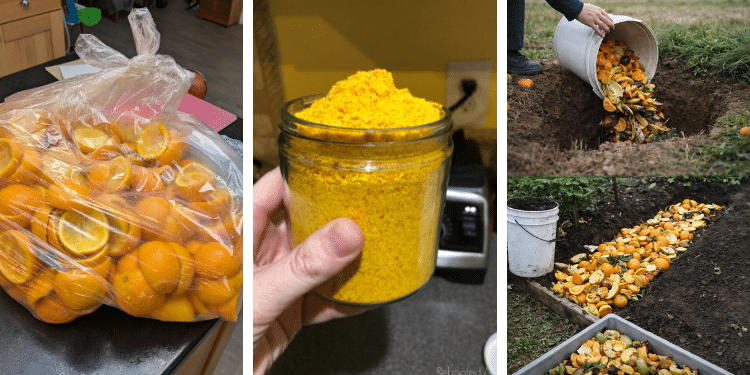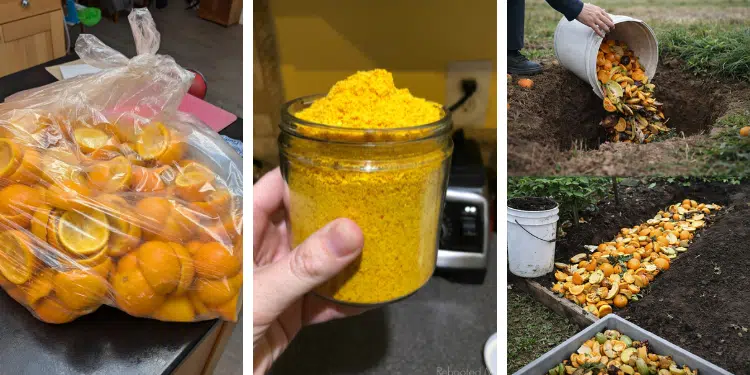
Citrus peels are one of the most underused resources in the kitchen and garden.
If you already understand that they can be used for cleaning, compost, and flavor – the next step is learning how to use them more effectively, how to process them for longer storage, and how to match each type of peel to the best purpose.
Why Citrus Peel Oils Are So Effective (The Chemistry Advantage)
Citrus peels contain very high concentrations of volatile oils – especially d-limonene – which gives them their grease-cutting and odor-neutralizing power.
These oils act as natural solvents. That means they dissolve fats, sticky residues, and certain grime types – which explains why commercial degreasers often use citrus derivatives.
But here’s what most people don’t know: The oil concentration is highest in the colored outer peel layer, not the white inner pith. That’s why zest is powerful and why thin peeling produces better results for cleaning and flavor uses.
Thick pith-heavy peels are better for compost and simmer pots – thin zest-heavy peels are best for extracts and cleaners.
A Natural Cleaner You Can Make at Home
One of the best uses for citrus peels is homemade cleaner. When soaked in vinegar, the acids and oils combine to create a strong-smelling but effective multi-surface solution that cuts grease and removes residue.
To make it, place citrus peels in a jar and cover them fully with white vinegar. Let the mixture steep for two to three weeks, then strain and dilute with equal parts water.
The result works well on sinks, tile, stovetops, and many kitchen surfaces. It removes grease and leaves a fresh scent without synthetic fragrances.
This cleaner should not be used on natural stone like marble or granite, since acids can damage those surfaces.
Fresh peels can also be rubbed directly on greasy spots before wiping clean. The oils help loosen sticky residue and food film.
Citrus Peels for Odor Control
Citrus peels are excellent at neutralizing odors rather than just masking them. Their oils interact with odor compounds and help reduce unpleasant smells in enclosed spaces.
Peels can be placed in trash cans, near garbage bins, or inside refrigerators to freshen the air. They also work well in garbage disposals – running a few small pieces through with water can help reduce odor buildup.
Another simple method is a simmer pot. Adding citrus peels to a small pot of water and simmering gently on the stove releases natural fragrance into the air.
Many people add cinnamon or cloves for a warmer scent. This is one of the safest and most natural ways to freshen indoor air.
Dried citrus peels can also be placed in cloth sachets for closets and drawers.
A Gentle Insect Deterrent
The strong aroma of citrus oils discourages some insects. While citrus peels won’t eliminate pest problems, they can help reduce insect interest in certain areas.
Placing peels near entry points, window sills, or pantry corners may help discourage ants and some flies. Outdoors, scattered peels near seating areas can slightly reduce mosquito presence nearby, though the effect is mild and temporary.
In garden beds, citrus peels are sometimes used to discourage cats from digging, since many cats avoid the smell. The effect fades after rain and needs refreshing.
Citrus Peels in Compost and Soil
Citrus peels are fully compostable and can add organic matter to compost piles. However, they should be added in moderation. Their acidity and strong oils can temporarily slow microbial activity if added in very large amounts.
Chopping peels into small pieces helps them break down faster. Mixing them with leaves, cardboard, and other compost materials keeps the pile balanced.
Some gardeners dry and crush citrus peels before adding them to compost or soil mixes. In small quantities, this can contribute trace nutrients and organic matter.
Valuable in the Kitchen
Citrus peels are a major flavor source in cooking. The zest – the thin colored outer layer – contains concentrated aromatic oils that enhance both sweet and savory dishes.
Fresh zest can be added to baked goods, dressings, sauces, marinades, yogurt, and grain dishes. It delivers strong flavor without added liquid.
Peels can also be dried and ground into powder for spice blends and teas. Dried orange or lemon peel is commonly used in herbal tea mixtures with ginger, cinnamon, or chamomile.
Another popular use is citrus-infused sugar or salt. Mixing zest with sugar or salt and letting it dry creates a fragrant finishing ingredient for desserts or savory dishes.
Traditional Skin and Body Uses
In traditional home care, dried citrus peel powders have been used in simple exfoliating scrubs and masks.
Mixed with sugar or salt and a carrier oil, finely grated peel can be used in body scrubs for fragrance and texture.
Because citrus oils can increase sun sensitivity on skin, any topical use should be followed by avoiding direct sun exposure. Always patch test first to check for irritation.
Fire Starters and Household Uses
Fully dried citrus peels are flammable and burn well, making them useful as natural fire starters for fireplaces and outdoor fires. They ignite easily and release a pleasant aroma while burning.
They can also be used in homemade drawer fresheners, potpourri mixes, and natural fragrance blends.
Storage Tips for Saved Peels
If you plan to reuse citrus peels, storage matters. Fresh peels can be kept in the refrigerator for a few days, but for longer storage they should be dried or frozen.
Air drying, low-temperature oven drying, or using a dehydrator works well. Once fully dry, peels can be stored in airtight containers for months. Zest can also be frozen for later cooking use.
Washing fruit thoroughly before saving peels is important, and using organic citrus reduces pesticide residue risk.
Saving citrus peels is a small habit that creates multiple benefits. It reduces waste, replaces some chemical cleaners, supports composting, expands cooking options, and provides natural fragrance solutions.
Few kitchen scraps offer this many practical uses.