Freezing leftovers is a common practice to prevent food waste and extend the life of our meals. However, not all foods are suitable for the freezer. Some items change texture, flavor, or even nutritional value when frozen and thawed. Understanding which foods to keep out of the freezer can enhance your culinary experience and ensure you enjoy your leftovers as much as the original meal.
In this article, we’ll explore ten foods that don’t fare well in the freezer. From creamy pasta dishes that separate to fried foods that become soggy, we’ll guide you through the reasons why these items should be consumed fresh or stored using alternative methods. Read on to learn how to keep your leftovers tasting great and to avoid any post-freeze disappointments.
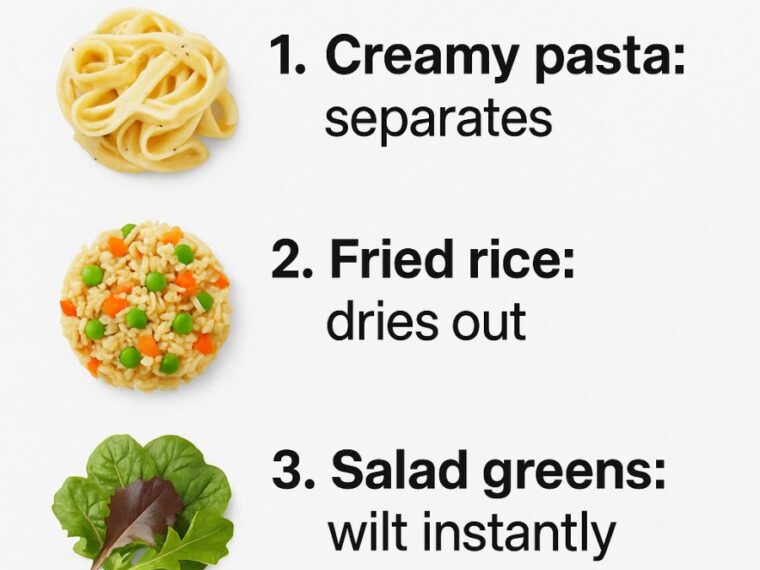
1. Creamy Pasta: Separates
Creamy pasta dishes, such as fettuccine Alfredo or mac and cheese, are loved for their rich, smooth textures. However, freezing these meals can cause the sauce to separate. This is because dairy-based sauces tend to break down when frozen, causing the cream and oil to separate from the pasta.
When you reheat the dish, you may find a pool of oil or a grainy texture instead of the creamy consistency you desire. Instead of freezing, store creamy pasta dishes in the refrigerator and consume within 2-3 days for best results.
2. Fried Rice: Dries Out
Fried rice is a convenient and tasty dish, but it doesn’t freeze well. The rice grains tend to lose moisture and become dry and hard when frozen. This occurs because freezing causes the moisture in the rice to crystallize, and once thawed, the grains can become tough and unpalatable.
To maintain the texture of fried rice, it’s best to keep it in the refrigerator and consume it within a few days. If you must freeze it, consider undercooking the rice slightly before freezing and adding a bit of water or broth when reheating to help restore some moisture.
3. Salad Greens: Wilt Instantly
Salad greens, such as lettuce, spinach, and arugula, are mostly water, which makes them highly susceptible to damage when frozen. Freezing causes the water inside the leaves to form ice crystals, which puncture the cell walls and cause wilting.
Once thawed, salad greens become limp and unappealing, losing their crispness and vibrant color. It’s best to store salad greens in the refrigerator, ideally in a crisper drawer, and consume them within a week to enjoy their freshness.
4. Mashed Potatoes: Get Grainy
Mashed potatoes may seem freezer-friendly, but they often develop a grainy texture upon thawing. This is due to the starches in the potatoes breaking down during the freezing process. When reheated, the once-smooth mash can become watery and lumpy.
If you need to store mashed potatoes, adding a bit of cream or butter before freezing can help maintain their texture. However, for the best quality, it’s advisable to refrigerate them and eat within a couple of days.
5. Fresh Fruit: Loses Texture
Freezing fresh fruit, especially those with high water content like strawberries, melons, and citrus, can result in a mushy texture once thawed. The water inside the fruit expands as it freezes, causing cell walls to burst and the fruit to become limp.
While frozen fruit can still be useful for smoothies or baking, it won’t have the same firm texture as fresh. For eating raw, it’s best to enjoy fruit fresh from the fridge or to freeze only those varieties that hold up better, such as berries or bananas.
6. Cheese: Alters Flavor and Consistency
While hard cheeses like cheddar can sometimes withstand freezing, soft cheeses like brie, camembert, and ricotta do not. The high moisture content in these cheeses causes them to become crumbly and lose their creamy texture when thawed.
Moreover, freezing can alter the flavor, making it less appealing. Instead, store cheese in the refrigerator, wrapped in wax paper inside an airtight container, and consume it within its best-by date to enjoy its intended taste and texture.
7. Eggs: Turn Rubbery
Freezing whole eggs or egg-based dishes like quiche can result in a rubbery texture. The proteins in eggs coagulate when frozen, leading to an unappealing, tough consistency once thawed and cooked.
If you have leftover eggs or egg dishes, it’s better to refrigerate them and consume within a few days. Alternatively, you can freeze egg whites separately, as they tend to freeze well, and use them for baking or cooking later.
8. Yogurt: Becomes Watery
Yogurt is another dairy product that doesn’t fare well in the freezer. The water content in yogurt separates from the solids during freezing, leading to a watery consistency when thawed. You might notice a layer of liquid on top and a grainy texture throughout.
For the best taste and texture, store yogurt in the refrigerator and consume it before the expiration date. If you have excess yogurt, consider using it in smoothies or baking rather than freezing it.
9. Coffee: Loses Flavor
Freezing coffee, whether in bean or ground form, can lead to a loss of flavor. This is because the oils in coffee are sensitive to temperature changes and can become rancid when frozen.
To preserve the rich aroma and taste of coffee, store beans or grounds in an airtight container in a cool, dark place. If you must freeze coffee, do so in small batches and use it promptly after thawing to minimize flavor degradation.
10. Fried Foods: Turn Soggy
Fried foods like french fries and fried chicken lose their crispiness when frozen and thawed. Moisture from the freezing process gets trapped in the breading, leading to a soggy, unappetizing texture when reheated.
To keep fried foods crispy, store them in the refrigerator and reheat in an oven or air fryer, which can help restore some of the original texture. Avoid freezing to maintain the best quality.
11. Cooked Fish: Develops Off-Flavors
Cooked fish, especially oily varieties like salmon or mackerel, can develop off-flavors when frozen. The fats in the fish oxidize during freezing, leading to a loss of freshness and a fishy taste
For optimal taste, consume cooked fish within a day or two of preparation. If you need to store it longer, consider using a vacuum sealer before freezing to minimize oxidation, but be aware that some flavor changes are inevitable.