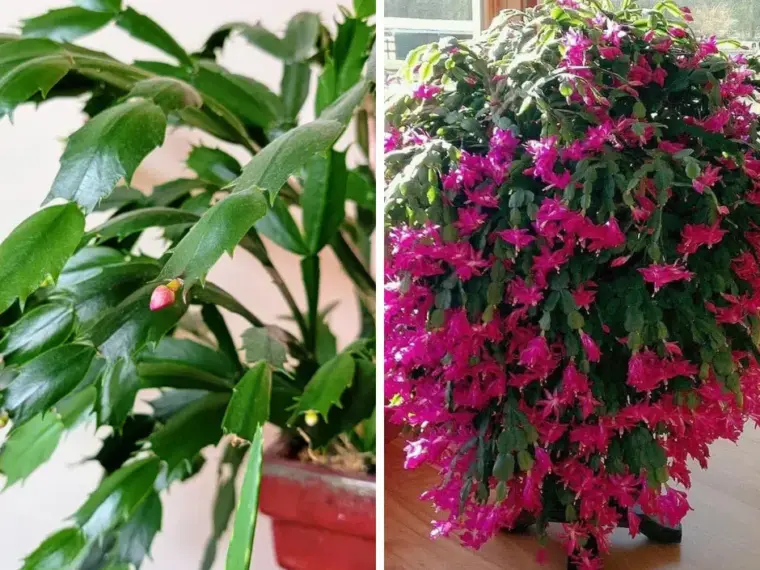
Christmas cactus is one of the most beloved holiday houseplants. Known for its arching stems and vivid, tubular flowers, it brightens homes just when winter days feel the shortest.
But while most people think of it as a plant that blooms only around December, the truth is that with proper care you can enjoy multiple flushes of flowers throughout the year.
1. Understanding the Christmas Cactus
Origin and Habitat
Christmas cactus (Schlumbergera bridgesii) comes from the coastal mountains of Brazil. Unlike desert cacti, these are epiphytic plants that grow in tree branches or rocky crevices in shady, humid forests.
Their native conditions tell us a lot about their needs indoors: filtered light, moderate moisture, cooler nights, and steady humidity.
Relatives: Thanksgiving and Easter Cactus
- Thanksgiving cactus (Schlumbergera truncata): Blooms earlier in November. Segments have pointed edges.
- Christmas cactus (Schlumbergera bridgesii): Rounded segments, bloom closer to December.
- Easter cactus (Rhipsalidopsis gaertneri): Star-shaped flowers in spring.
While they look similar, their bloom triggers are nearly identical. The methods in this article can also encourage Thanksgiving or Easter cacti to bloom multiple times.
2. What Triggers Blooming?
Christmas cactus is a short-day plant. Its flowering is not random; it’s controlled by environmental cues.
Three main factors influence blooming:
- Light duration – It needs 12–14 hours of uninterrupted darkness each night for 6–8 weeks to trigger buds.
- Temperature – Cool nights (55–65°F / 13–18°C) encourage bud set. Warm nights prevent flowering.
- Moisture cycles – A brief reduction in watering during dormancy signals the plant to switch from growth to reproduction.
By controlling these conditions at different times of year, you can “trick” the plant into thinking it’s bloom season again.
3. Secret to Multiple Bloom Cycles
First Cycle: Holiday Bloom (November–January)
- Natural bloom period triggered by shorter days in autumn.
- Keep plant in cool, dark nights until buds form.
- Maintain steady moisture and avoid moving it while buds are setting.
Second Cycle: Late Winter or Spring
- After the holiday flush ends, prune lightly and allow recovery for 4–6 weeks.
- Reduce watering, provide bright but indirect light.
- In February or March, reintroduce short days and cool nights for another round of buds.
Third Cycle: Late Summer or Early Fall
- With careful manipulation, a third flush may occur in late August–September.
- Achieve this by providing 6 weeks of shortened light cycles starting in midsummer.
Important: Not all plants will produce three full flushes, but two blooms per year is very achievable for a healthy, mature cactus.
4. Seasonal Care Calendar
A year-round care routine is the backbone of multiple blooms.
Spring (Post-Holiday Recovery)
- Cut back stems (remove 1–2 segments per branch) to encourage branching.
- Fertilize monthly with balanced fertilizer (20-20-20).
- Resume regular watering when new growth appears.
- Repot if needed, but only every 2–3 years.
Summer
- Move outdoors in partial shade if weather is warm but not scorching.
- Fertilize every 2–4 weeks.
- Pinch tips in June to promote more bloom sites.
- Keep soil evenly moist but not soggy.
Fall (Pre-Bloom)
- In September, bring indoors before night temperatures fall below 50°F.
- Begin short-day treatment: 12–14 hours of darkness per night.
- Reduce watering slightly.
- Do not fertilize.
Winter (Bloom + Rest)
- Once buds appear, return to normal watering.
- Avoid moving or rotating the plant to prevent bud drop.
- After flowering ends, allow a brief rest: cooler temperatures, minimal fertilizer, and slightly reduced watering.
5. Zone-by-Zone Overwintering Tips
Because climates vary widely, your overwintering strategy should match your USDA hardiness zone.
- Zones 9–11: Plants can stay outdoors year-round in shaded patios. Nighttime coolness in fall is enough to trigger blooms naturally.
- Zones 7–8: Plants can summer outside but must come indoors before frost. Provide cool, bright rooms for winter.
- Zones 5–6: Bring indoors by early September. Bud initiation requires a cool indoor room or enclosed porch.
- Zones 3–4: Keep indoors year-round. Use grow lights if natural light is insufficient. Strictly control daylength by covering at night.
6. Propagation for More Blooming Plants
Another “secret” to year-round blooms is having multiple plants at different cycles. Propagating Christmas cactus is easy:
Step-by-Step Propagation
- After blooming, prune stem segments.
- Take cuttings of 2–4 segments.
- Let cuttings dry for 24–48 hours to callus.
- Insert into moist cactus or succulent mix.
- Keep in bright, indirect light.
- Roots form in 4–6 weeks.
Once established, stagger their bloom cycles by manipulating light and temperature separately. With three or more plants on rotation, you can always have one in bloom.
7. Troubleshooting Bloom Problems
Bud Drop
- Cause: Plant moved, overwatered, or exposed to drafts.
- Solution: Keep stable conditions, water evenly, avoid relocations.
No Bud Formation
- Cause: Nights are too warm, too much artificial light, or no dormancy period.
- Solution: Provide 6–8 weeks of cool nights and uninterrupted darkness.
Leggy Growth, Few Flowers
- Cause: Insufficient light in spring and summer.
- Solution: Provide brighter, indirect sunlight during growth phases.
8. Case Studies and Examples
- Grower A (Zone 6): Keeps three Christmas cactus plants. One blooms in December, one is manipulated for March, and the third is forced in late August. With staggered cycles, they enjoy color for 7–8 months of the year.
- Grower B (Zone 9): Leaves plants outdoors in shaded patio year-round. Natural fall and spring cycles produce two blooms without artificial intervention.
- Grower C (Zone 4): Uses grow lights and blackout covers indoors to simulate short days. Achieves two bloom flushes annually despite long, cold winters.
9. Advanced Grower Tips
- Use of Grow Lights: Full-spectrum grow lights maintain strong growth in winter. Timers help enforce 12 hours on/12 off cycles.
- Humidity Trays: Since homes are dry in winter, humidity trays or room humidifiers prevent stress.
- Soil Mix: Christmas cactus thrives in a peat-based, well-draining mix enriched with perlite. Avoid heavy soils.
- Root Bound Advantage: These plants bloom better when slightly root bound. Avoid frequent repotting.
10. Frequently Asked Questions
How long can a Christmas cactus live?
With good care, plants can live 50 years or more. Many are passed down as heirlooms.
Should I fertilize during blooming?
No. Stop feeding once buds appear until blooms finish.
Why does my cactus bloom in spring instead of Christmas?
It may be a Thanksgiving or Easter cactus, or conditions caused an off-season cycle. This is not harmful.
How long does each bloom cycle last?
Flowers typically last 4–6 weeks per flush.
The secret to making your Christmas cactus bloom multiple times a year lies in mimicking its natural rainforest cycle of short days, cool nights, and brief dry periods.
With seasonal adjustments, careful aftercare, and propagation to stagger bloom times, you can transform this holiday classic into a year-round display of vibrant flowers.