Growing herbs at home is not only a rewarding hobby but also a fantastic way to ensure you have fresh ingredients at your fingertips. However, many home gardeners are often disappointed by the lack of flavor in their homegrown herbs compared to store-bought ones. The secret to unlocking the full potential of your herbs lies in understanding their nutritional needs and providing them with the right nutrients to enhance their natural flavors.
When herbs receive the right balance of nutrients, their essential oil production increases, leading to more intense flavors and aromas. This article will guide you through a simple, yet effective, method to supercharge the flavor of your homegrown herbs using a carefully formulated nutrient mixture. Whether you are growing basil, mint, rosemary, or any other culinary herb, this nutrient boost will transform your cooking experience.
1. The Simple Nutrient Mix That Supercharges Herb Flavor
The key to enhancing the flavor of herbs lies in a nutrient mix that specifically targets the production of essential oils. A simple mixture of water, Epsom salt, and a balanced liquid fertilizer can make a significant difference. Start by mixing one tablespoon of Epsom salt with a gallon of water. Epsom salt contains magnesium, which is crucial for chlorophyll production and enhances the intensity of the plant’s color and flavor.
Adding a balanced liquid fertilizer, such as a 10-10-10 formula, will provide the necessary nitrogen, phosphorus, and potassium. Use one teaspoon of liquid fertilizer per gallon of water. This combination ensures that the herbs receive a well-rounded nutrient boost, promoting healthy growth and flavor enhancement.
2. Why Herbs Respond So Dramatically To Targeted Feeding
Herbs have unique metabolic processes that are highly responsive to the availability of certain nutrients. Targeted feeding enhances the production of essential oils, which are responsible for the distinct flavors and aromas. Magnesium in Epsom salt plays a vital role in the enzymatic reactions that synthesize these oils.
Additionally, nitrogen from the fertilizer encourages lush foliage, while phosphorus and potassium support root development and overall plant resilience. This balanced nutrient supply ensures that herbs are not only healthy but also produce the maximum amount of flavorful compounds.
3. The Exact Ingredients You Need For The Flavor-Boosting Mixture
For the flavor-boosting mixture, you will need the following ingredients: one gallon of water, one tablespoon of Epsom salt, and one teaspoon of a balanced liquid fertilizer (10-10-10). Epsom salt is readily available at most garden centers, and liquid fertilizers can be found in stores or online.
Ensure that the fertilizer you choose is suitable for edible plants and does not contain any harmful chemicals. Using these specific ingredients will optimize the nutrient intake of your herbs, leading to a noticeable improvement in flavor.
4. How To Mix The Nutrients In The Right Ratios
To prepare the mixture, start by dissolving one tablespoon of Epsom salt in a gallon of water. Stir well until the Epsom salt is completely dissolved. Next, add one teaspoon of the liquid fertilizer to the solution and mix thoroughly.
It’s important to ensure that the fertilizer is evenly distributed in the water to avoid any nutrient burn on the plants. Use a watering can or a spray bottle to apply the mixture, depending on the size of your herb garden.
5. The Best Way To Pour The Mixture Into Herb Pots
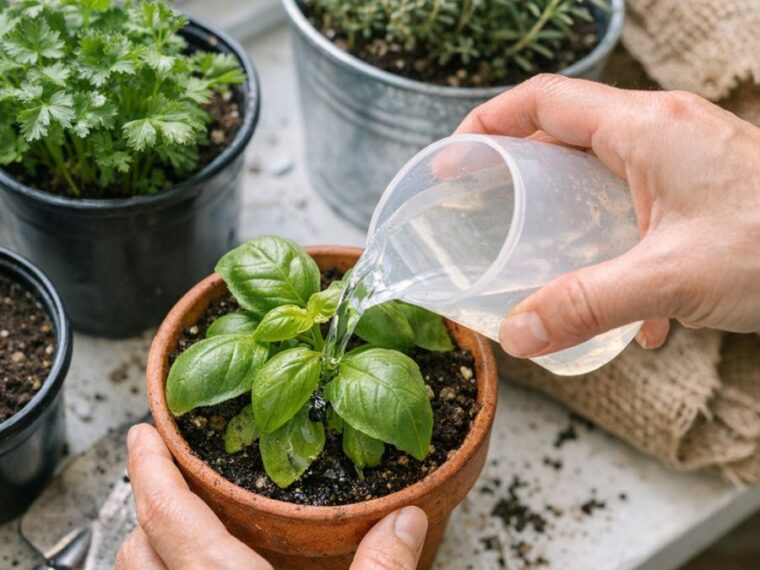
When applying the nutrient mixture to your herb pots, it’s crucial to do so gently to prevent soil disruption. Use a watering can with a fine nozzle or a spray bottle for smaller pots. Slowly pour or spray the mixture at the base of the plants, ensuring that the soil is evenly moist but not waterlogged.
Avoid getting the mixture directly onto the leaves, as this can lead to nutrient burn or fungal issues. Watering in the morning allows any excess moisture on the leaves to evaporate, reducing the risk of disease.
6. Timing Your Feedings For Maximum Aroma And Taste
Timing is crucial when it comes to feeding your herbs. For optimal results, apply the nutrient mixture every two weeks during the active growing season. This regular feeding schedule ensures that the plants have a consistent supply of nutrients to support their growth and flavor production.
In hotter climates or during peak growth periods, you may need to adjust the frequency to once a week. However, be cautious not to over-fertilize, as this can lead to nutrient imbalances and reduce the herb’s flavor quality.
7. How This Mixture Changes Leaf Oils, Aroma, And Intensity
The nutrient mixture specifically targets the production of essential oils in herb leaves, directly impacting their flavor and aroma. Magnesium from Epsom salt is integral to the synthesis of chlorophyll, which in turn enhances the plant’s photosynthetic efficiency.
This increased photosynthesis boosts the plant’s energy levels, allowing it to produce more oils. The result is a noticeable increase in the intensity of the herb’s aroma and a richer, more robust flavor profile, making your culinary creations stand out.
8. Adjusting The Formula For Basil, Mint, Rosemary, And More
Different herbs may require slight adjustments to the nutrient formula for optimal results. For example, basil, which is a heavy feeder, may benefit from a slightly higher concentration of liquid fertilizer. Consider increasing the liquid fertilizer to one and a half teaspoons per gallon for basil.
Mint, on the other hand, is less demanding and may thrive with the standard formula. For woody herbs like rosemary and thyme, which require less nitrogen, consider reducing the fertilizer to half a teaspoon per gallon to prevent excessive leaf growth and maintain their characteristic flavors.
9. Common Mistakes That Can Dull Flavor Instead Of Enhancing It
One common mistake is over-fertilizing, which can lead to lush foliage but dilute the concentration of essential oils, resulting in milder flavors. Always adhere to the recommended ratios and feeding schedule to avoid this issue.
Another mistake is inconsistent watering. Herbs need consistent moisture levels, and allowing the soil to dry out completely between waterings can stress the plants, reducing their ability to produce flavorful compounds. Ensure a regular watering schedule, adjusting as needed based on climate and plant needs.
10. Natural Alternatives If You Don’t Want Store-Bought Fertilizers
For those who prefer natural alternatives, compost tea is an excellent option. To make compost tea, steep a shovelful of compost in a five-gallon bucket of water for 24 hours. Strain the liquid and use it to water your herbs.
Another option is using fish emulsion, which is high in nitrogen and other essential nutrients. Dilute fish emulsion according to the package instructions and apply it as you would the nutrient mixture. Both methods provide a rich source of organic nutrients that can enhance the flavor of your herbs naturally.
11. How To Tell The Mixture Is Working On Your Herbs
You’ll know the nutrient mixture is working when you observe a noticeable increase in the vibrancy and lushness of your herbs. Leaves should appear greener and more robust, and the plants should exhibit healthy growth patterns.
The most telling sign, however, will be in the flavor and aroma of the herbs. After a few weeks of regular feedings, harvest a few leaves and conduct a taste test. You should notice a marked improvement in the intensity and depth of the flavor, confirming the success of the nutrient mixture.