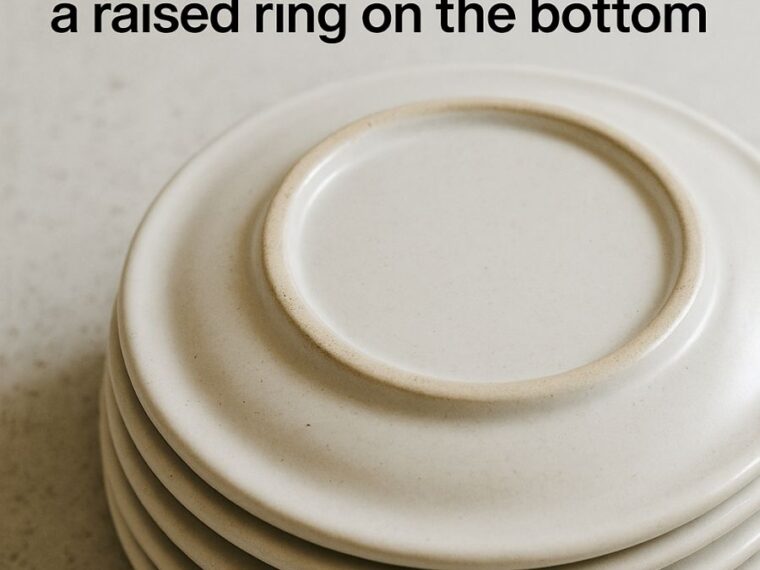
In the world of everyday objects, few items are as ubiquitous and overlooked as the humble dinner plate. Most of us use plates daily, yet few pause to consider the subtle engineering that goes into their design. Among the most intriguing features of a standard plate is the raised ring on its underside. This small but significant detail is so commonplace that it often goes unnoticed, yet it plays a crucial role in the plate’s functionality.
For most people, the raised ring is simply an unremarkable part of the plate’s design. However, this unassuming feature has been carefully crafted to enhance the plate’s utility in several ways. From preventing heat damage to ensuring stability, the raised ring is a testament to the blend of art and science that goes into creating dinnerware. This article will explore the various purposes served by the raised ring on plates and why it remains a staple in dinnerware design.
1. The Hidden Engineering Behind Everyday Dinnerware
The raised ring on the bottom of a plate, often referred to as the ‘foot’ or ‘foot ring,’ is a marvel of simple yet effective engineering. This feature is typically about 1-1.5 centimeters in height and runs along the circumference of the base of the plate, creating a small hollow area when the plate is placed on a flat surface. The foot ring is not merely decorative; its design is rooted in practicality and physics.
By elevating the base of the plate, the foot ring allows for a reduced contact area between the plate and the table surface. This aspect is crucial in distributing weight evenly and providing stability. Moreover, the ring’s height and diameter are meticulously measured to ensure the plate remains stable while also allowing for efficient stacking, an essential feature in both home and commercial settings.
2. How the Raised Ring Prevents Plates From Cracking Under Heat
One of the primary functions of the raised ring is to prevent thermal shock and heat-related damage. When a hot meal is placed on a plate, the temperature of the plate can rise significantly. If the entire base of the plate were in contact with a cooler surface, it could lead to uneven heating and potential cracking.
The foot ring minimizes direct contact with the table, allowing air to circulate beneath the plate. This design helps to dissipate heat more evenly across the plate, reducing the risk of thermal stress cracks. The foot ring thus acts as a buffer zone, maintaining the integrity of the material even when exposed to high temperatures.
3. Keeping Your Table Safe: Why the Ring Lifts Hot Surfaces Off the Table
The raised ring also serves to protect the surface of your table from heat damage. By lifting the bulk of the plate away from the table, the ring ensures that only a small portion of the plate’s bottom is in contact with the table. This limited contact helps prevent heat from transferring directly to the table, which could cause unsightly scorch marks or damage.
This feature is particularly beneficial for wooden or plastic tables that are more susceptible to heat damage. By incorporating the foot ring, manufacturers can offer reassurance that their dinnerware will not only serve its primary purpose but also help maintain the condition of your dining surfaces.
4. Stability Matters: The Ring’s Role in Stopping Plates From Rocking
Have you ever placed a plate on a slightly uneven surface, only to have it wobble precariously? The foot ring helps mitigate this issue by providing a stable base that accommodates minor irregularities in the surface beneath. The circular design of the ring means that even if the plate is placed on an uneven surface, the ring distributes weight evenly to maintain stability.
This stability is crucial in preventing accidents, especially in environments where plates are handled quickly and frequently, such as in busy restaurant kitchens. By ensuring that the plate is less likely to rock, the foot ring helps prevent spills and breakages, making it an essential feature for both safety and convenience.
5. The Secret to Stackable Plates in Restaurant Kitchens
In commercial kitchens, space is at a premium, and the ability to stack plates efficiently is essential. The raised ring on the bottom of plates allows them to be neatly stacked without risking damage to the surface of the plate below. The ring provides a gap between stacked plates, preventing the surfaces from rubbing against each other, which could lead to scratches and wear.
This feature is vital in high-volume settings where plates are frequently moved and stored. The foot ring ensures that plates remain in pristine condition, even with regular stacking and unstacking, thereby extending the life of the dinnerware and maintaining its aesthetic appeal.
6. Faster Drying and Cleaner Cabinets: Airflow Created by the Ring
The raised ring also facilitates better airflow around the plate when it is drying. After washing, plates are often placed on drying racks where residual moisture needs to evaporate quickly to prevent water spots and bacterial growth. The foot ring elevates the plate slightly, allowing air to circulate more freely around it.
This improved airflow accelerates the drying process, ensuring that plates are ready for use sooner and reducing the risk of mold or mildew developing in stored dinnerware. Additionally, by minimizing contact with surfaces during drying, the ring helps maintain the cleanliness and hygiene of the plates.
7. Why Glaze and Clay Shrink Differently—and How the Ring Saves the Plate
The manufacturing process of plates involves the application of a glaze over a clay body, both of which undergo shrinkage during firing. However, the rates of shrinkage for clay and glaze differ, which can lead to stress points in the plate. The foot ring plays a crucial role in mitigating these stresses.
During firing, the foot ring provides a point of contact that supports the plate as it cools, allowing the glaze and clay to adjust without cracking. This structural support is essential in ensuring that the plate emerges from the kiln intact, ready for use. By accommodating the differing shrinkage rates, the foot ring helps maintain the structural integrity and durability of the plate.
8. The Ring as a Wear Zone: Protecting the Pretty Part of the Plate
The foot ring also serves as a sacrificial wear zone, taking the brunt of the abrasion that occurs during everyday use. When plates are slid across tables or countertops, the ring is the first point of contact, protecting the glazed surface of the plate from scratches and scuffs.
This design ensures that the visible parts of the plate remain pristine, preserving the aesthetic appeal of the dinnerware. By taking the wear and tear on behalf of the rest of the plate, the foot ring helps maintain the plate’s appearance over time, ensuring that it remains an attractive part of your table setting.
9. How the Foot Ring Helps Dishwashers Do Their Job
In the realm of modern conveniences, dishwashers have become indispensable, and the foot ring plays a subtle yet significant role in their effectiveness. By elevating the plate, the ring allows water and detergent to circulate freely around and beneath the plate during the wash cycle.
This enhanced circulation ensures that all surfaces of the plate are thoroughly cleaned, even in areas that might otherwise be difficult to reach. The foot ring thus contributes to the overall efficiency of the dishwasher, ensuring that plates emerge spotless and hygienic after every cycle.
10. From Potter’s Wheel to Factory Line: The History of the Plate Foot
The concept of the foot ring is not a modern innovation but rather a design element with historical roots. In ancient pottery, artisans used variations of the foot ring to provide stability and support for their creations. As pottery techniques evolved, so did the design of the foot ring, adapting to the needs of different cultures and times.
Today, the foot ring is a standard feature in mass-produced dinnerware, a testament to its enduring practicality. From handcrafted ceramics to factory-produced plates, the foot ring remains a vital component in the design and manufacture of plates, bridging the gap between tradition and modernity.
11. Viral Hacks: Using the Raised Ring for Grip, Storage, and DIY Tricks
Beyond its intended design purposes, the raised ring has found new life in the world of viral life hacks and DIY projects. Some people use the ring as a convenient grip when handling plates, especially when they are wet or greasy. The ring can also aid in organizing and storing plates more efficiently, providing a secure grip that prevents slippage.
In the DIY community, the foot ring has been repurposed in creative ways, from providing a base for homemade candle holders to serving as a guide for perfect circular cutting tasks. These innovative uses highlight the versatility of the foot ring and its potential beyond the dining table.
12. Why Some Modern and Designer Plates Break the Ring Rule
While the foot ring is a staple in traditional dinnerware design, some modern and designer plates choose to forgo this feature in favor of aesthetics or unconventional functionality. These plates often prioritize form over function, with sleek, minimalist designs that cater to contemporary tastes.
However, the absence of a foot ring in these designs can lead to some practical drawbacks, such as reduced stability and increased susceptibility to heat damage. Despite these challenges, the appeal of modern design continues to drive innovation in dinnerware, pushing the boundaries of what a plate can be and how it can function in our daily lives.