Storing firewood properly is essential for ensuring that it burns efficiently and safely when you need it. However, many people make common mistakes that can lead to moldy, bug-infested, or unseasoned wood that is difficult to burn and may not provide the heat you need. The way you store your firewood can have a significant impact on its quality and usability. Understanding the right methods can save you time, energy, and even money in the long run.
In this article, we will explore ten ways you might be storing your firewood wrong and provide tips on how to correct these mistakes. By the end, you’ll be equipped with the knowledge to keep your firewood dry, seasoned, and ready for those cozy fires in the colder months.
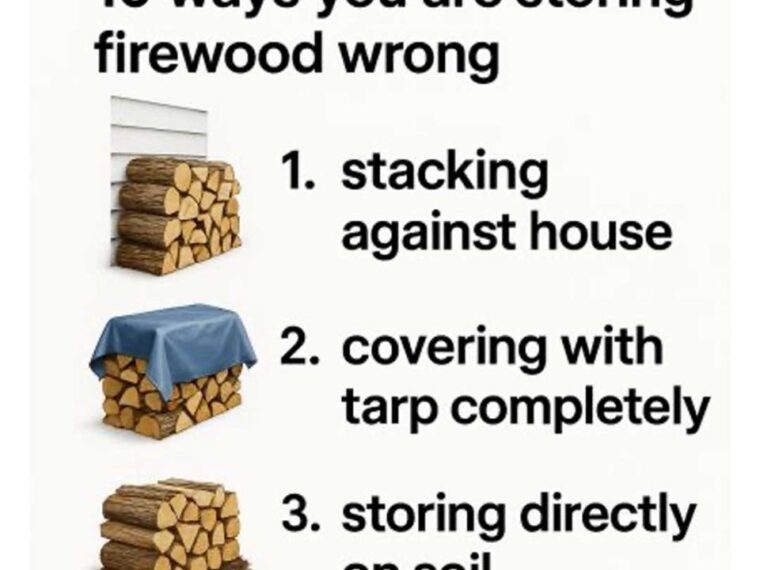
1. Stacking Firewood Against the House
While it might seem convenient, stacking firewood against the side of your house can lead to several problems. The primary issue is moisture. When wood is stacked directly against a wall, it restricts airflow, which can trap moisture and promote mold growth. Additionally, wood piles can attract pests, such as termites and rodents, who might then enter your home. Ideally, firewood should be stored at least 20 feet away from your house to prevent these issues. If space is limited, ensure there’s at least a few inches of space between the woodpile and any structure to allow for proper air circulation.
2. Covering Firewood Completely with a Tarp
Covering your firewood with a tarp might seem like a good way to protect it from the elements, but doing so completely can prevent it from drying out properly. Firewood needs airflow to season correctly, and a completely covered stack will trap moisture, which can lead to mold and rot. Instead, cover only the top of the stack, leaving the sides open for air circulation. This method protects the wood from direct rainfall while allowing it to dry out effectively.
3. Storing Firewood Directly on Soil
When firewood is stored directly on the ground, it can absorb moisture from the soil, leading to rot and decay. To prevent this, elevate your woodpile using pallets, bricks, or a firewood rack. Ideally, the wood should be at least 6 inches off the ground. This setup allows air to circulate beneath the stack, keeping the bottom layers dry and reducing the risk of rot.
4. Bringing Firewood Indoors Too Early
Bringing firewood indoors before it is fully seasoned can introduce moisture and pests into your home. Unseasoned wood can also produce more smoke and less heat when burned. Firewood should be seasoned for at least 6 to 12 months, depending on the type of wood and climate conditions. Make sure the wood is dry and free of insects before moving it indoors. Store only a small amount of firewood inside at a time, sufficient for immediate use, to minimize the risk of bringing pests into your home.
5. Ignoring Proper Airflow
Proper airflow is crucial for drying and seasoning firewood. When stacking your wood, make sure to leave gaps between the logs to allow air to circulate. One popular method is the crisscross stacking technique, which involves alternating the direction of each layer of logs. This technique not only promotes airflow but also helps stabilize the stack. Additionally, consider the location of your woodpile; it should be in a breezy, sunny spot to maximize drying potential.
6. Failing to Season Firewood Properly
Seasoning is the process of drying out firewood to make it suitable for burning. Wood that hasn’t been seasoned properly will be difficult to ignite and will produce a lot of smoke. To season firewood effectively, cut it to the desired length and split it as soon as possible after cutting down the tree. Stack the wood off the ground in a location where it will receive ample sun and wind. Seasoning can take anywhere from 6 months to 2 years, depending on the type of wood and climate conditions.
7. Storing Firewood Too Close to Trees or Bushes
Placing your woodpile too close to trees or bushes can restrict airflow and trap moisture. Additionally, trees and bushes can harbor pests that might infest your woodpile. To prevent these issues, store your firewood in an open area, away from vegetation. Ensure there’s at least a few feet of space between your woodpile and any trees or bushes to promote proper air circulation and reduce the risk of pest infestations.
8. Not Rotating Older and Newer Firewood
Failing to rotate your firewood can lead to older pieces sitting unused and potentially going bad. When adding new wood to your pile, always place it behind or beneath the older wood. This way, you use the seasoned wood first and ensure that all the wood gets a chance to dry properly. Regularly check your woodpile and rotate as needed to maintain a consistent supply of ready-to-burn wood.
9. Using Improper Firewood Racks
The right firewood rack can make a significant difference in storage efficiency. A good rack should keep wood off the ground and allow air to circulate around the logs. Avoid using racks that are too narrow or too short, as they can cause the pile to tip over. Instead, choose a sturdy, elevated rack that can support the weight of your wood and withstand the elements. Consider a metal or treated wood rack for durability.
10. Neglecting Pest Control Measures
Firewood piles can attract a variety of pests, including termites, ants, and rodents. To minimize the risk, store your firewood away from your home and other structures. Regularly inspect your woodpile for signs of infestations, such as tunnels or droppings. If you notice any issues, take action immediately by removing infested wood and considering natural pest deterrents, like diatomaceous earth, around your woodpile.
11. Underestimating the Importance of Firewood Type
Not all firewood is created equal, and choosing the wrong type can lead to inefficient burning. Hardwoods like oak, hickory, and maple are dense and burn hotter and longer than softwoods, making them ideal for home heating. Softwoods, such as pine or spruce, ignite quickly but burn faster and produce more creosote, which can build up in chimneys and become a fire hazard. When selecting firewood, consider your heating needs and the characteristics of different wood types.