Maintaining your HVAC system is crucial for ensuring comfort in your home, yet many homeowners unknowingly make common mistakes that can lead to inefficiency and costly repairs. Understanding how to properly care for your HVAC system can not only extend its lifespan but also improve its performance and save you money on energy bills.
Most people assume that as long as cool or warm air is flowing, their HVAC system is in good shape. However, this assumption can lead to neglect of key maintenance tasks. In this article, we will explore ten common ways people are maintaining their HVAC systems incorrectly and provide guidance on how to avoid these pitfalls.
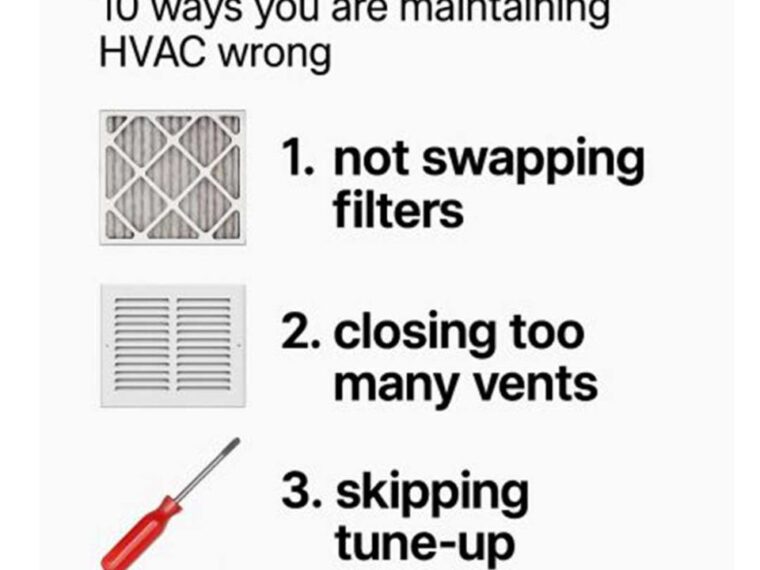
1. Ignoring Regular Filter Swaps
One of the most common mistakes homeowners make is neglecting to change the HVAC filters regularly. Filters should typically be replaced every 1 to 3 months, depending on the type of filter and the level of dust and allergens in your home. Dirty filters can restrict airflow, making your system work harder and increasing energy usage by up to 15%. Additionally, clogged filters can cause dirt and debris to accumulate in the system, leading to mechanical issues.
2. Closing Too Many Air Vents
Some people believe that closing air vents in unused rooms will save energy, but this can actually have the opposite effect. Your HVAC system is designed to heat or cool a specific square footage, and closing vents can create pressure imbalances that strain the system. This can lead to increased wear and tear, higher energy bills, and even duct leaks. It’s generally best to keep at least 80% of your home’s vents open to ensure proper airflow.
3. Skipping Seasonal Tune-Ups
Regular maintenance by a professional HVAC technician is essential for keeping your system running efficiently. Skipping these tune-ups can lead to undetected issues that may become costly repairs. During a tune-up, technicians check the system’s components, clean and lubricate moving parts, and ensure everything is operating correctly. Ideally, you should schedule maintenance in the spring for your cooling system and in the fall for your heating system.
4. Blocking the Outdoor Unit with Debris
The outdoor condenser unit needs ample airflow to function properly. Homeowners often neglect to clear debris such as leaves, grass clippings, and dirt from around the unit. It’s important to maintain at least 2 feet of clearance on all sides of the unit and 5 feet above it. Failing to do so can cause the system to overheat, reducing its efficiency and potentially leading to mechanical failures.
5. Failing to Set the Thermostat Correctly
Improper thermostat settings can significantly impact your HVAC system’s efficiency. Many homeowners set their thermostats to extreme temperatures, thinking it will heat or cool their homes faster. However, HVAC systems operate at a constant rate, and extreme settings only result in higher energy consumption. A programmable thermostat can help maintain more consistent temperatures and save up to 10% on annual heating and cooling costs.
6. Overlooking Ductwork Maintenance
Ductwork is an often overlooked component of the HVAC system, but it plays a critical role in delivering conditioned air throughout your home. Leaks, gaps, or obstructions in the ducts can cause up to 30% energy loss. Regularly inspecting and sealing ductwork can improve efficiency and indoor air quality. Professional duct cleaning every 3 to 5 years is also recommended to remove dust and allergens.
7. Neglecting to Clean the Condenser Coils
Condenser coils in the outdoor unit release the heat absorbed from inside your home. If these coils become covered in dirt and grime, the unit must work harder to expel heat, reducing efficiency and increasing energy costs. It’s important to clean the coils at least once a year, using a garden hose to gently wash away accumulated debris. This simple task can significantly enhance system performance.
8. Using the Wrong Size HVAC System for Your Space
An improperly sized HVAC system can lead to a host of problems, from inadequate temperature control to excessive energy use. A system that’s too small will struggle to maintain comfort during extreme temperatures, while an oversized system will cycle on and off too frequently, leading to increased wear and inefficiency. Have a professional conduct a load calculation to ensure your system is appropriately sized for your home.
9. Not Understanding the Importance of Humidity Control
Humidity levels can greatly affect your home’s comfort and your HVAC system’s efficiency. High humidity makes it harder for the system to cool your home, while low humidity in the winter can make heating less effective. Using a humidifier or dehumidifier can help maintain optimal humidity levels. Aim for 30-50% humidity to ensure comfort and efficiency year-round.
10. Relying on Outdated Thermostats
Many households still use manual thermostats, which can be inaccurate and inefficient. Upgrading to a smart thermostat can help optimize your HVAC system by learning your schedule and adjusting temperatures automatically. Smart thermostats can reduce energy usage by up to 23%, and many models offer remote control via smartphone apps, providing convenience and potential cost savings.