Pruning is an essential task for maintaining healthy, vibrant rose bushes. Whether you’re growing hybrid teas, climbers, or shrub roses, pruning promotes new growth, encourages blooming, shapes the plant, and prevents diseases.
However, improper pruning can lead to weak growth and fewer flowers. Learning when and how to prune a rose bush will ensure your roses thrive throughout the growing season.
Here’s a detailed guide on when to prune your rose bushes and how to prune them in 6 simple steps.
When to Prune Roses: The Best Time for Pruning
The ideal time to prune most types of rose bushes is late winter to early spring when the threat of frost has passed but before new growth starts.
This timing allows the plant to focus on producing strong new shoots and blooms.
- Temperate Climates: Late January to early March is usually the best time.
- Colder Regions: Wait until early spring (March or April) when you see the first signs of buds forming.
- Deadheading: During the growing season, you can remove spent blooms (deadheading) to encourage continuous flowering.
Tip: Prune roses on a dry, mild day to minimize the risk of fungal infections and ensure quick healing.
Tools You’ll Need for Pruning Roses
- Sharp Pruners: Use bypass pruners for clean cuts that don’t crush the stems.
- Loppers: For cutting thicker canes or older wood.
- Gloves: Protect your hands from thorns.
- Disinfectant: Clean tools with rubbing alcohol between cuts to prevent disease spread.
How to Prune Roses in 6 Simple Steps
Step 1: Prepare the Rose Bush
Before you begin pruning, clear away any fallen leaves, weeds, or debris from the base of the plant. This ensures that you have a clean working area and reduces the chance of spreading diseases.
Tip: Water the rose bush the day before pruning to reduce stress on the plant.
Step 2: Remove Dead, Damaged, and Diseased Canes
Start by cutting away any canes (stems) that are:
- Dead (brown and dry)
- Damaged (cracked or broken)
- Diseased (black spots, mold, or discoloration)
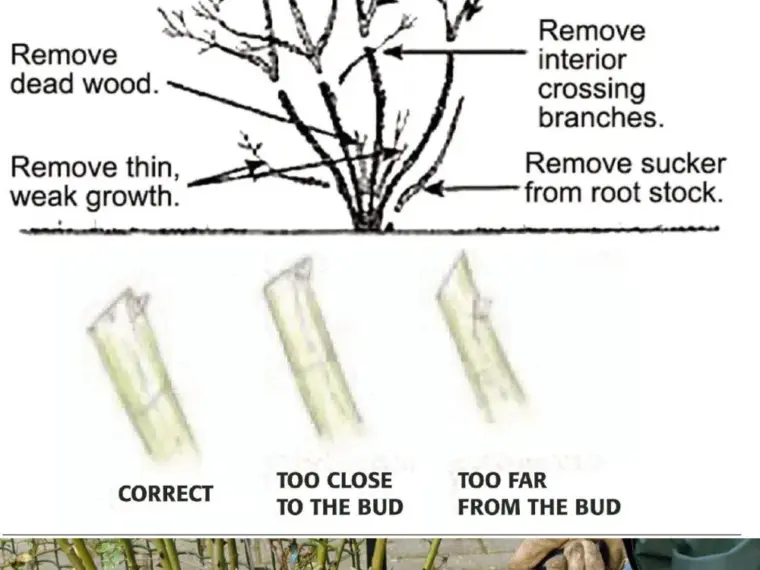
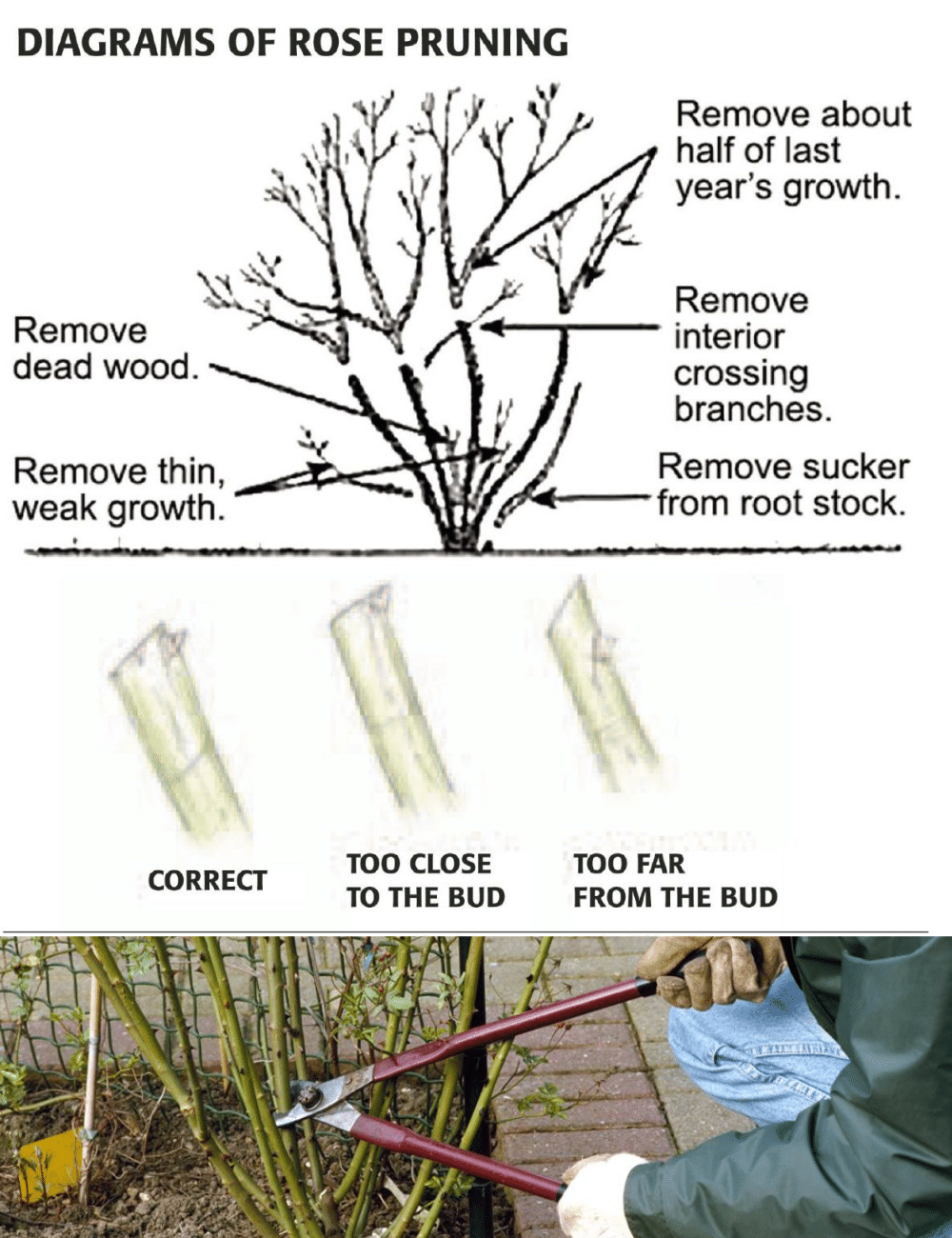
Make your cuts at the base of the cane, near the point where it meets the main stem. Removing these canes prevents diseases from spreading and encourages healthy new growth.
Step 3: Eliminate Weak or Crossing Canes
Next, inspect the rose bush for weak or thin canes that are unlikely to produce flowers. Also, remove any canes that are crossing or rubbing against each other. These can create wounds that invite disease and pests.
Tip: When choosing between crossing canes, keep the strongest one with the healthiest buds.
Step 4: Shape the Bush
Now that you’ve removed dead, diseased, and weak canes, focus on shaping the rose bush. The goal is to create an open, vase-like structure with evenly spaced canes to allow airflow and sunlight to reach the center of the plant.
- Remove any growth that is crowding the center of the bush.
- Aim to leave 3-5 of the strongest canes, spaced out evenly around the plant.
Step 5: Make Precise Cuts Above Outward-Facing Buds
To encourage outward growth, always prune just above an outward-facing bud (a small bump where new growth emerges). This directs the new growth away from the center of the bush, promoting better airflow and reducing the risk of fungal infections.
- How to Cut: Make a 45-degree angled cut, sloping away from the bud. This prevents water from collecting on the cut surface, reducing the risk of rot.
Step 6: Clean Up and Mulch
After pruning, gather and discard all cut branches, leaves, and debris from around the base of the rose bush. This helps prevent pests and diseases from taking hold.
- Apply Mulch: Add a layer of organic mulch around the base of the plant to retain moisture and prevent weeds. Keep the mulch a few inches away from the stem to prevent rot.
Bonus Tips for Pruning Different Types of Roses
- Hybrid Tea Roses: Prune hard, cutting back the canes to about 12-18 inches from the ground. This encourages strong growth and larger blooms.
- Climbing Roses: Only remove dead or weak canes in the first few years. Once established, prune after flowering and tie the strongest canes to a support.
- Shrub Roses: Lightly shape the bush by removing dead or crossing canes, but avoid heavy pruning.
- Miniature Roses: Prune lightly, focusing on deadheading spent blooms and thinning out weak canes.
Common Mistakes to Avoid
- Pruning Too Early or Late: Pruning too early can expose new growth to frost, while pruning too late can reduce blooming.
- Over-Pruning: Cutting away too much of the plant can weaken it and reduce flowers.
- Cutting Above Inward-Facing Buds: This can lead to congested growth, reducing airflow and increasing disease risk.
Learning how and when to prune your roses is key to maintaining healthy, beautiful plants.