Spider plants (Chlorophytum comosum) are beloved for their graceful arching leaves and ability to produce abundant “babies” or spiderettes.
While they’re easy to grow and incredibly forgiving, many gardeners don’t realize that pruning is a key part of maximizing their growth and keeping them looking their best.
If your spider plant has become leggy, overgrown, or filled with brown-tipped leaves, pruning can rejuvenate it quickly.
When done properly, pruning doesn’t just improve appearance – it stimulates new growth, promotes more spiderettes, and maintains the overall health of the plant.
Why Prune a Spider Plant?
Spider plants are naturally fast growers. Without occasional trimming, they can quickly become overgrown, cluttered, or weak-looking. Here’s why strategic pruning is beneficial:
1. Encourages New Growth
Pruning helps redirect the plant’s energy toward producing fresh, healthy leaves. Removing old, damaged, or dying foliage stimulates new growth from the center.
2. Boosts Spiderette Production
When spider plants are slightly stressed or trimmed, they often respond by producing more stolons (long flowering stems) with spiderettes. This is part of their natural survival mechanism.
3. Improves Aesthetics
Pruning removes dead or brown-tipped leaves that make the plant look untidy. It also helps shape an overgrown plant into a more compact, attractive form.
4. Prevents Disease and Pests
Removing decaying or yellowing leaves can help prevent fungal issues, bacterial leaf spots, and infestations from pests like aphids or spider mites.
When Is the Best Time to Prune a Spider Plant?
You can prune spider plants year-round, but the best time is during their active growing season – spring through early fall. This is when the plant has the energy and warmth needed to recover and regrow quickly.
Prune in Spring or Summer If:
- You want to encourage vigorous growth or more babies
- The plant is actively producing new leaves
- You plan to propagate spiderettes
Prune in Winter Only If:
- You’re removing dead or diseased leaves
- You’re trimming lightly for maintenance
- You’re correcting leggy or overgrown growth indoors
Avoid heavy pruning in the dead of winter unless absolutely necessary, as spider plants are semi-dormant and may take longer to bounce back.
Tools You’ll Need
To prune a spider plant safely and effectively, gather the following tools:
- Sharp scissors or pruning shears – Clean and sharp tools prevent tearing and reduce the risk of infection.
- Gloves (optional) – Some people may experience mild skin irritation from the plant sap.
- Clean cloth and rubbing alcohol – For sterilizing tools before and after use.
- Small container or pot – If propagating plantlets.
Always sterilize your tools before pruning to avoid transferring bacteria or fungus between cuts or plants.
Parts of the Spider Plant You Can Prune
Understanding which parts of the plant can be trimmed helps you target the pruning process effectively.
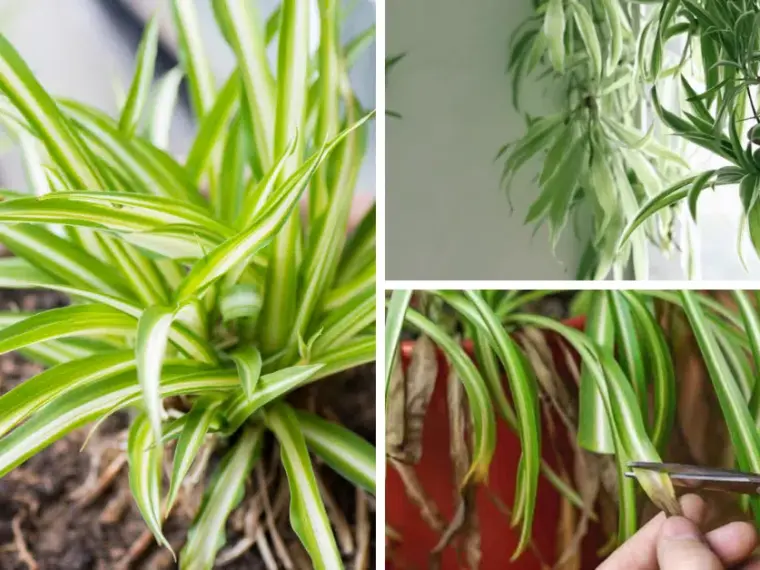
1. Dead or Brown-Tipped Leaves
These are the most common parts to remove. Leaf tips often brown due to low humidity, fluoride in water, or inconsistent watering.
Remove the entire leaf if it’s mostly brown, or trim just the tip if the rest is healthy.
2. Overgrown or Yellowing Foliage
If the plant has become leggy, remove older outer leaves to make room for new central growth.
3. Stolons (Runners) and Spiderettes
These long stems hold baby spider plants. You can trim them to encourage the mother plant to focus energy on growing more stolons or to propagate the plantlets.
4. Flower Stems
Spider plants produce small white flowers on runners. Once the blooms fade, you can trim the flower stalk to tidy the plant or wait until spiderettes form.
How to Prune a Spider Plant: Step-by-Step
Now that you know what and when to prune, here’s a step-by-step guide to pruning your spider plant correctly.
Step 1: Inspect the Plant
Look for:
- Brown or damaged leaves
- Yellowing or mushy foliage
- Dead or dried-up spiderettes
- Long runners that are crowding the plant
Step 2: Sterilize Your Tools
Wipe your scissors or shears with rubbing alcohol to prevent spreading disease between cuts.
Step 3: Remove Dead or Damaged Leaves
- Trim each damaged leaf at the base, near the soil line.
- If only the tips are brown, cut at a 45° angle just above the damage, mimicking the natural leaf shape.
Step 4: Trim Excess Foliage
If your spider plant is too large or bushy:
- Cut back older, outer leaves to encourage central growth.
- Never remove more than 25% of the plant at once – over-pruning can shock the plant.
Step 5: Cut Off Spiderettes (Optional)
To encourage more babies or to propagate:
- Use clean scissors to snip the stolon about an inch from the base of the baby plant.
- You can either discard the spiderette or root it in water or soil.
Step 6: Prune Flower Stems
If your plant has finished flowering:
- Cut the flower stalk back to the base once it begins to dry.
- If spiderettes are forming, wait until they’ve developed roots before removing them.
How Often Should You Prune a Spider Plant?
Spider plants don’t need frequent pruning, but routine maintenance helps keep them tidy and healthy.
General Guidelines:
- Light pruning: Every 2–3 months to remove dead leaves and tips.
- Moderate pruning: Every spring or early summer to reshape or encourage new growth.
- Heavy pruning: Once or twice per year, especially if the plant has grown too large for its space.
If you’re pruning for propagation, you can trim off spiderettes more frequently.
Pruning for Propagation
Spider plants are one of the easiest houseplants to propagate. Pruning helps you gather new baby plants that can be rooted and grown independently.
How to Root Spiderettes:
- Select a healthy spiderette with small visible roots.
- Snip it from the runner using sterilized scissors.
- Place it in water or plant directly into moist potting soil.
- Keep the medium consistently moist and provide bright, indirect light.
- Once roots are 1–2 inches long, transplant to its own pot.
This method is perfect for creating new plants to give away, sell, or add to other rooms.
Mistakes to Avoid When Pruning Spider Plants
1. Over-pruning
Never remove more than one-third of the foliage at once. This can cause stress, stunted growth, or even plant decline.
2. Using Dirty Tools
Unclean shears can introduce bacteria and fungus to open wounds. Always sterilize your tools before and after each pruning session.
3. Cutting Healthy Growth
Avoid cutting healthy central leaves unless you’re trying to reduce plant size. Focus on outer leaves and damaged parts first.
4. Ignoring Leaf Tip Issues
Consistently browning tips may indicate poor water quality or low humidity. Pruning helps, but addressing the underlying cause prevents recurrence.
Tips to Promote Faster Growth After Pruning
Pruning stimulates new growth, but the plant will recover faster with proper care afterward.
1. Water Properly
Water when the top inch of soil feels dry. Avoid overwatering, which can slow recovery.
2. Provide Bright, Indirect Light
Place your plant near a window with filtered sunlight. Insufficient light slows regrowth.
3. Feed Lightly
During the growing season, feed monthly with a balanced liquid fertilizer. Avoid feeding in winter.
4. Repot if Root-Bound
If your plant is severely root-bound, consider repotting it into a slightly larger container with fresh potting soil. This gives the roots room to grow and helps support new leaf development.
Frequently Asked Questions
Can I cut spider plant babies off without hurting the mother plant?
Yes. Removing spiderettes is safe and often beneficial, as it helps the parent plant redirect energy toward new growth.
Is it okay to trim brown tips regularly?
Yes. Trimming brown tips helps keep the plant tidy and doesn’t harm overall health. Just don’t overdo it, and check for underlying issues like poor water quality.
Will pruning make my spider plant grow more spiderettes?
Often, yes. Pruning runners and excess foliage can slightly stress the plant, which may trigger the production of new babies as a natural survival mechanism.
What’s the best season to prune a spider plant for propagation?
Late spring or early summer is ideal. The plant is actively growing and more likely to produce healthy new spiderettes that root easily.
Pruning a spider plant is one of the simplest and most effective ways to maximize growth, improve health, and boost spiderette production.
With just a few strategic cuts each season, you can shape your plant, remove problem areas, and create the ideal environment for strong, lush foliage