Tomatoes are one of the most rewarding crops any gardener can grow. They’re vibrant, flavorful, packed with nutrition, and versatile in the kitchen.
But what if you could grow an endless supply of tomato plants – without buying expensive seeds or seedlings – using nothing more than a few slices of a ripe tomato from your kitchen?
Why Grow Tomatoes from Slices?
Most people start tomatoes from seed packets or buy seedlings from a garden center.
While those are perfectly valid options, using slices of a ripe tomato is one of the simplest, cheapest, and most satisfying ways to grow your plants – especially if you’re new to gardening or want to multiply your yield without spending extra money.
Here’s why this method is so effective:
- Cost-Effective and Sustainable: You don’t need to buy seeds – one tomato can produce dozens of plants.
- No Special Equipment Needed: All you need is a pot, soil, and a ripe tomato.
- Beginner-Friendly: Even those with no gardening experience can succeed.
- Fast Germination: Tomato seeds sprout quickly when fresh, often in just 5–10 days.
- Great for Saving Heirloom Varieties: If you have a delicious tomato from the store or a farmer’s market, you can preserve its genetics by growing your own plants from slices.
This method mimics the way tomatoes naturally reproduce – dropping fruit to the ground, where seeds sprout in nutrient-rich soil. We’re simply giving nature a head start indoors or in a controlled garden bed.
Step 1: Choosing the Right Tomato
Not all tomatoes are created equal. The type you choose at the beginning will determine the quality, flavor, and productivity of your future plants. Before you slice, keep these tips in mind:
1. Pick a Fully Ripe Tomato
Only use tomatoes that are ripe, red, and juicy (or fully mature in whatever color variety they are). Seeds inside immature fruit are often underdeveloped and may not germinate well.
2. Opt for Organic or Heirloom Varieties
If possible, choose organic tomatoes. Conventional tomatoes from grocery stores are sometimes treated with chemicals that inhibit seed germination.
Heirloom tomatoes are another excellent choice – they’re open-pollinated, so the plants grown from their seeds will be true to the parent plant.
3. Avoid Hybrids if You Want Consistency
Hybrid tomatoes (often labeled “F1”) may produce plants that are less productive or different from the parent plant.
If you’re experimenting, hybrids can still work, but for consistent results, stick with open-pollinated or heirloom varieties.
Step 2: Preparing Your Soil and Container
Tomatoes love well-draining, nutrient-rich soil. Before you plant your slices, prepare the ideal environment for germination and root growth.
Soil Requirements
- Texture: Loose, loamy soil that retains moisture but drains well.
- pH: Slightly acidic, between 6.0 and 6.8.
- Enrichment: Mix in compost, aged manure, or organic vegetable fertilizer to boost nutrient content.
Container Choice
You can use seed trays, small pots, or even recycled containers (like yogurt cups with drainage holes). Make sure your container:
- Has good drainage to prevent soggy roots.
- Is at least 4–6 inches deep to allow root development.
- Is placed in a warm, bright location for best germination results.
Step 3: Planting Tomato Slices – Step-by-Step
Here’s where the magic happens. Follow these steps to turn your tomato slices into dozens of seedlings:
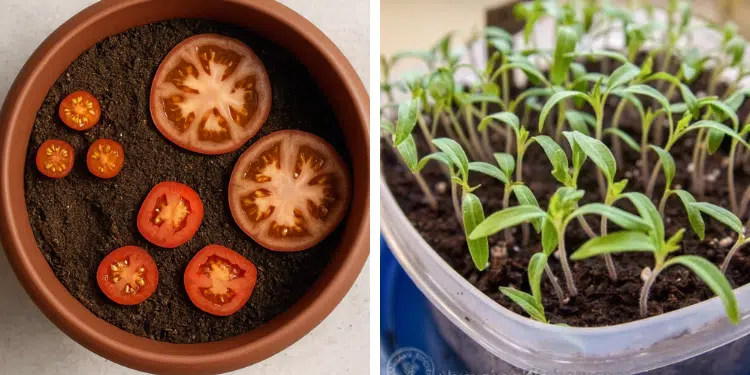
1. Slice the Tomato
- Cut the tomato into ¼-inch thick slices.
- Each slice should contain several seeds evenly spaced throughout the flesh.
2. Lay the Slices on Soil
- Fill your pot or container with pre-moistened soil.
- Gently press 2–3 slices flat on the surface of the soil.
- Space them slightly apart if planting multiple slices in one container.
3. Cover Lightly with Soil
- Sprinkle about ½ inch of soil over the slices.
- Don’t bury them too deeply – they need light and warmth to germinate.
4. Water Gently
- Water the soil lightly to keep it evenly moist (but not soaked).
- Use a spray bottle for even moisture without displacing the seeds.
5. Place in a Warm, Bright Spot
- Tomatoes germinate best at 70–80°F (21–27°C).
- A sunny windowsill or a spot under a grow light is perfect.
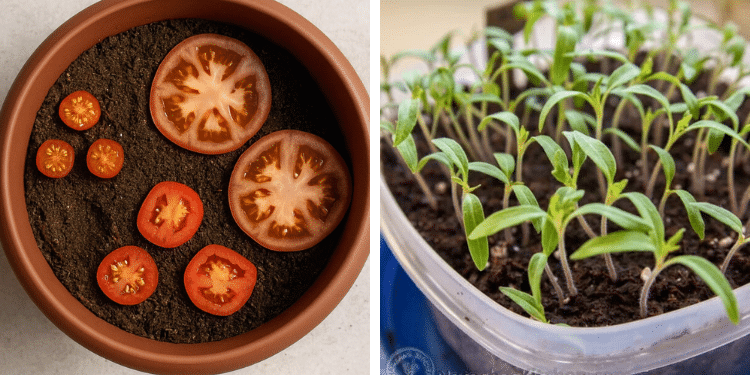
In about 7–14 days, you’ll start to see tiny green seedlings emerging from the soil.
Step 4: Caring for Tomato Seedlings
Once your tomato seeds sprout, the next stage is crucial. Proper care during this early period sets the foundation for strong, healthy plants.
1. Thin Out Seedlings
Because each slice contains many seeds, dozens of seedlings may sprout together. Once they’re about 2 inches tall, gently thin them out:
- Choose the strongest and healthiest seedlings to keep.
- Snip or pinch off the weaker ones at soil level – don’t pull them, as this can damage nearby roots.
2. Provide Plenty of Light
Tomato seedlings need 12–16 hours of bright light per day. If they don’t get enough light, they’ll become tall and leggy.
- Place them on a sunny south-facing windowsill.
- Use grow lights if natural light is insufficient.
3. Water Consistently
Keep the soil evenly moist but never waterlogged. Overwatering can lead to damping-off disease, a fungal infection that kills young seedlings.
4. Feed Gently
After seedlings develop their second set of true leaves, begin feeding with a diluted organic liquid fertilizer (about half strength) every 2–3 weeks.
Step 5: Transplanting Tomato Seedlings
When seedlings reach 4–6 inches tall and have at least 3–4 sets of leaves, they’re ready to move into larger pots or your garden.
Hardening Off
Before transplanting outdoors, “harden off” seedlings by gradually exposing them to outdoor conditions over a week:
- Place them outside in a sheltered, shady area for a few hours daily.
- Increase exposure to sun and wind gradually.
- Bring them indoors at night if temperatures drop below 50°F (10°C).
Transplanting Tips
- Depth: Plant seedlings deeper than they were in the pot – bury ⅔ of the stem. New roots will form along the buried stem, strengthening the plant.
- Spacing: Space plants 18–24 inches apart for optimal airflow and growth.
- Soil Prep: Mix compost or aged manure into the planting hole for a nutrient boost.
- Watering: Water deeply immediately after transplanting.
Step 6: Supporting Healthy Growth and Big Harvests
Once your tomatoes are in the ground, proper care will ensure they grow strong, resist disease, and produce an abundant harvest.
1. Water Deeply and Consistently
Tomatoes prefer deep, infrequent watering rather than light, frequent sprinkles. Water once or twice a week, soaking the root zone thoroughly. Irregular watering can lead to blossom end rot or fruit cracking.
2. Mulch to Retain Moisture
Apply a 2–3 inch layer of organic mulch (like straw or shredded leaves) around the base of each plant. Mulch helps:
- Retain soil moisture
- Suppress weeds
- Regulate soil temperature
3. Prune for Productivity
Pruning helps channel the plant’s energy into producing fruit instead of excess foliage.
- Remove suckers (the small shoots that grow between the main stem and branches) when they’re young.
- Prune lower leaves that touch the ground to prevent disease.
4. Support with Stakes or Cages
Tomato plants grow tall and heavy with fruit. Support them early with stakes, trellises, or cages to prevent branches from breaking and improve air circulation.
5. Feed Throughout the Season
Tomatoes are heavy feeders. Use an organic fertilizer rich in phosphorus and potassium every 3–4 weeks once fruiting begins. Avoid excessive nitrogen, which promotes leaf growth over fruit.
Common Mistakes to Avoid
Even with the best intentions, beginners sometimes make mistakes that can slow growth or reduce yield.
Here are the most common ones – and how to fix them:
- Planting Too Deep Too Soon: Seeds should be lightly covered. Planting too deep can prevent germination.
- Overwatering: Waterlogged soil suffocates roots and encourages fungal diseases.
- Not Thinning Seedlings: Overcrowded seedlings compete for light and nutrients, leading to weak plants.
- Skipping Hardening Off: Sudden outdoor exposure can shock and kill young plants.
- Neglecting Pruning: Overgrown plants produce fewer fruits and are more prone to disease.
How to Multiply Tomatoes Season After Season
Once you master this technique, you can grow unlimited tomato plants every year. Here’s how:
- Save slices from your best-performing plants and repeat the process next season.
- Harvest seeds from ripe fruits and store them for future planting.
- Take cuttings from mature plants and root them in water for fast propagation.
This closed-loop system means you’ll never need to buy tomato seeds or seedlings again – and you’ll always have fresh, organic tomatoes right at home.
Extra Tips for Bigger, Juicier Tomatoes
Want to take your tomato harvest to the next level? Try these advanced techniques:
- Companion Planting: Grow basil, marigolds, or garlic nearby to repel pests and boost growth.
- Deep Watering Tubes: Bury a plastic pipe near the root zone to deliver water directly to the roots.
- Calcium Boost: Add crushed eggshells to the soil to prevent blossom end rot.
- Epsom Salt Spray: A foliar spray of Epsom salt (magnesium sulfate) can improve fruiting and leaf health.
- Regular Harvesting: Pick tomatoes as soon as they ripen to encourage the plant to produce more.
Growing tomato plants from slices is more than just a gardening trick – it’s a powerful way to make your garden self-sustaining, affordable, and abundant.
With just one ripe tomato, a little soil, and some patience, you can create dozens of plants that will reward you with baskets of fresh, flavorful fruit