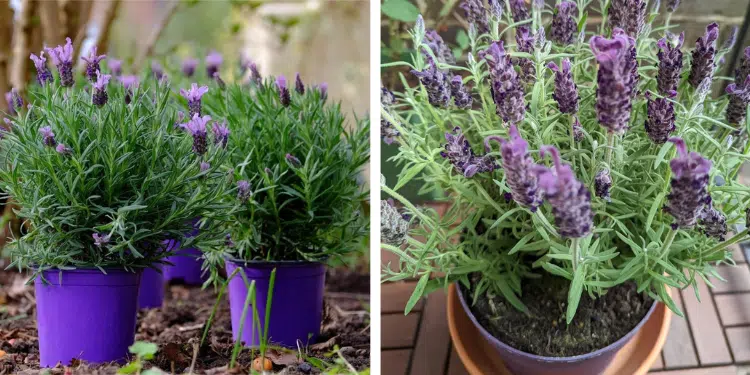
Lavender is one of the most rewarding plants you can grow. It smells incredible, looks beautiful, attracts pollinators, and offers calming, medicinal benefits.
But while lavender thrives easily in garden beds, many people struggle when growing it in pots.
The problem isn’t that lavender is difficult. It’s that container environments don’t naturally match the dry, rocky, sun-soaked hillsides where lavender evolved.
Too much moisture, poor drainage, the wrong soil, or too little sun can quickly turn a healthy plant into a drooping disappointment.
The good news is that once you understand what lavender actually wants, growing it in pots becomes surprisingly easy.
Here are ten professional-level tips to help you grow lavender in containers like a pro and keep it thriving for years.
1. Choose the Right Lavender Variety
Not all lavender types perform equally well in pots. Compact, slow-growing varieties adapt best to containers.
English lavender varieties like ‘Munstead’ and ‘Hidcote’ are excellent choices and are the most cold-hardy.
Spanish and French lavenders handle heat well and grow beautifully in warm climates, but they are less frost-tolerant. Hybrid lavandins can also work in larger pots.
If you live in a colder region, English lavender is the safest option. In warm climates, Spanish or French lavender often performs better in containers.
2. Use the Right Pot Size and Material
Lavender hates soggy roots but also dislikes cramped spaces.
A pot that is 10–12 inches wide works well for young plants, while mature lavender needs a container closer to 14–18 inches wide.
Terracotta, clay, or unglazed ceramic pots are ideal because they allow moisture to evaporate through the sides. Plastic pots hold water longer and increase the risk of root rot.
Always choose a pot with drainage holes. Lavender will not survive in a container without proper drainage.
3. Create a Fast-Draining Soil Mix
This is the single most important factor for success.
Lavender will die in heavy, moisture-retaining soil.
Use a fast-draining mix made from high-quality potting soil blended with coarse sand or grit and perlite or pumice. The goal is sharp drainage, not rich fertility.
Avoid compost-heavy mixes or garden soil. Lavender prefers lean, dry conditions.
4. Give It Full, Direct Sun
Lavender needs at least six to eight hours of direct sunlight every day.
In pots, sunlight is even more critical than in the ground.
Place lavender where it gets strong morning, midday, and afternoon sun. South- or west-facing patios, balconies, or windows are ideal.
Without enough sun, lavender becomes leggy, weak, and poorly flowering.
5. Water Less Than You Think
Overwatering is the number one killer of potted lavender. Lavender prefers dry conditions and slightly stressed roots.
Water only when the top few inches of soil are completely dry and the pot feels noticeably lighter. When you water, soak thoroughly and let excess drain away.
Never leave standing water in a saucer.
In summer, this may mean watering once or twice per week. In cooler seasons, it may mean watering every 10–14 days. When in doubt, don’t water.
6. Avoid Rich Fertilizers
Lavender is a low-nutrient plant.
Too much fertilizer leads to excessive leafy growth, weak stems, fewer flowers, and reduced fragrance. In most cases, lavender in pots needs little to no feeding.
If you fertilize, use a light application of balanced fertilizer in early spring or a slow-release fertilizer once per year. Avoid nitrogen-heavy products.
7. Prune Regularly for Bushy Growth
Lavender becomes woody and sparse if left unpruned.
After flowering, trim back about one-third of the plant to encourage new growth. In early spring, remove dead growth and lightly shape the plant.
Never cut into old woody stems, as they may not regrow. Regular pruning keeps lavender compact, full, and heavily flowering.
8. Ensure Good Air Circulation
Lavender evolved in dry, windy environments. Poor airflow encourages fungal disease and weak growth.
Place pots where air can move freely around the plant and avoid crowding lavender with other containers. Good circulation keeps leaves dry and disease away.
9. Protect Lavender in Winter
Lavender in pots is more vulnerable to cold than lavender in the ground. Cold soil temperatures can damage or kill roots.
In winter, move pots to a sheltered location, place them near a sunny wall, insulate the containers, and raise them off frozen ground.
In very cold climates, bring lavender indoors to a cool, bright space. Avoid warm, dark rooms.
10. Repot Every Few Years
Over time, soil compacts and drainage worsens.
Repot lavender every two to three years to refresh the soil and improve drainage. Trim damaged roots and move into a slightly larger pot if needed.
This prevents root rot and keeps growth vigorous.
Common Mistakes That Kill Potted Lavender
Most lavender failures come from the same few errors: using moisture-retaining soil, overwatering, using pots without drainage, providing too little sun, overfertilizing, skipping pruning, or choosing oversized containers.
Fixing these mistakes usually saves struggling plants.
Signs Your Lavender Is Thriving
A healthy potted lavender plant shows silvery-green leaves, upright bushy growth, strong fragrance, frequent flowering, and firm woody stems at the base.
Drooping leaves, yellowing, and mushy stems signal overwatering or poor drainage.
Lavender isn’t difficult to grow in pots. It’s just intolerant of mistakes.
Once you give it the fast-draining soil, bright sun, careful watering, and light pruning it naturally prefers, lavender becomes one of the easiest and most rewarding container plants you can grow.