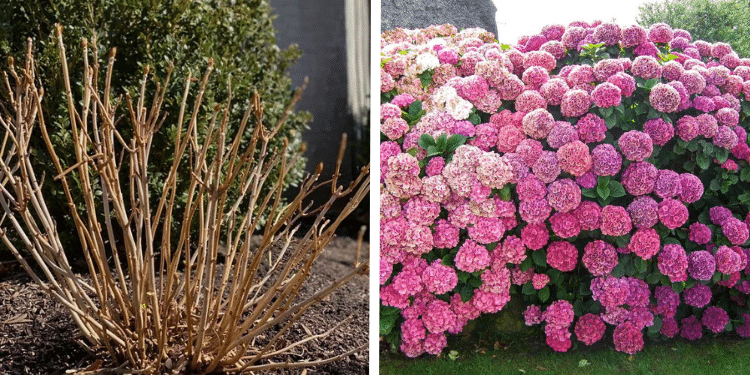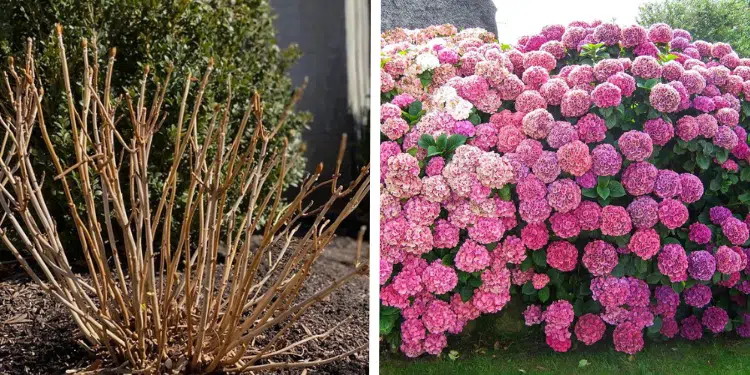
Hydrangeas are one of the most breathtaking flowers you can grow – large, colorful, cloud-like blooms that transform any garden into a romantic, lush landscape.
But many gardeners struggle with small, sparse, or disappointing flowers year after year. They try feeding, watering, pruning, mulching, and adjusting soil pH… yet the blooms still remain underwhelming.
The reason? Most people skip one crucial step that directly impacts the size, abundance, and strength of hydrangea blooms.
It’s the step experienced gardeners swear by, yet beginners rarely think about: removing old, weak stems at the base to redirect energy into stronger, thicker new growth.
Here’s the complete guide to doing it right.
Why Removing Old Stems Is the Secret to Bigger Blooms
Hydrangeas grow vigorously and naturally create new stems every year. As they mature, a tangle of old and new stems forms, especially at the base. Many of these older canes are:
- thin
- woody
- weak
- unproductive
- shaded by healthier stems
These older stems cannot support large blooms, and they steal energy from the new, strong stems that can.
Removing the oldest, least productive canes at ground level:
- increases airflow
- reduces disease risk
- redirects nutrients into flowering stems
- encourages new, thicker canes
- results in larger, fuller blooms
This one step can make the difference between small, tight flowers and big, show-stopping hydrangea clusters.
Which Hydrangeas Respond Best to Stem Removal?
While most varieties benefit from base cleaning, this method is especially effective for:
- Hydrangea macrophylla (Bigleaf, Mophead, Lacecap)
- Hydrangea serrata
- Hydrangea arborescens (Annabelle)
- Hydrangea paniculata (PeeGee, Limelight, etc.)
All produce stronger, more abundant blooms when old stems are removed correctly.
1. Start With the Right Timing
The best time to remove old stems depends on the hydrangea type.
For bigleaf (macrophylla) and serrata hydrangeas:
Remove old stems right after flowering, usually mid to late summer. Removing stems in winter may destroy next year’s flower buds.
For panicle and smooth hydrangeas:
Remove old stems in late winter or very early spring, before growth begins. These bloom on new wood, so winter pruning is safe.
Why timing matters:
Correct timing protects next season’s flowers and ensures the plant has enough time to grow new, productive stems.
2. Identify Old vs. New Stems
Before cutting, look closely at your hydrangea’s structure.
Old stems:
- woody
- thin
- grey or brown
- brittle
- may have peeling bark
- fewer buds
- smaller leaves
- usually don’t bloom well
New stems:
- green or light brown
- thicker
- flexible
- healthier leaves
- stronger buds
- more vigorous growth
The goal is not to hack the plant back, but to selectively remove the tired stems that drain resources.
3. Cut Old Stems at the Base – Not Higher Up
This is the step most gardeners miss.
Old stems must be removed all the way at ground level. Cutting halfway up leaves the cane intact and still stealing energy.
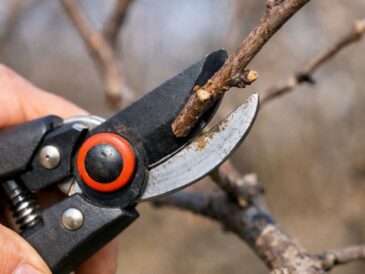
Use sharp pruners or loppers and cut cleanly at the soil line. Removing stems at the base encourages new shoots – the ones that produce the biggest, strongest flowers.
How many to remove:
- Remove ⅓ of the oldest stems each year.
- Never remove more than 40% at once; hydrangeas need enough stems to stay healthy.
This gradual renewal keeps the plant strong without shocking it.
4. Redirect Energy Into Next Year’s Blooms
Once old stems are removed, the plant instantly diverts nutrients, water, and energy into:
- new canes
- developing buds
- stronger growth
This internal redirection is what produces bigger, more abundant blooms the following season.
To support this:
After pruning:
- Water deeply
- Apply a slow-release fertilizer appropriate for hydrangeas
- Add organic compost around the base
- Mulch to conserve moisture
Healthy roots = healthy blooms.
5. Give Hydrangeas the Right Sun and Shade Balance
Hydrangeas that get too much shade produce fewer and smaller blooms.
Ideal light conditions:
- Morning sun + afternoon shade
- Avoid harsh midday sun for bigleaf types
- Paniculata varieties tolerate more sun and bloom heavier with 6+ hours of sunlight
More sun = more flower formation = bigger blooms.
6. Water Correctly for Bigger Blooms
Hydrangeas are moisture lovers, but the key is consistent, deep watering, not frequent shallow watering.
Watering rules:
- Water 2–3 times per week during hot months
- Water at the base, not overhead
- Keep soil evenly moist
- Mulch to retain moisture
Deep hydration helps hydrangeas push nutrients into bloom development.
7. Feed at the Right Times
Fertilizing at the wrong time creates lots of leaf growth but few flowers.
Best fertilizing schedule:
- Early spring: balanced fertilizer (10-10-10) or organic compost
- Late spring: bloom booster for bigger flower heads
- Avoid fertilizing in late summer – this encourages leafy growth instead of blooms
Proper feeding strengthens stems so they can support heavier flower heads.
8. Support Heavy Blooms With Proper Staking
If your hydrangeas finally produce huge blooms, heavy clusters can cause stems to droop. Supporting stems with cages or stakes helps:
- prevent breakage
- keep blooms upright
- increase airflow around flowers
Healthy stems lead to even bigger future blooms.
Growing bigger hydrangea blooms isn’t just about fertilizer, water, or soil pH – although those things help.
The real secret lies in renewing the plant’s base by removing old, weak stems that drain energy.