Basil is one of the most beloved herbs in the garden. Its vibrant green leaves, intoxicating aroma, and versatile flavor make it a staple in kitchens around the world.
Whether you’re preparing pesto, garnishing pasta, or adding fresh leaves to a summer salad, there’s nothing quite like basil harvested straight from your own garden.
Yet many gardeners share the same frustration: basil plants that start strong in spring quickly flower, turn bitter, or stop producing altogether by midsummer.
The leaves shrink, the stems harden, and instead of a lush, leafy plant, you’re left with a spindly stalk topped with flowers.
But what if your basil could keep producing fresh, tender leaves all season long? The truth is, it can – if you know the secrets of how to grow, prune, and care for it properly.
Experienced gardeners have long used simple tricks to stretch basil’s productivity, and once you master them, you’ll never have to suffer through tired basil plants again.
Why Basil Stops Producing
To understand how to keep basil productive, you need to know why it slows down in the first place.
Basil is an annual herb, which means its natural life cycle is designed to complete itself in one growing season. Its ultimate goal is to flower, set seed, and die.
When basil starts forming flowers, the plant diverts energy from leaf growth to reproduction. Leaves become smaller, tougher, and less flavorful. This is why gardeners often say, “The moment basil flowers, the flavor goes downhill.”
But here’s the secret: you can interrupt this natural cycle by pruning and harvesting strategically.
When done correctly, pruning tells the plant to keep producing new side shoots instead of racing toward seed production.
Combine that with proper planting, watering, and feeding, and your basil will keep thriving until the end of the season.
Choosing the Right Basil Varieties
Not all basil types perform the same way in the garden. Some varieties are naturally more resilient, slower to bolt, or better suited to continuous harvest.
- Genovese Basil: The classic variety for Italian cooking and pesto. Large, aromatic leaves.
- Sweet Basil: Very common, mild, and versatile, though it tends to bolt quickly in hot weather.
- Thai Basil: Spicier, with smaller leaves and purple stems. Very tolerant of heat.
- Lemon Basil: Fragrant citrus notes, great for teas and salads.
- Purple Basil: Gorgeous deep color, slightly milder flavor.
- Everleaf Emerald Towers: A newer cultivar bred to be slow-bolting and ideal for long harvests.
If your main goal is longevity and productivity, consider starting with a slow-bolting variety like Everleaf or Genovese. They naturally resist flowering for longer, making your job easier.
Planting Basil for Strong Growth
Basil thrives in warm weather and full sun. To maximize productivity, timing and placement matter.
When to Plant
- Wait until soil temperatures reach at least 60°F (15°C) and nighttime lows are consistently above 50°F (10°C). Basil is highly frost-sensitive.
- In most regions, that means planting in late spring after all danger of frost has passed.
Where to Plant
- Basil loves 6–8 hours of direct sun daily. In very hot climates, a little afternoon shade helps prevent stress.
- Plant in fertile, well-draining soil. Raised beds or containers with high-quality potting mix are ideal.
How to Plant
- Space plants 12–18 inches apart to allow airflow and reduce fungal disease risk.
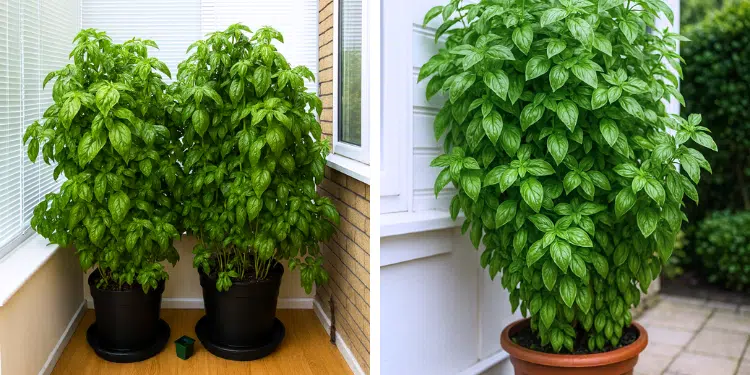
- If growing in containers, choose pots at least 10–12 inches wide and deep. Basil likes room to spread its roots.
Soil and Water: Basil’s Foundation
Basil thrives in soil that is rich, moist, and slightly acidic to neutral (pH 6.0–7.0). To prepare the best environment:
- Work in compost or aged manure before planting to enrich the soil with nutrients.
- Basil prefers consistent moisture but hates waterlogging. Water when the top inch of soil feels dry, aiming for deep, even hydration rather than frequent light sprinkles.
- Mulch around the base with straw, shredded leaves, or grass clippings to retain soil moisture and regulate temperature.
A well-hydrated, well-fed basil plant has the energy to keep producing new leaves after every pruning.
Fertilizing Basil for Continuous Harvest
Basil is a relatively heavy feeder compared to some herbs. It responds well to regular fertilization, especially when grown in containers where nutrients leach out quickly.
- Use a balanced liquid fertilizer (10-10-10 or 20-20-20) every 2–3 weeks during the growing season.
- For organic gardeners, fish emulsion or seaweed extract works beautifully.
- Avoid over-fertilizing with nitrogen-heavy formulas, which create huge leaves but reduce flavor intensity.
Think of fertilization as replenishing the plant’s reserves. After every harvest, the plant needs fresh nutrients to regrow.
The Gardener’s Secret: Pruning Basil for Endless Growth
This is the true key to basil that keeps producing all season: the way you prune it.
Most beginners harvest basil by pulling a few leaves from the bottom of the plant. While this provides a quick snack, it does nothing to encourage long-term growth.
In fact, it often leaves the plant tall, leggy, and eager to flower.
The secret is to prune from the top, not the bottom. Here’s how:
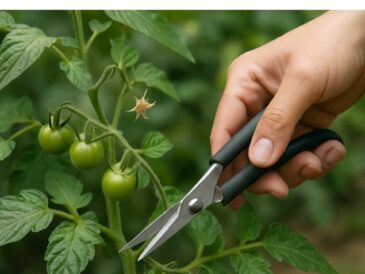
- Locate a stem with several sets of leaves.
- Find a pair of small leaves or shoots growing from the leaf nodes (the point where leaves meet the stem).
- Cut the stem just above this node, leaving the small shoots intact.
- Those shoots will now grow into two new branches, doubling your harvest potential.
Every time you prune this way, the plant responds by branching. A single stem becomes two, then four, then eight. Instead of one tall plant, you end up with a bushy basil shrub that produces continuously.
Timing is Everything
- Start pruning when the plant is about 6–8 inches tall.
- Continue pruning every 7–10 days, or whenever stems grow tall and leafy.
- Never remove more than one-third of the plant at once, to avoid stressing it.
Removing Flowers Immediately
The moment you see a flower bud forming at the top, pinch it off right away. Flowering is the endgame for basil – it signals the plant to stop producing leaves.
By removing buds early, you keep the plant in a perpetual leafy state.
Harvesting Basil for Maximum Yield
Harvesting and pruning go hand in hand. In fact, harvesting is just another form of pruning when done correctly.
- Pick basil regularly. The more you harvest, the more it grows.
- Harvest in the morning when oils are strongest for the best flavor.
- Store fresh basil in water like cut flowers, or freeze leaves to preserve flavor.
By harvesting strategically, you not only keep your kitchen stocked but also keep your plant bushy and productive.
Pests and Problems That Affect Productivity
Even with perfect pruning, basil can stall if pests or diseases take hold.
- Aphids: Small green or black insects that cluster on stems. Wash off with water or treat with neem oil.
- Japanese Beetles: Hand-pick them off leaves or use row covers.
- Fungal Diseases: Common in humid conditions. Prevent with good airflow and avoid watering leaves.
- Root Rot: Always use well-draining soil and avoid soggy pots.
Healthy plants resist pests better, so maintaining strong soil, good spacing, and steady care pays off.
Extending Basil Season
In cooler climates, basil’s season ends quickly with the first frost.
To enjoy it longer:
- Grow basil in pots and bring them indoors before frost. Place in a sunny window or under grow lights.
- Take cuttings in late summer and root them in water. Transplant into pots for indoor winter basil.
- Dry or freeze excess leaves for use all winter long.
Advanced Gardener’s Tips
Once you’ve mastered the basics, try these advanced methods to push basil production even further:
- Succession Planting: Sow new basil seeds every 3–4 weeks to ensure a constant supply.
- Companion Planting: Grow basil near tomatoes and peppers to enhance flavor and repel pests.
- Hydroponic Basil: Grows rapidly indoors with consistent nutrients and light.
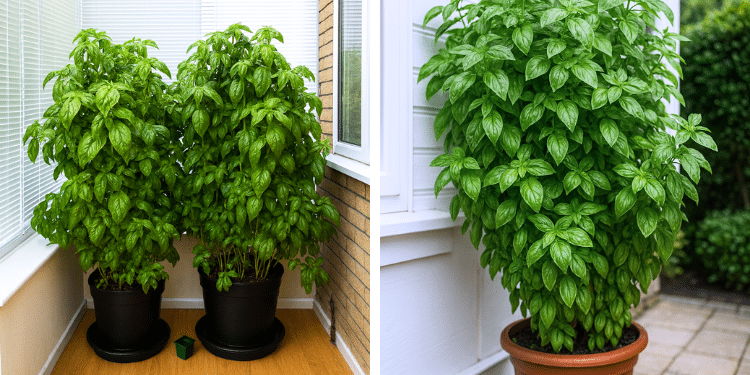 Basil doesn’t have to be a short-lived, once-and-done herb. With the right care, you can enjoy a continuous harvest from spring through fall.
The gardener’s secret lies in pruning – cutting above leaf nodes to encourage branching – combined with proper watering, feeding, and vigilance against flowering.