As the chill of winter fades and the promise of spring draws near, indoor gardeners often face an unexpected nuisance: fungus gnats. These tiny, flying insects can become a significant problem if not dealt with promptly, especially as they thrive in the moist environments typical of indoor plant care during the colder months. Though they are small, their ability to reproduce quickly can lead to a full-blown infestation that can harm your beloved houseplants.
Fortunately, by understanding the lifecycle of fungus gnats and implementing a series of preventive measures, you can eliminate these pests before they become a major problem in the spring. This article will guide you through a series of simple yet effective indoor fixes to manage and prevent fungus gnat infestations, ensuring your plants remain healthy and thriving as the seasons change.
1. Understand Why Fungus Gnats Explode in Late Winter
Fungus gnats are attracted to moist environments, which are common in winter as indoor gardeners tend to water their plants more frequently to combat dry indoor air. The larvae feed on organic matter in the soil, thriving in damp conditions. During late winter, central heating systems often dry the air, leading many to water their plants more than necessary, inadvertently creating ideal breeding conditions for these pests.
Additionally, as daylight increases, many houseplants begin to show new growth, leading gardeners to further increase watering and fertilizing schedules. This creates an abundance of decaying organic material, a perfect food source for gnat larvae. By understanding these conditions, you can preemptively adjust your plant care routine to disrupt the gnat lifecycle before they become a problem.
2. Spot the Early Signs Before an Infestation Takes Off
Early detection is crucial to preventing a full-scale fungus gnat infestation. Look for small, dark insects flying around your plants or crawling on the soil surface. They are usually about 1/8 inch long. You might also notice larvae in the soil, which appear as tiny, white, worm-like creatures just below the surface.
Another sign of potential infestation is the gradual decline in plant health, where leaves may turn yellow or the plant’s growth becomes stunted due to larvae feeding on roots. By routinely inspecting your plants, especially the soil surface, you can catch the problem early and take appropriate action.
3. Dry Out the Top Inch of Soil to Break the Breeding Cycle
Fungus gnats lay their eggs in the top layer of moist soil. By allowing the top inch of soil to dry out between waterings, you can effectively disrupt their breeding cycle. Most houseplants can handle a bit of dryness on the surface as long as their overall water needs are met.
Use a moisture meter or simply stick your finger into the soil to check the moisture level. If the top inch is dry, it’s safe to water again. This simple adjustment can significantly reduce the gnat population by making the soil less hospitable for egg-laying.
4. Repot Safely and Swap to Better-Draining Potting Mix
If a plant is heavily infested, it might be best to repot it entirely. Choose a well-draining potting mix that includes ingredients like perlite, vermiculite, or coarse sand, which help prevent soil from retaining too much moisture.
When repotting, gently remove as much of the old soil as possible without damaging the roots. This can help remove larvae and eggs that might be present. Additionally, ensure that the new pot has adequate drainage holes to prevent water from accumulating at the bottom, which can create a perfect breeding ground for gnats.
5. Water Smarter: Bottom-Watering and Strict Schedules
Bottom-watering is an effective method to prevent fungus gnats, as it keeps the upper soil layer dry. To bottom-water, place your plant pot in a tray of water and allow it to soak up moisture from the bottom, ensuring the top remains less conducive to gnat activity.
Establishing a strict watering schedule based on each plant’s specific needs can also prevent overwatering, a common mistake that leads to ideal conditions for gnat proliferation. Use reminder apps or set alarms to help maintain consistency and prevent forgetting to water or overwatering.
6. Use Sticky Traps to Catch Adult Gnats Fast
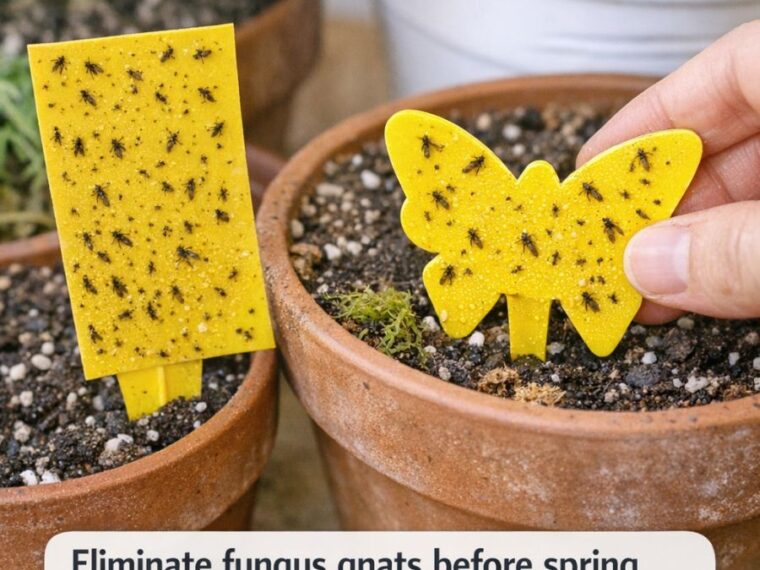
Yellow sticky traps are a simple yet effective tool for capturing adult fungus gnats. These traps exploit the gnats’ natural attraction to the color yellow. Place them near the soil surface or hang them close to your plants. They will catch adult gnats, preventing them from laying new eggs.
Regularly replace the traps as they become full to ensure continued effectiveness. While sticky traps won’t eliminate larvae, they are an excellent first line of defense for reducing the adult population quickly.
7. Target Larvae With Safe Biological Controls
For a safe and environmentally friendly approach, introduce biological controls such as beneficial nematodes or the bacterium Bacillus thuringiensis var. israelensis (Bti). These natural predators specifically target and kill fungus gnat larvae in the soil without harming your plants.
Beneficial nematodes can be mixed with water and applied to the soil, where they will hunt down and destroy larvae. Bti can be found in products like mosquito dunks, which can be crumbled and applied to the soil surface. Both methods are highly effective and safe for indoor use.
8. Seal Soil Surfaces With Sand, Gravel, or Gnat-Proof Mulch
Covering the soil surface with a layer of sand, gravel, or a specially designed gnat-proof mulch creates a physical barrier that prevents adult gnats from accessing the soil to lay eggs. This method also helps maintain a drier top layer of soil.
Use a layer approximately 1/4 to 1/2 inch thick to ensure complete coverage. This barrier not only deters gnats but also adds an aesthetic touch to your plant displays. Ensure the material you use does not retain moisture, as this would counteract the drying effect needed to disrupt the gnats’ lifecycle.
9. Clean Up Saucers, Dead Leaves, and Hidden Moisture Traps
Regularly inspect and clean plant saucers, as they can collect excess water and create hidden moisture traps that attract fungus gnats. Remove any dead leaves or plant debris from the soil surface, as decaying organic matter is a food source for larvae.
Pay attention to hidden areas such as under pots or in crevices where moisture might accumulate unnoticed. Keeping your plant area clean and dry is an essential step in preventing gnat infestations and promoting overall plant health.
10. Quarantine New Plants and Potting Soil Before Spring Growth
When bringing new plants or potting soil into your home, quarantine them for a period to ensure they are not carrying fungus gnats. Place new plants in a separate area and monitor them for any signs of gnats before integrating them with your existing collection.
For potting soil, consider storing it in a sealed container or spreading it out to dry slightly indoors before use. This precaution helps prevent inadvertently introducing pests to your indoor garden, especially as spring growth begins and plants become more vulnerable.
11. Set a Simple Weekly Gnat-Prevention Routine
Establishing a regular routine can help keep fungus gnats at bay. Spend a few minutes each week inspecting your plants, cleaning up debris, and checking for excess moisture. Adjust watering schedules as necessary and replace sticky traps as needed.
Incorporating these practices into your weekly plant care routine not only prevents gnats but also encourages you to stay attentive to your plants’ overall health. By being proactive, you can enjoy a flourishing indoor garden free of unwanted pests as spring arrives.