Water is becoming one of the biggest limiting factors in modern gardening. Long dry spells, rising temperatures, and water restrictions are forcing gardeners to rethink how they grow food.
Yet there’s an old permaculture method that solves this problem almost completely.
It’s called hügelkultur, and when built correctly, a hugelkultur mound can hold moisture for weeks without irrigation, even in hot weather.
This isn’t a gimmick. It’s a centuries-old technique that mimics how forests naturally store water, build soil, and grow lush plants without constant watering.
Once you understand how it works and how to build one properly, a hugelkultur mound can transform a dry, struggling garden bed into a self-watering powerhouse.
Here’s exactly what hugelkultur is, why it holds water so effectively, and how to build one step by step.
What Is Hugelkultur?
Hugelkultur (pronounced hoo-gul-kul-toor) is a raised garden mound built from layers of decaying wood, organic debris, compost, and soil.
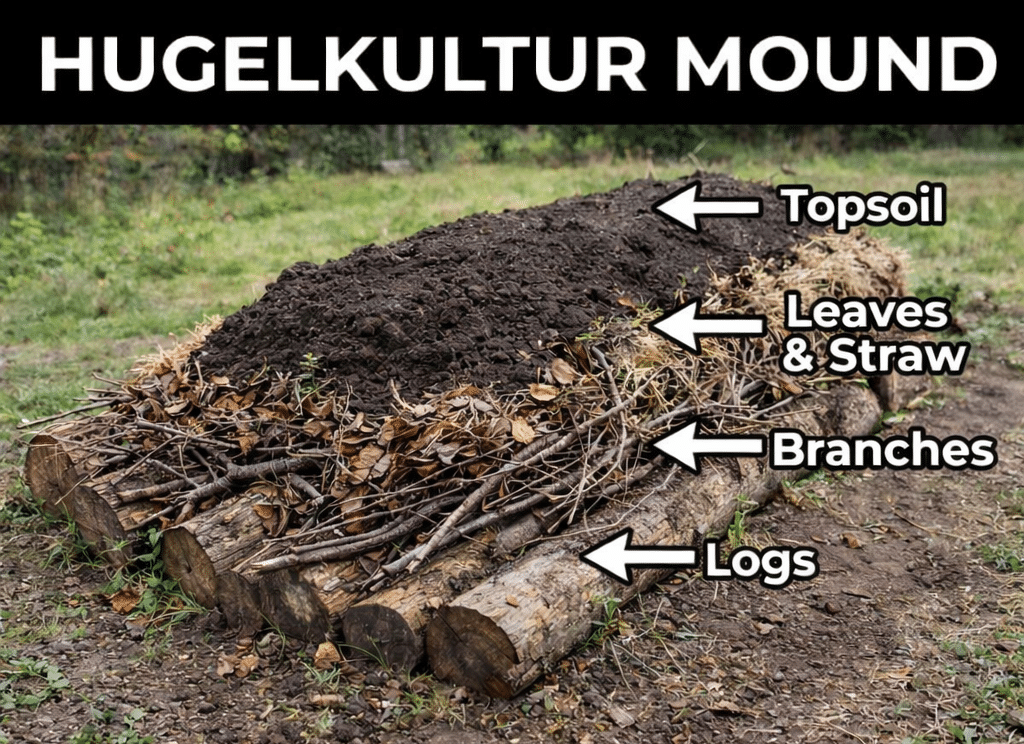
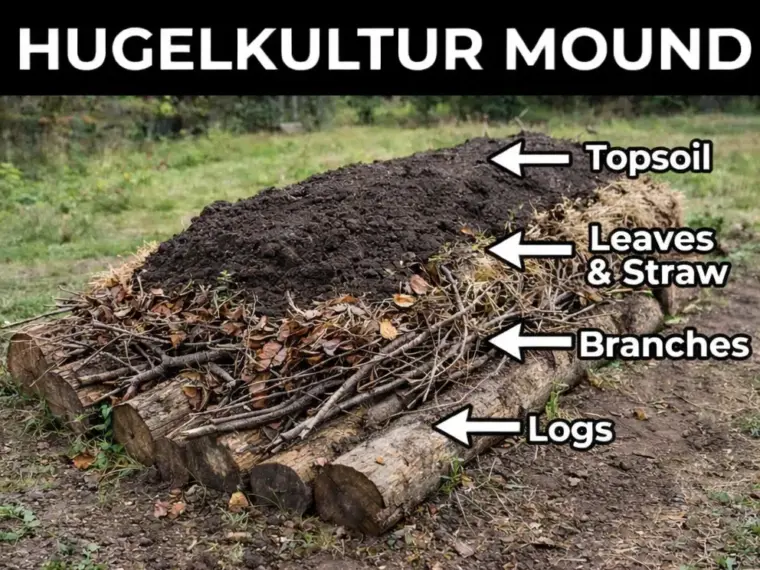
Instead of filling a bed with just soil, you create a core of logs and branches, then bury them under organic matter and topsoil.
Over time, the wood slowly decomposes like a forest floor, acting as a sponge that absorbs rainwater and releases it gradually back into the soil.
In German, Hügelkultur literally means “mound culture,” and it’s been used for centuries in European agriculture.
Why a Hugelkultur Mound Holds Water for Weeks
The secret is the rotting wood core.
As logs and branches decompose, they become porous and sponge-like. They soak up rainfall, dew, and irrigation water, then slowly release it as the surrounding soil dries.
This creates a built-in moisture reservoir underground.
At the same time:
• Decomposing wood improves soil structure
• Organic matter increases water-holding capacity
• Microbial life multiplies
• Fungal networks distribute moisture
• Nutrients are released gradually
The result is soil that stays moist long after flat beds dry out.
In many climates, gardeners report watering only once every two to three weeks after their hugelkultur mound becomes established.
Why Hugelkultur Works Better Than Raised Beds
Traditional raised beds drain quickly. They dry out fast and need frequent watering.
Hugelkultur beds do the opposite.
They:
• Retain water
• Improve drainage at the same time
• Build fertility naturally
• Eliminate the need for constant irrigation
• Reduce fertilizer use
• Increase yields
• Improve drought resistance
They also get better every year as the wood continues to decompose.
What You Can Grow in a Hugelkultur Mound
Hugelkultur beds support almost every garden crop.
They’re especially powerful for:
• Tomatoes
• Peppers
• Squash
• Cucumbers
• Zucchini
• Beans
• Corn
• Potatoes
• Leafy greens
• Herbs
• Strawberries
• Fruit trees
Deep-rooted plants love hugelkultur because their roots tap into the moisture stored in the wood core.
The Best Materials for Hugelkultur
The success of a hugelkultur mound depends on the materials you use.
1. Wood (The Core)
Use untreated, natural wood.
Best choices:
• Fallen logs
• Old firewood
• Branches
• Sticks
• Tree trimmings
Avoid:
• Pressure-treated wood
• Painted wood
• Black walnut (toxic to plants)
• Cedar and redwood (decompose too slowly)
Hardwoods like oak, maple, apple, birch, and poplar are ideal.
2. Nitrogen-Rich Materials
As wood decomposes, it temporarily consumes nitrogen.
Balance this by adding nitrogen-rich layers:
• Fresh grass clippings
• Kitchen scraps
• Manure
• Green leaves
• Coffee grounds
This prevents nutrient deficiencies.
3. Carbon-Rich Materials
These add bulk and structure:
• Dry leaves
• Straw
• Wood chips
• Cardboard
• Paper
4. Compost and Topsoil
This forms the growing layer.
Use mature compost and high-quality topsoil for the final layer.
How to Build a Hugelkultur Mound Step by Step
This simple method works for gardens, backyards, and homesteads.
Step 1: Choose the Location
- Pick a sunny spot.
- Avoid low areas that flood.
- Orient the mound east-west for even sun exposure.
Step 2: Dig a Shallow Trench (Optional)
- Dig 6–12 inches deep.
- This anchors the mound and increases water retention.
- This step is optional but highly recommended.
Step 3: Lay Down Large Logs
- Place the largest logs at the bottom of the trench or directly on the ground.
- Pack them tightly.
- This forms the water-holding core.
Step 4: Add Smaller Wood and Branches
- Stack branches, sticks, and twigs on top of the logs.
- Fill in gaps.
- This increases surface area and improves decomposition.
Step 5: Add Nitrogen-Rich Material
- Layer fresh grass clippings, kitchen scraps, or manure.
- This balances nitrogen loss during wood decomposition.
Step 6: Add Carbon-Rich Material
- Layer dry leaves, straw, cardboard, or wood chips.
- This adds bulk and moisture retention.
Step 7: Add Compost
- Add a thick layer of compost.
- This jump-starts microbial activity.
Step 8: Top With Soil
- Cover everything with 8–12 inches of topsoil.
- Shape into a mound.
- Water thoroughly.
How Big Should a Hugelkultur Mound Be?
Ideal size:
• Height: 3–5 feet
• Width: 4–6 feet
• Length: Any
Smaller mounds work too, but larger mounds store more water.
How Long Before You Can Plant?
You can plant immediately. However, yields improve after the first season. The mound becomes more fertile each year.
Why Hugelkultur Mounds Get Better Over Time
As wood decomposes:
• Soil structure improves
• Microbial life increases
• Nutrients are released
• Water retention improves
• Roots grow deeper
After 2–3 years, hugelkultur beds become incredibly productive.
Common Mistakes That Ruin Hugelkultur Beds
- Using treated wood
- Skipping nitrogen layers
- Using too much cedar
- Making the mound too small
- Not watering thoroughly at the start
- Planting too shallow
Avoiding these mistakes ensures success.
How Often Do You Need to Water?
First year: water normally while the mound establishes.
After year one:
• Water every 2–3 weeks
• Sometimes not at all during rainy periods
In many climates, irrigation becomes nearly unnecessary.
Can You Build Hugelkultur in Containers?
Yes – mini hugelkultur beds work in raised beds and large pots.
Layer logs, branches, compost, and soil inside deep containers.
They still retain moisture better than soil alone.
A hugelkultur mound isn’t just a raised bed. It’s a self-watering, self-fertilizing, soil-building system that gets better every year.