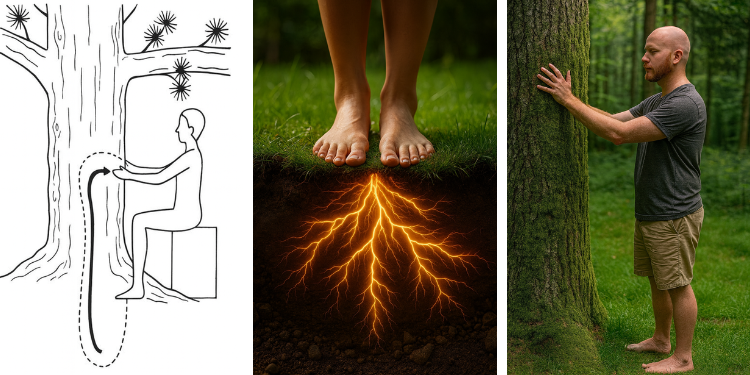
In a world that’s always buzzing – phones, screens, noise, stress – most of us have forgotten what it feels like to truly connect with the Earth beneath our feet.
We walk on concrete, live in insulated homes, and spend our days surrounded by artificial light and static electricity.
But beneath us lies something extraordinary – a natural source of energy and balance that has sustained life for millions of years.
It’s called grounding, also known as earthing – the practice of making direct contact with the Earth’s surface, often by walking barefoot on soil, grass, or sand.
What Is Grounding (Earthing)?
Grounding, or earthing, is the simple act of connecting your body directly to the Earth’s surface – through your bare feet, hands, or even lying down on natural ground.
When your skin touches soil, sand, grass, or stone, your body absorbs electrons from the Earth – a flow of free, negative ions that neutralize the positive charge built up from daily exposure to electronics, pollution, and stress.
In essence, grounding rebalances your body’s electrical system, reduces inflammation, and helps your nervous system find its natural rhythm again.
It’s not just a spiritual or symbolic idea – it’s a physiological process that has been documented in numerous scientific studies.
The Science Behind Grounding: How It Works
Everything in nature, including the human body, operates through subtle electrical signals. Our hearts beat, our nerves fire, and our cells communicate using tiny electrical impulses.
However, modern living – constant exposure to EMFs (electromagnetic fields), rubber shoes, and insulated buildings – isolates us from the Earth’s natural electric field.
This leads to electrical imbalance in the body and contributes to stress, inflammation, and fatigue.
When you touch the Earth, you absorb negatively charged electrons, which have been shown to:
- Neutralize free radicals, reducing oxidative stress
- Lower inflammation throughout the body
- Stabilize cortisol levels (the stress hormone)
- Improve blood viscosity and circulation
- Enhance sleep and relaxation
It’s a reset button for your entire system – achieved simply by going barefoot.
Proven Benefits of Grounding and Tree Connection
Let’s look at what happens to your body and mind when you spend time barefoot among trees.
1. Reduces Stress and Anxiety
Studies show that grounding reduces cortisol levels – the primary stress hormone – and helps balance the parasympathetic (rest-and-digest) nervous system.
When you walk barefoot on grass or soil, your breathing slows, your muscles relax, and your brain waves shift into a calmer alpha state.
Spending even 20 minutes among trees can significantly lower heart rate, blood pressure, and anxiety, according to multiple Japanese forest therapy studies.
It’s as if your body recognizes its natural home again – and instantly begins to unwind.
2. Improves Sleep and Natural Energy
Grounding helps regulate circadian rhythms by stabilizing your body’s electrical activity and cortisol cycle.
Participants in grounding studies often report deeper, more restorative sleep, fewer nighttime awakenings, and increased daytime energy.
The reason? Direct contact with the Earth resets your body’s internal clock, syncing you with the planet’s natural day-night rhythm.
Trees amplify this effect by releasing phytoncides – organic compounds that promote relaxation and improve sleep quality.
3. Reduces Inflammation and Pain
Inflammation is at the root of most chronic diseases – from arthritis to heart conditions.
Grounding has been shown to reduce inflammation markers in the body by neutralizing positively charged free radicals, which cause cellular damage.
In one study, people who grounded for 2 hours had measurable decreases in blood inflammation proteins. Others experienced pain relief in just 30 minutes of barefoot walking or sleeping on grounded mats.
When combined with the oxygen-rich environment of trees, grounding accelerates recovery and tissue repair – ideal for those dealing with joint pain, muscle soreness, or autoimmune conditions.
4. Boosts Immunity
Spending time grounded in nature enhances your immune system’s natural defenses.
Trees release microscopic essential oils called phytoncides, which strengthen white blood cell activity and increase natural killer (NK) cells – the body’s front line against viruses and cancer cells.
At the same time, grounding helps balance immune responses by reducing chronic inflammation and oxidative stress.
It’s a double effect – tree therapy and earthing working in harmony to fortify your body from within.
5. Improves Mood and Mental Clarity
Many people report that grounding leaves them feeling happier, lighter, and more focused.
This isn’t just placebo – studies show that being grounded improves serotonin levels and lowers symptoms of depression.
Trees also emit subtle negative ions (like those found near waterfalls or ocean waves) that improve mood and increase oxygen absorption in the brain.
Spending time barefoot in nature literally clears mental “static,” helping your mind function more smoothly – like cleaning the dust from an old circuit.
6. Supports Heart Health and Circulation
Walking barefoot on uneven, natural ground not only improves posture and muscle tone – it also stimulates the nervous system and promotes healthy blood flow.
Grounding has been shown to reduce blood viscosity, improving oxygen delivery throughout the body and lowering the risk of blood clots.
Coupled with the calming effect of tree-filled environments, it helps stabilize blood pressure and supports cardiovascular wellness naturally.
7. Deepens Connection and Emotional Healing
Grounding isn’t just physical – it’s emotional and spiritual too.
When you stand barefoot beneath a tree, you can feel your body soften, your breath deepen, and your awareness expand.
The natural rhythm of your heartbeat begins to synchronize with the slower, grounded pulse of the Earth – bringing peace and emotional clarity.
For many, this simple practice helps release grief, anxiety, or emotional blockages they didn’t even realize they were carrying.
How to Practice Barefoot Grounding Among Trees
You don’t need special tools, schedules, or training – just time, intention, and your bare feet.
Here’s how to get started:
1. Choose Your Spot
Find a natural place where the Earth is exposed – a park, forest, meadow, or even your garden.
Areas with living trees and natural soil are ideal. Avoid asphalt, treated wood decks, or synthetic grass – they block the Earth’s energy.
2. Remove Shoes and Socks
Bare skin contact is essential. Take off your shoes and let your feet touch the ground. You can stand, walk, or sit – as long as your skin connects directly with soil, grass, or tree roots.
3. Connect with a Tree
Gently place your hands on the trunk of a tree or lean against it.
Close your eyes and take slow, deep breaths. Visualize roots extending from your feet into the Earth, connecting with the tree’s roots below you.
Stay for at least 10–20 minutes – you’ll feel calmer and lighter afterward.
4. Breathe and Observe
Notice the sounds of the leaves, the scent of the bark, the air around you. Breathing deeply while grounded helps oxygenate your body and align your nervous system with the natural rhythm of the environment.
5. Make It a Habit
Grounding works cumulatively – the more you do it, the greater the benefits.
Aim for at least 30 minutes a few times a week, or daily if possible. Even short moments of contact can bring immediate relaxation.
Ways to Ground Indoors (When You Can’t Get Outside)
Not everyone has access to green space, especially in winter or urban environments. But there are ways to stay connected:
- Use grounding mats or sheets made with conductive materials that mimic the Earth’s charge.
- Keep live plants and natural wood in your home – they carry trace energy from soil.
- Open windows and breathe fresh air to balance indoor static.
- Meditate near natural materials like stones, crystals, or houseplants to stay attuned to the Earth’s frequency.
These aren’t replacements for real grounding, but they help maintain a subtle energetic balance when nature isn’t accessible.
Trees with the Strongest Grounding Energy
All trees have healing properties, but certain species are especially grounding and beneficial for human health:
1. Oak – Symbol of strength and stability. Oak trees help calm the mind and build emotional resilience.
2. Pine – Cleansing and rejuvenating. The scent alone purifies the air and supports respiratory health.
3. Birch – Associated with renewal and detoxification; birch forests are soothing and refreshing.
4. Willow – Linked with emotional healing, letting go, and creative flow.
5. Cedar – Sacred in many traditions; promotes protection, courage, and deep grounding energy.
6. Beech – Known for balance and patience; excellent for meditation.
7. Maple – Symbolizes clarity and flexibility, helping restore mental peace.
Each tree has its own energetic “signature,” and the one you feel most drawn to is often the one your body needs most.
The Deeper Meaning of Grounding: Remembering Our Roots
We often think of wellness as something we need to buy, plan, or chase. But the truth is, the most profound healing happens when we return to what’s natural.
Trees remind us how to live – rooted, patient, connected, and still.
The Earth reminds us that energy flows both ways – when we give our stress, it gives us calm; when we release our tension, it returns balance.
Grounding is not just about electrons – it’s about belonging. It’s remembering that you are part of the living world, not separate from it.
How Quickly You’ll Notice the Benefits
Many people report feeling lighter, calmer, and clearer within just 10–15 minutes of barefoot contact. After a few days of regular grounding, sleep improves, tension decreases, and energy levels rise.
After a few weeks, your immune system, mood, and overall resilience begin to strengthen.
Grounding is both a practice and a way of living – one that grows more powerful the longer you maintain it.
The healing power of trees and grounding is nature’s simplest secret – one hidden beneath our feet all along.