Winter can pose a significant challenge for avid composters. As the temperatures drop and snow blankets the ground, many assume that composting must pause until spring. However, with a little creativity and innovation, you can keep your compost pile active and healthy even during the coldest months.
By employing some unconventional methods, you can ensure that your compost pile continues to break down organic material, providing you with rich, fertile soil come spring. Here are 10 bizarre winter composting tricks that actually work.
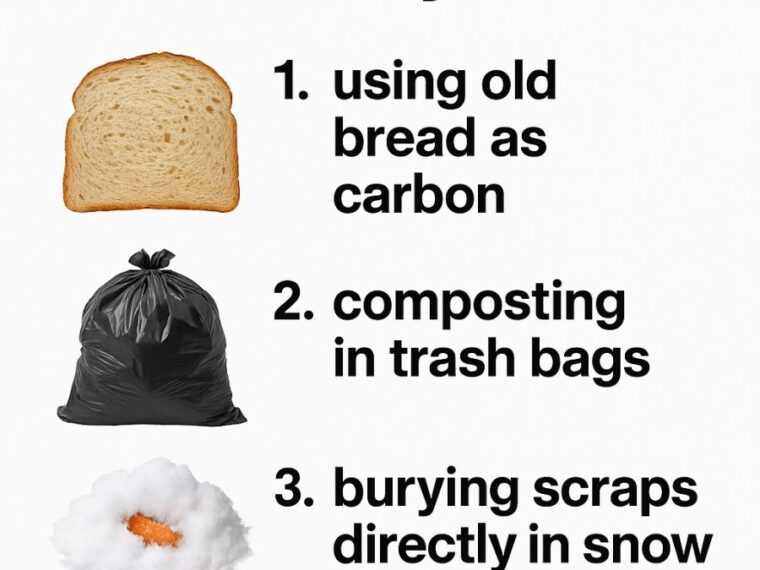
1. Using Old Bread as Carbon
In winter, finding enough carbon-rich materials like dried leaves or straw can be challenging. Surprisingly, old bread can serve as an effective substitute. Bread is a carbon source that can balance the nitrogen in your compost pile. Simply tear up stale bread into small pieces and mix it evenly into the compost. Aim for a ratio of about one part bread to two parts green material, such as vegetable scraps or coffee grounds. This not only helps maintain the carbon-nitrogen balance but also prevents bread from molding or attracting pests.
2. Composting in Trash Bags
Trash bag composting is an excellent method for those with limited outdoor space or harsh winter climates. Use a heavy-duty black trash bag and fill it with a balanced mix of green and brown materials. Add a little water to keep the contents moist, but not soggy. Tie the bag securely and poke a few small holes for aeration. Place the bag in a sunny spot to help heat the contents. The black color absorbs sunlight, which can help maintain internal warmth, promoting decomposition even in cold weather.
3. Burying Scraps Directly in Snow
Burying kitchen scraps directly in the snow might seem counterintuitive, but it can actually be effective. Snow acts as an insulator, preventing extreme temperature fluctuations. Dig a hole in the snow, about 12 inches deep, and place your food scraps in it. Cover the hole with snow again. As the snow melts and refreezes, it creates a microenvironment where decomposition can occur at a slow but steady rate. By spring, the organic material will have broken down significantly, enriching the soil beneath.
4. Adding Coffee Grounds for Heat
Coffee grounds are an excellent addition to any compost pile, especially in winter. They provide nitrogen, which is essential for microbial activity that generates heat. Sprinkle coffee grounds evenly over your compost pile, aiming for a thin layer every week. Not only do they help maintain warmth, but they also improve the pile’s structure and aeration, making it easier for microbes to continue their work even in colder temperatures.
5. Insulating with Straw Bales
Straw bales are not just for decoration or livestock bedding; they can be used to insulate your compost pile during winter. Arrange straw bales around your compost bin or pile to create a barrier against the wind and cold. The straw provides excellent insulation, trapping heat generated by microbial activity. Make sure to leave some space at the top for aeration, or cover the pile loosely with a tarp to keep out excess moisture from snow or rain.
6. Utilizing Hot Water Bottles
Hot water bottles can be a lifesaver for maintaining heat in your compost pile. Fill a few bottles with hot water and tuck them into the pile, especially on particularly cold days or nights. The heat from the bottles can help prevent the pile from freezing and keep microbial activity going. Replace the hot water every few days to ensure a consistent temperature, allowing your compost to break down organic materials throughout winter.
7. Creating a Worm Bin in Your Basement
If outdoor composting seems too challenging during winter, consider setting up a worm bin in your basement. Worms thrive in temperatures between 55-77°F, making your basement a perfect environment during colder months. Use a sturdy bin with good drainage, add shredded newspaper for bedding, and introduce red wigglers. Feed them kitchen scraps in moderation, avoiding excessive citrus or onion peels. This method not only keeps composting going year-round but also produces nutrient-rich worm castings.
8. Using a Compost Tumbler for Winter Aeration
A compost tumbler can be a game-changer for winter composting. Unlike static piles, tumblers allow you to easily mix and aerate the compost, ensuring that even in cold conditions, oxygen reaches the microbes. Regular turning, about once a week, can help maintain the internal heat required for decomposition. Place the tumbler in a sunny location to maximize heat absorption and prevent the contents from freezing.
9. Employing Black Plastic to Absorb Solar Heat
Covering your compost pile with black plastic is a simple yet effective way to harness solar energy. The black plastic absorbs sunlight, warming the compost pile beneath. Secure the plastic with rocks or stakes to prevent it from blowing away. This method not only helps maintain a warmer temperature inside the pile but also reduces moisture loss from wind, ensuring the compost remains active throughout winter.
10. Building a Mini Greenhouse Over the Pile
Constructing a mini greenhouse over your compost pile can significantly boost its temperature. Use PVC pipes or wooden frames to create a simple structure over the pile and cover it with clear plastic sheeting. This setup traps heat and moisture, creating a microclimate that accelerates decomposition. Ensure there’s adequate ventilation to prevent overheating and allow excess moisture to escape. This method can keep your compost pile active and productive, even during the coldest winter days.
11. Incorporating Animal Manure for Extra Warmth
Animal manure is rich in nitrogen and can generate significant heat as it decomposes, making it a valuable addition to winter compost. If you have access to manure from herbivores like cows, horses, or chickens, layer it into your compost pile. Aim for a mix of one part manure to two parts carbon-rich material, such as straw or dried leaves. The heat generated from the manure helps maintain an active compost pile, ensuring organic materials continue to break down throughout the winter months.