Ginger has been hailed for centuries as a potent natural remedy, particularly effective for nausea and cold symptoms. Despite its widespread use, many people might not be utilizing ginger to its fullest potential. Often, improper preparation or consumption can diminish its effectiveness.
In this article, we’ll explore the right ways to harness the power of ginger for health benefits. From ginger tea to essential oils, we will guide you through the best practices and common mistakes to avoid. Whether you’re battling a cold or seeking relief from motion sickness, these insights will ensure you make the most of this remarkable root.
1. Understanding the Benefits of Ginger
Ginger is rich in active compounds like gingerol, which possess anti-inflammatory and antioxidant properties. These compounds are what make ginger particularly effective against nausea and colds. Studies have shown that taking 1-1.5 grams of ginger can significantly reduce symptoms of nausea, making it a great natural remedy for morning sickness, chemotherapy-induced nausea, and seasickness.
For colds, ginger’s warming effect can help break down the accumulation of toxins in your body, making it an excellent remedy for flu and congestion. Additionally, its anti-inflammatory properties can help soothe sore throats and reduce inflammation in the respiratory tract.
2. Preparing Ginger Tea the Right Way
To make ginger tea, start with fresh ginger root, as it contains the highest concentration of beneficial compounds. Peel and slice a 2-inch piece of ginger root into thin slices. Boil 2 cups of water, then add the ginger slices and let them simmer for about 10-15 minutes. For added flavor and benefits, consider adding a teaspoon of honey and a squeeze of lemon. These additions can enhance ginger’s anti-inflammatory effects and provide additional relief for cold symptoms.
3. The Honey Mix for Sore Throat Relief
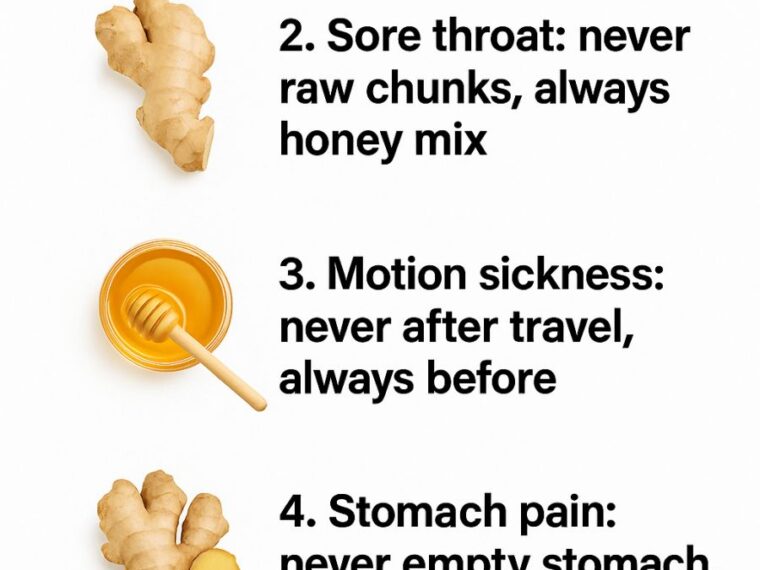
A simple and effective remedy for sore throats is a mixture of ginger and honey. Take a teaspoon of fresh ginger juice, which can be extracted by grating ginger and pressing it through a sieve, and mix it with a tablespoon of honey. Take this concoction three times a day to soothe a sore throat and reduce inflammation.
4. Timing Ginger for Motion Sickness
For those prone to motion sickness, timing is crucial. It is recommended to consume ginger about 30 minutes to an hour before traveling. You can chew on a small piece of raw ginger or sip on ginger tea. This preemptive approach allows the active compounds to enter your system and reduce the symptoms of nausea effectively during travel.
5. Eating Ginger After Meals for Stomach Pain
Ginger can also aid digestion and alleviate stomach pain. After a meal, especially a heavy one, consuming ginger can help speed up the digestion process. Try chewing a small piece of ginger or drink a cup of ginger tea. This is particularly beneficial after meals that might cause bloating or discomfort.
6. Choosing Fresh vs. Dried Ginger
When choosing between fresh and dried ginger, it’s important to consider the intended use. Fresh ginger is often preferred for its potent flavor and higher levels of gingerol, making it ideal for teas and cooking. However, dried ginger, often found in the form of powder, is more concentrated and can be used in smaller quantities. It is also convenient for baking or when fresh ginger is unavailable. Remember, dried ginger has a slightly different flavor profile, so use it appropriately in recipes.
7. Incorporating Ginger in Soups and Broths
Ginger can be a wonderful addition to soups and broths, providing both flavor and health benefits. Add thin slices of ginger to the broth as it simmers, allowing the flavors to meld. For a hearty chicken or vegetable soup, add about an inch of sliced ginger per quart of liquid. This not only enhances the taste but also aids in digestion and provides relief from cold symptoms.
8. Using Ginger Essential Oil for Aromatherapy
Ginger essential oil is another versatile way to enjoy its benefits, especially for aromatherapy. Add a few drops of ginger essential oil to a diffuser to create a warm, uplifting atmosphere that can help relieve nausea and promote a feeling of well-being. Additionally, mixing ginger oil with a carrier oil like coconut or jojoba and applying it to the chest can provide relief from respiratory issues.
9. Ginger Supplements: What You Need to Know
For those who prefer a more convenient option, ginger supplements are available in capsule form. These supplements typically contain standardized extracts of ginger, ensuring a consistent dose of active compounds. It’s important to follow the dosage instructions on the label, as excessive consumption can lead to side effects like heartburn or diarrhea. As with any supplement, consulting with a healthcare provider before starting is advisable.
10. Avoiding Common Mistakes with Ginger
One common mistake is using too much ginger, which can lead to heartburn or an upset stomach. It’s important to start with small amounts and gradually increase if necessary. Another mistake is not peeling ginger before use, which can result in a bitter taste. Always peel the ginger root before slicing or grating it for the best flavor and efficacy.
Moreover, relying solely on dried ginger in recipes that call for fresh ginger can alter the intended flavor and potency. Understanding when to use fresh versus dried ginger is key to maximizing its benefits.
11. Exploring Popular Viral Hacks with Ginger
Social media is rife with viral hacks involving ginger, but not all are effective or safe. One popular hack is using ginger wraps for belly fat reduction. While ginger’s warming effect can temporarily increase circulation, there’s no scientific evidence supporting its efficacy for fat loss. It’s essential to approach such hacks with skepticism and prioritize evidence-based methods
Another viral trend involves using ginger shots for immune boosting. While ginger shots can indeed provide a concentrated dose of nutrients, they should be consumed in moderation due to their potency. Always ensure that the ginger used is fresh and properly prepared to avoid any adverse reactions.