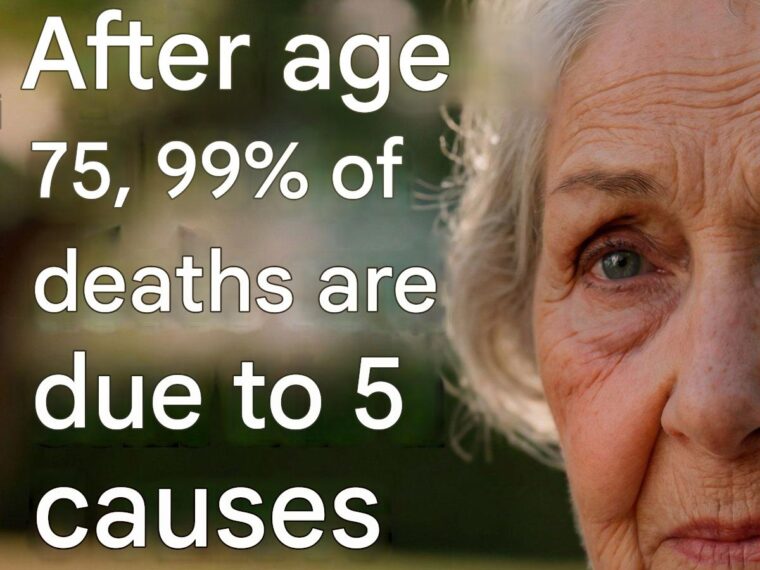
Did you know that almost all deaths occurring after the age of 75 are due to just a few specific causes? While many believe that dying at an advanced age is simply part of the natural cycle, the reality is that most of these deaths are due to preventable factors, dangers often overlooked until it is too late.
1. Heart disease: the number one silent killer
Heart disease remains the leading cause of death in people over 75, yet many are unaware of the impact it can have on this condition. The heart is a muscle that, like all muscles, thrives when cared for and deteriorates when neglected.
The danger lies in the fact that these symptoms often remain silent until it’s too late. Many people attribute fatigue, shortness of breath, or a general slowing down to aging, but these symptoms can actually be warning signs of a weakening heart.
High blood pressure is a major risk factor for heart disease. Over time, elevated blood pressure puts extreme strain on your arteries and forces your heart to work harder than it should. The problem is that high blood pressure usually doesn’t cause noticeable symptoms, such as pain or discomfort, until a serious event, like a heart attack or stroke, occurs.
An unhealthy diet is another major factor. Years of consuming processed foods, excess salt, and harmful fats silently damage the body, clog arteries, and restrict blood flow. Your heart needs proper nutrients to stay strong. If your diet is deficient, the deterioration happens faster than you might think.
Lack of physical activity also plays a significant role. The heart is not designed to remain inactive all day. Without regular movement, blood circulation slows, muscles weaken, and the heart lacks the stimulation necessary for proper function.
2. Falls and injuries: an underestimated danger
For older people, one of the most dangerous and underestimated threats is not illness, but falls. It can happen in an instant: a misstep, sudden dizziness, or a slippery floor can have dramatic consequences
A fall can indeed cause a hip fracture, a head injury, or even a seemingly minor injury that quickly escalates into something far more serious. Falls are among the leading causes of fatal injuries in older adults. Every year, they send millions of seniors to the emergency room, and for many of them, that fall marks the beginning of a permanent decline.
The challenge is that, with age, our balance, muscle strength, and reaction time gradually decline. But because this decline is so gradual, we often don’t notice these changes. Unfortunately, the body’s ability to recover from an accident is not what it used to be. What would once have been a harmless fall can now lead to serious, sometimes fatal, injury.
There’s another hidden danger: the fear of falling can lead to more falls. After a near fall or a minor tumble, many older adults become hesitant. They move less, avoid stairs, skip walks, and limit their activities out of fear. But the less you move, the weaker your muscles become, and the greater your risk of falling.
The good news is that falls aren’t inevitable. There are simple yet highly effective strategies to reduce your risk. Strengthening your legs and core, working on your balance, and making small, smart improvements to your home, such as better lighting, securing rugs, and installing sturdy grab bars, can make all the difference.
3. Respiratory illnesses: when breathing becomes difficult
We rarely think about breathing until it becomes difficult. With age, the lungs lose their efficiency, and even minor breathing problems can quickly worsen.
Chronic obstructive pulmonary disease (COPD), which includes emphysema and chronic bronchitis, is a major concern. Over time, the airways become inflamed and narrow, making breathing increasingly difficult. Many older adults downplay symptoms such as chronic cough, wheezing, or shortness of breath, believing them to be simply a consequence of aging.
There’s also pneumonia. Although it may seem like just another infection, pneumonia can be fatal for older people. What starts as a simple cold or mild chest congestion can develop into a life-threatening condition. This is because, with age, the immune system weakens, making it harder to fight off infections.
Air quality is another critical factor. Years of exposure to pollutants such as dust, smoke, or chemicals can silently damage your lungs. Even inside your home, irritants like mold, pet dander, or poor ventilation can worsen breathing problems. One of the simplest yet most effective ways to take care of your lungs is to stay active. Movement allows your lungs to fully expand, clear mucus, and keep your respiratory system functioning properly.
4. Stroke: a sudden medical emergency
A stroke occurs suddenly, without warning, leaving no time to prepare. In a matter of seconds, it can change the course of your life. It is one of the leading causes of death after age 75, and yet many people are unaware that numerous risk factors for stroke are within their control.
The scariest part? A stroke rarely gives you a second chance. Once it happens, the damage is often irreversible. But here’s what might surprise you: up to 80% of strokes are preventable. This means your everyday choices, right now, can determine whether you remain independent or face a life-changing health crisis.
A stroke occurs when blood flow to the brain is suddenly blocked or when a blood vessel in the brain ruptures. Without oxygen, brain cells begin to die within minutes. Some strokes cause mild symptoms, such as temporary confusion or weakness, while others can lead to paralysis, loss of speech, or complete dependence.
High blood pressure is one of the most common and dangerous causes of stroke. Over time, the extra pressure damages the arteries, increasing the risk of them bursting or becoming blocked. Another cause is irregular heart rhythms, such as atrial fibrillation. Many older people have this condition without knowing it.
A crucial, but often overlooked, warning sign of a future stroke is what’s known as a mini-stroke or transient ischemic attack (TIA). These events can cause sudden confusion, blurred vision, or slurred speech. Even if these symptoms disappear quickly, they should never be ignored.
5. Cognitive decline and its consequences
One of the most painful realities of aging is the progressive loss of memory, judgment, and independence. Cognitive decline doesn’t happen overnight; it sets in slowly, with subtle changes that can easily be overlooked.
Diseases like Alzheimer’s and other forms of dementia affect not only the brain but also the entire body. As mental abilities decline, so does a person’s ability to care for themselves. It becomes increasingly difficult to remember to take medication, eat balanced meals, or notice when something is wrong with the body.
Another serious danger is the risk of accidental injury: forgetting to turn off the stove, leaving the front door unlocked, or going into dangerous areas. These risks increase as cognitive abilities decline.
Early symptoms, such as forgetting names, frequently losing objects, or difficulty following a conversation, are often considered part of normal aging, when in reality they are early signs of brain changes.
How can you protect your brain? Just like your body, your brain needs exercise. Staying mentally active by reading, learning new skills, playing games, or having enriching conversations helps keep your brain sharp and stimulated. Physical exercise is just as important: it increases blood flow to the brain, which helps preserve memory and thinking skills.
Staying socially connected is another powerful tool. Loneliness and isolation can accelerate mental decline, while regular social interactions help keep the brain engaged and alert. Your diet also plays a major role. Foods rich in omega-3 fatty acids, antioxidants, and vitamins, such as leafy green vegetables, berries, and nuts, are powerful protectors of brain health.
The truth is that a healthy mind starts with a healthy lifestyle. The choices you make today about food, physical activity, and social interactions will influence how your brain functions tomorrow. Cognitive decline is not an inevitable consequence of aging.
These five conditions—heart disease, falls, respiratory disease, stroke, and cognitive decline—account for nearly all deaths after the age of 75. But here’s the key message: they are not inevitable. Most people don’t realize the impact they can have on their health until it’s too late.
Small, consistent habits, adopted today, can lead to years of increased strength, clarity, and independence. Instead of focusing on the things you can’t do, focus on what you can do to live a longer, healthier, and happier life. This might include adding more fresh foods to your diet, getting some exercise each day, scheduling a health checkup, or spending more time talking with loved ones.
At this stage of life, your well-being is your greatest asset. The more you take care of it, the more time, joy, and freedom you’ll be able to enjoy. Every day is a new opportunity to choose yourself, and the decisions you make today will shape your strength, energy, and happiness for years to come.