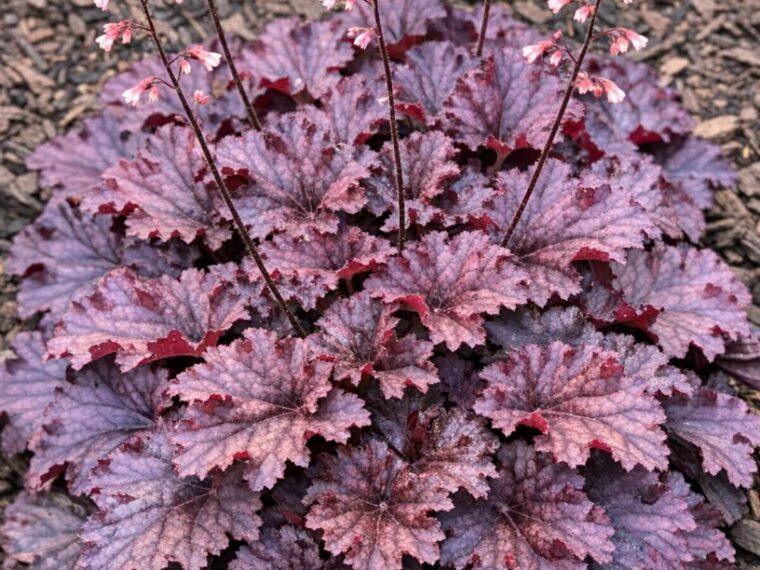
By June, my coral bells are either setting up for a beautiful, colorful summer—or quietly signaling that they’re about to sulk the minute the real heat rolls in. Here in the Midwest, I’ve learned that Heuchera can look almost indestructible in spring and then suddenly collapse into crispy frustration after a week of 92-degree afternoons, hot wind, and sticky nights. If you grow coral bells for their ruffled foliage, vivid leaf colors, and tidy mounds, June is the month that matters most.
This is the point in the season when I stop admiring them and start managing them. A few targeted jobs now—watering correctly, cleaning crowns, refreshing mulch, and paying attention to sun exposure—can make the difference between lush plants in August and a patch of scorched, heaving crowns by July. Below are the June tasks I consider essential, and I’m going past 10 because, in my garden at least, coral bells always reward a little extra attention before summer gets brutal.
1. Check the crown position before heat sets in
Coral bells hate being buried too deeply, but they also struggle when their crowns rise above the soil line and bake in the sun. In June, I inspect every plant at the base where the stems meet the roots. The crown should sit right at soil level. If it is sticking up 1/2 inch to 1 inch above the soil, that plant is more vulnerable to drying out and heat stress.
I gently pull back mulch and add a small amount of compost-rich soil around the roots, but I do not bury the center of the plant. Think of it as tucking in the root zone, not smothering the crown. This is especially important for older clumps, because coral bells naturally tend to “climb” over time. If I ignore that in June, July usually punishes me for it.
2. Water deeply, not constantly
One of the most common mistakes I see is shallow daily watering. Coral bells prefer evenly moist, well-drained soil, and they do better with a deep soak than a frequent sprinkle. In June, I aim for about 1 inch of water per week from rain or irrigation, and when temperatures climb above 88 degrees for several days, I increase that to roughly 1 1/2 inches depending on soil type and sun exposure.
Practically, that means watering long enough to moisten the top 6 to 8 inches of soil. In my beds, that is usually 20 to 30 minutes with a soaker hose, two times a week in hot spells. Containers dry out much faster and may need water every 1 to 2 days. I always check first by sticking my finger into the soil 2 inches down. If it is dry there, it is time to water. If it is still cool and damp, I wait.
3. Water in the morning and keep foliage dry when possible
June humidity can be as hard on coral bells as direct heat. Wet leaves overnight invite fungal problems, especially on densely packed plants. I try to water between 6 a.m. and 9 a.m., so any splashed foliage dries quickly. If I’m hand-watering, I direct water to the base rather than showering the leaves.
This small habit matters. Coral bells can develop leaf spotting and crown issues when air circulation is poor and moisture lingers. Morning watering also gives the plant a reserve of moisture before the hottest afternoon temperatures hit. In a week of 90-plus weather, that timing alone can noticeably reduce wilting.
4. Refresh mulch, but keep it off the crown
In June, I top up mulch to a depth of about 2 inches around coral bells. Shredded leaf mulch, pine fines, or a light wood mulch all work well in my garden. Mulch helps moderate soil temperature, cuts moisture loss, and reduces the stress of repeated heat spikes.
The key is keeping a clear ring of about 1 to 2 inches around the crown itself. If mulch is pressed against the base, especially in wet weather, the crown can rot. I treat coral bells the way I treat bearded iris in this respect: the center needs air, while the surrounding roots appreciate insulation.
5. Trim away damaged, tattered, or scorched leaves
By June, winter-worn foliage and spring-battered leaves can still be hanging on, especially if the plant put on new growth quickly and hid the older damage. I remove browned, torn, or flattened leaves by snipping them at the base with clean scissors or pruners. I do not rip them off, because that can tug at the crown.
This cleanup is partly cosmetic, but it is also practical. Better airflow around the plant reduces disease pressure, and the plant no longer spends energy supporting leaves that will never recover. If a clump has 20 to 30 leaves and 5 or 6 are clearly scorched, I remove those and leave the healthy canopy intact to shade the crown.
6. Deadhead flower stalks strategically
Coral bells send up airy flower spikes that pollinators enjoy, and I usually leave them while they are fresh. But in June, once the blooms begin fading, I cut spent stalks down to the basal foliage. Those thin stems can continue drawing energy, and on stressed plants I’d rather redirect that energy into roots and leaf health before severe summer weather arrives.
If the plant is vigorous and blooming beautifully, I may leave a few stalks longer for hummingbirds and bees. On a smaller or recently planted heuchera, though, I am quicker to deadhead. First-year plants especially benefit from putting resources into establishing a strong root system rather than supporting tired bloom spikes through heat.
7. Watch the sun pattern, not just the plant tag
Plant tags often say “part shade” or “morning sun,” but June is when the actual light pattern becomes clear. A bed that gets gentle sun in May may get punishing reflected heat in late June once nearby pavement, fencing, or brick walls warm up. I walk my garden around 1 p.m. and again around 4 p.m. to see which coral bells are getting blasted.
Darker purple and silver-leaved varieties often tolerate more sun than chartreuse or caramel-colored ones, but that is not a hard rule. In my experience, the biggest factor is afternoon exposure during heat waves. If a coral bells planting gets more than 4 to 5 hours of direct sun, especially after noon, I expect stress in a Midwestern summer unless the soil stays consistently moist.
8. Add temporary shade for vulnerable plants
If June suddenly turns vicious—which it often does—I do not hesitate to rig temporary protection. Shade cloth at 30% to 40% works beautifully, especially over newer plantings or varieties with thin, delicate foliage. Even an overturned tomato cage draped with a light sheet during a three-day heat emergency can help, as long as air can still circulate.
I’ve also tucked container-grown coral bells behind taller pots or moved them to a spot with bright morning light and afternoon shade. A few degrees of relief can prevent leaf scorch. This is especially worthwhile when forecasts show highs above 95 degrees combined with hot overnight lows above 72 degrees, because plants get almost no recovery time.
9. Feed lightly, if at all
June is not the month for pushing lush, tender growth with heavy fertilizer. Coral bells are not heavy feeders, and excess nitrogen can produce soft leaves that struggle in heat. If my soil is reasonably fertile, I usually skip feeding entirely and rely on a top-dressing of compost.
If a plant looks pale and genuinely needs support, I use a diluted balanced fertilizer at half strength—something like 10-10-10 or 5-5-5—once early in June and no more. For granular products, I stay light and follow label rates carefully. I would much rather have steady, resilient growth than a burst of foliage that folds the moment summer gets hard.
10. Check drainage after storms
People often think of heat stress as a drought problem, but in June we can get 2 inches of rain in one thunderstorm and then jump right back into steam-bath conditions. Coral bells dislike soggy roots, and saturated soil followed by heat is a perfect setup for root and crown trouble.
After a heavy rain, I check whether water is pooling around the plants for more than a few hours. If it is, I loosen the surrounding soil surface gently, clear clogged mulch, and make a note to improve drainage with compost or by slight regrading later. For container plants, I confirm that drain holes are open and saucers are emptied. I never let pots sit in water during hot weather.
11. Thin nearby growth to improve airflow
By June, neighboring perennials can crowd coral bells fast. Hostas, catmint, hardy geraniums, and even sprawling annuals can lean in and trap humidity. I like coral bells to have enough breathing room that I can see daylight through the clump and feel air moving around the leaves.
If another plant is flopping over them, I cut it back or tie it up. I aim for at least 3 to 4 inches of open space around the heuchera crown area. This helps foliage dry faster after rain and reduces the stagnant conditions that encourage disease. It also makes it easier for me to spot problems early.
12. Inspect for vine weevil and other root-zone pests
In some regions, black vine weevil is a serious coral bells pest, especially in containers and sheltered beds. The adults notch leaf edges, but the larvae are the bigger issue because they feed on roots and crowns. In June, I inspect leaves for the classic scalloped chewing pattern and check any plant that wilts despite adequate moisture.
If I suspect root damage, I gently examine the root zone. Cream-colored, C-shaped larvae in the soil are a warning sign. Local extension guidance is worth following here, because treatment options vary by region and product availability. I also keep an eye out for slugs, which love the shelter of mulch and can shred tender foliage during wet stretches.
13. Divide or replant only if absolutely necessary
June is generally not my favorite month to divide coral bells unless a plant is in real trouble. The heat load is increasing, and disturbed roots dry out quickly. If a clump is severely heaved, split, or declining because the crown is exposed, I will intervene—but carefully.
When I must replant, I do it on a cloudy day or in the evening, trim off any damaged foliage, replant at proper depth, water thoroughly, and provide temporary shade for 7 to 10 days. I also keep the soil consistently moist, not soggy, while the plant settles. If the issue can wait until early fall, I usually wait.
14. Give container coral bells special treatment
Coral bells in pots are much more vulnerable to summer stress than those in the ground. A 12-inch patio pot can heat up dramatically by late afternoon, and the soil volume is limited. In June, I check potted plants daily once the weather reaches the mid-80s, and sometimes twice daily during heat waves.
I prefer containers at least 12 to 14 inches wide for one mature plant, using a high-quality potting mix with good drainage. Dark ceramic and metal containers heat up faster, so I move them out of harsh afternoon sun if possible. If a pot feels hot to the touch at 4 p.m., the root zone is likely too warm. Grouping pots together and mulching the soil surface lightly can help reduce temperature swings.
15. Know the signs of heat stress early
Healthy coral bells should have firm leaves with good color and a full, mounded habit. Early heat stress often shows up as drooping in late afternoon that does not fully recover by morning, bleached patches on exposed leaves, crisp brown edges, or leaves lying flat against the soil. If the center begins to look thin or the crown feels soft, that is more serious.
When I catch stress early, I can usually correct it with better moisture management, extra shade, and cleanup. If I wait until half the clump is scorched, recovery is slower and sometimes incomplete for the rest of the season. June is the month for vigilance. Five minutes of observation every few days is often enough.
16. Make a variety-by-variety note for next year
This final task is less glamorous, but it has saved me money and disappointment. Not all coral bells perform the same in brutal summers. In my beds, some varieties hold their color beautifully through August, while others melt down no matter how carefully I water. In June, I start noting which cultivars are thriving in which exposures.
I keep a simple garden note on my phone: variety name, sun hours, watering frequency, and whether it scorches by late June. Over time, that record tells me far more than any plant tag. If one cultivar struggles every year in a west-facing bed, I move it or stop buying that type for that spot. Gardening gets easier when I stop fighting the site and start matching the plant to it.
Coral bells are wonderfully versatile plants, but they are not “plant and forget” performers when summer turns fierce. June is their preparation month. A little crown care, measured watering, shade management, and cleanup now can keep those foliage mounds handsome well into the dog days.
And if you garden anywhere with real summer heat, don’t feel guilty about fussing over them. I do. Coral bells may be tough in many ways, but I’ve found they respond best when I treat them like the ornamental workhorses they are: beautiful, dependable, and worth protecting before the weather turns mean.