Most of us think of bananas as a quick snack, smoothie ingredient, or perhaps banana bread’s starring role.
But for gardeners in the know, an overripe banana is far more than a kitchen leftover – it’s a secret weapon for a healthier, more vibrant garden.
Instead of tossing those speckled, soft bananas into the trash or compost bin right away, try hanging them in your garden.
This single act can unlock numerous benefits – from attracting vital pollinators to deterring pests, nourishing your soil, and even improving your harvest yields.
Why Are Overripe Bananas So Powerful in the Garden?
Bananas, especially as they ripen past their prime, undergo several chemical changes:
- Sugars increase dramatically, transforming starch into glucose, fructose, and sucrose.
- Fermentation begins, producing aromatic compounds that attract insects and animals.
- Potassium, phosphorus, and micronutrient levels remain high.
These properties make bananas an irresistible lure for many beneficial creatures – and a formidable tool for managing pests, feeding plants, and enriching the garden ecosystem.
1. Attracting Pollinators to Boost Your Garden’s Productivity
Pollinators are the unsung heroes of the garden. Without bees, butterflies, hoverflies, and other pollinators, many of our fruits and vegetables simply wouldn’t produce well.
Why Pollination Matters
Pollination enables plants to:
- Set fruit
- Develop seeds
- Produce higher yields
Vegetables like squash, melons, cucumbers, peppers, and tomatoes rely heavily on insect pollination.
Insufficient pollination can lead to:
- Misshapen fruits
- Poor yields
- Incomplete seed development
How Bananas Help
Overripe bananas give off powerful sweet aromas due to their high sugar content and natural fermentation.
These scents:
- Act like a magnet for bees, butterflies, and hoverflies.
- Draw pollinators into areas of your garden that may not naturally attract them.
- Encourage more visits to nearby flowering crops.
By hanging an overripe banana near blossoms, you create a “pollinator station” that can dramatically improve fruit set.
Pollination in Greenhouses and Indoor Gardens
If you grow crops like tomatoes or cucumbers in a greenhouse or polytunnel, pollinator access can be limited.
Hanging a banana inside your structure can:
- Lure pollinators in through open doors or vents.
- Encourage them to stay longer and explore the flowers.
This is a fantastic, low-cost solution for indoor gardeners.
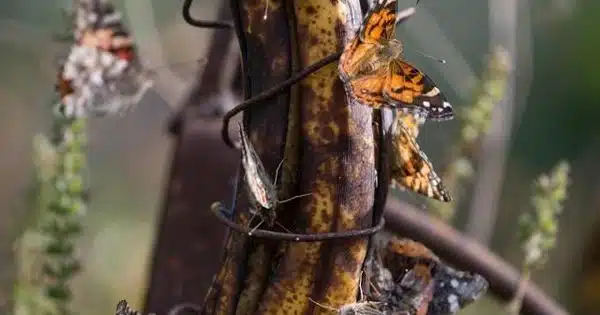
2. Feeding Butterflies and Other Nectar-Loving Insects
Butterflies don’t rely solely on nectar – they also seek out minerals and sugars.
An overripe banana:
- Provides instant sugar energy.
- Supplies trace minerals like magnesium, potassium, and calcium.
Butterflies will gather on the banana, sipping its juices. This not only nourishes them but creates a delightful spectacle in your garden.
The Role of Sugars for Butterflies
Sugars fuel butterfly activities like:
- Flight
- Egg-laying
- Migration
For species like monarchs, energy reserves from sugar-rich food sources can be critical for long-distance journeys.
3. A Natural Trap for Fruit Flies and Gnats
While we often complain about fruit flies in the kitchen, they can also be a nuisance in the garden.
Overripe bananas serve as:
- A lure for fruit flies, gnats, and other small insects.
- A natural bait for trapping these pests away from valuable crops.
How to Make a Fruit Fly Trap with Bananas
- Place pieces of overripe banana into a small jar.
- Cover the jar with plastic wrap.
- Poke small holes in the top.
- Hang or place it in the garden.
Fruit flies crawl in for the sweet scent but have trouble escaping, reducing their numbers naturally.
4. Drawing Out Slugs and Snails
Slugs and snails are attracted to sugars and fermenting scents.
An overripe banana placed on the ground can:
- Draw slugs away from seedlings.
- Act as bait for nightly “slug patrols.”
- Allow you to easily collect and remove them in the morning.
This natural method reduces the need for toxic slug pellets.
5. Encouraging Birds for Natural Pest Control
Many bird species – like thrushes, orioles, and tanagers – enjoy sweet, soft fruit.
Hanging a banana:
- Attracts birds into your garden.
- Encourages birds to stay and forage for insects.
- Helps control pests like caterpillars, beetles, and grasshoppers.
While the banana feeds the birds, the birds help keep your garden pest population in check.
6. Turning Bananas into Liquid Fertilizer
After hanging in the garden, an overripe banana can be transformed into a potent liquid fertilizer.
How to Make Banana Peel Tea
- Remove any remaining banana pulp from the peel.
- Chop the peel into small pieces.
- Place in a jar and cover with water.
- Let sit for 3–5 days.
- Strain and dilute the liquid (1 part banana tea to 5 parts water).
This “banana tea” is loaded with:
- Potassium for flower and fruit development.
- Phosphorus for strong root growth.
- Calcium for plant health and disease resistance.
Water plants like tomatoes, peppers, roses, and flowering perennials for an organic boost.
7. Composting Overripe Bananas
Even after hanging in the garden, don’t waste the leftover banana!
Bananas decompose rapidly in compost, adding:
- Organic matter
- Potassium
- Phosphorus
- Trace minerals
Composting bananas:
- Speeds up decomposition.
- Balances “green” and “brown” materials.
- Enriches compost for healthier soil.
Pro Tip:
Chop banana peels into small pieces before composting. This increases surface area and speeds breakdown.
8. Direct Soil Amendment
Instead of composting, you can bury leftover banana pieces directly in the soil:
- Chop the banana or peel into pieces.
- Dig a small hole near the plant base.
- Cover with soil.
As the banana decomposes, it releases nutrients like potassium and phosphorus directly where roots can absorb them.
This is particularly beneficial for:
- Roses
- Tomatoes
- Peppers
- Squash
- Flowering perennials
9. Improving Soil Microbiology
Bananas contain natural sugars that feed beneficial soil microbes.
When buried or composted:
- Microbes multiply and thrive.
- Soil structure improves.
- Nutrients become more available to plants.
Healthy soil microbes help suppress diseases and improve plant resilience.
10. Supporting Sustainable Gardening
Hanging an overripe banana in your garden embodies sustainable gardening principles:
- Reduces food waste by reusing kitchen scraps.
- Eliminates chemical pesticides for certain pests.
- Enriches soil organically instead of synthetic fertilizers.
- Supports pollinators and biodiversity.
Every banana you hang is one less item in the landfill – and one more step toward a healthier planet.
How to Hang Bananas in the Garden
Hanging a banana is simple, but a few tips make it more effective.
Materials You’ll Need:
- Overripe banana
- String, twine, or garden wire
- Mesh bag or netting (optional)
Step-by-Step Instructions:
Choose Your Spot – Pick a sunny or partially shaded area near flowering plants or vegetables needing pollination.
Prepare the Banana – You can hang the banana whole or cut it into sections for stronger scent release.
Use Netting if Needed – Place banana pieces in mesh bags to:
- Prevent them from falling.
- Keep larger pests like squirrels at bay.
Hang at Proper Height – Hang bananas at 3–5 feet above ground. High enough for insects to access, low enough for easy replacement.
Check Regularly – Inspect bananas daily:
- Replace when they become too mushy or moldy
- Remove any pests trapped if using as bait.
When to Hang Bananas
- Early morning: Best time for attracting pollinators.
- Spring and summer: Peak pollination season.
- Before flowering of crops like squash, cucumbers, and melons.
Common Concerns About Hanging Bananas
While effective, there are a few things to consider:
Bees and Wasps
Bananas attract bees, which is usually positive. However:
- Keep bananas away from paths or seating areas.
- Consider hanging bananas in less-trafficked garden zones.
Odor
In hot weather, overripe bananas can smell strong. Replace bananas frequently to avoid unpleasant odors.
Attracting Rodents
Rodents may be tempted by hanging bananas. Use netting or hang bananas higher if this is a problem.
Fruit Fly Infestation
Fruit flies might multiply quickly. Use bananas as traps rather than leaving them exposed indefinitely.
Other Creative Banana Uses in the Garden
Bananas and their peels have endless uses:
- Polish plant leaves for a natural shine.
- Add to worm bins for happy compost worms.
- Create mulch from chopped banana peels.
- Repel aphids by burying chopped peels around susceptible plants.
The banana is truly one of gardening’s unsung heroes.
Environmental Benefits of Banana Gardening
Utilizing overripe bananas:
- Reduces landfill waste.
- Decreases methane emissions from decomposing food waste.
- Encourages biodiversity.
- Lowers reliance on chemical fertilizers and pesticides.
It’s a simple, eco-friendly step toward a more sustainable lifestyle.
Hanging an overripe banana in your garden is one of the simplest, most sustainable ways to harness nature’s power – and your plants, insects, and the environment will thank you for it.