For decades, clover was considered an unwelcome invader in the perfectly manicured lawn. Homeowners waged war against its spreading patches, spraying herbicides and reseeding grass in an endless cycle of frustration.
But times are changing. Across the world, more and more gardeners are welcoming clover back into their lawns – not as a weed, but as an ally.
From supporting pollinators to improving soil health, reducing maintenance, and even saving money, clover is gaining a reputation as the ultimate sustainable lawn alternative.
Instead of fighting it, savvy gardeners are asking: why not let clover thrive?
The History of Clover in Lawns
Before the rise of modern lawn culture, clover was not considered a weed at all. In fact, until the 1950s, many lawn seed mixes actually included clover alongside grass.
- Pre-1950s lawns: Clover was prized for its lush green appearance and soil-improving properties.
- The chemical revolution: When broadleaf herbicides became popular after World War II, clover was suddenly rebranded as an enemy – because those chemicals killed it along with “real” weeds.
- The comeback: Today, with growing concerns about pollinator declines, fertilizer runoff, and water shortages, clover is making a strong return as a low-maintenance, eco-friendly alternative.
What was once discarded as a nuisance is now being recognized as a key player in the future of sustainable landscaping.
1. Clover Supports Pollinators and Biodiversity
One of the most important reasons gardeners keep clover is its value to pollinators.
Nectar-Rich Flowers
- Clover blossoms (white, red, and micro varieties) are packed with nectar and pollen.
- Bees, butterflies, and hoverflies depend on clover as a steady food source through spring and summer.
Extended Blooming Season
Clover flowers bloom repeatedly, ensuring a continuous supply of forage when other plants aren’t blooming.
Boosting Local Ecosystems
- More clover means more insects, which in turn supports birds and other wildlife.
- By leaving clover, your lawn becomes part of a mini-ecosystem instead of a sterile grass monoculture.
In an age where pollinators are in decline, keeping clover isn’t just a trend – it’s an act of conservation.
2. Clover Improves Soil Health
Clover isn’t just good above the ground – it’s a powerhouse for soil health beneath the surface.
Nitrogen Fixation
- Clover belongs to the legume family, meaning it has a special relationship with soil bacteria.
- These bacteria live in nodules on clover roots and “fix” nitrogen from the air, turning it into a form plants can use.
- This natural fertilizer reduces (or eliminates) the need for chemical fertilizers.
Soil Aeration
- Clover roots are fine and fibrous, improving soil structure and water infiltration.
- They help prevent compaction, making the soil healthier for all nearby plants.
Weed Suppression
- Clover grows densely and shades the soil, naturally suppressing weeds.
- Its growth pattern reduces the need for herbicides.
3. Clover Lawns Require Less Water
Clover is more drought-tolerant than traditional turf grasses.
- Deeper roots: Clover’s roots reach deeper into the soil, pulling up water that grass roots can’t reach.
- Less irrigation: A clover lawn stays green with far less watering, even in hot summers.
- Resilient recovery: Clover bounces back quickly after drought stress, unlike grass which often turns brown.
In regions with increasing water restrictions, clover offers a sustainable way to maintain a green lawn without draining resources.
4. Clover Saves Time and Money
Switching from a grass-only lawn to a clover-inclusive lawn saves both effort and cost.
- No fertilizer needed: Clover feeds itself and the surrounding grass through nitrogen fixation.
- Less mowing: Clover grows lower than many grasses, meaning fewer mowing sessions.
- Fewer chemicals: Clover outcompetes many weeds naturally, reducing herbicide costs.
- Lower water bills: With reduced irrigation needs, homeowners save money on utilities.
The savings add up year after year, making clover one of the most cost-effective landscaping choices.
5. Clover Adds Beauty and Variety
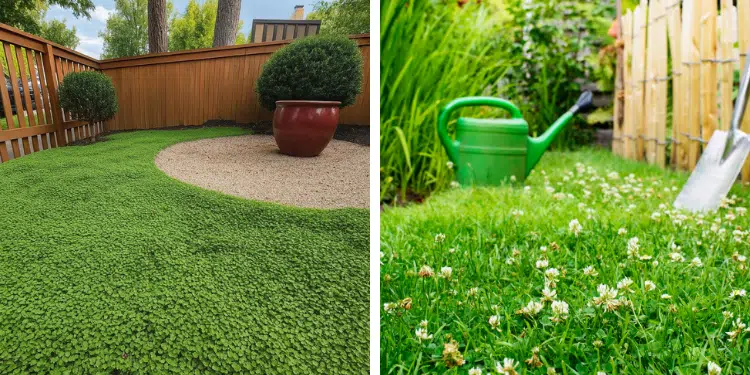
A common misconception is that clover makes a lawn look messy. In fact, clover adds charm and texture.
- Soft green carpet: Clover leaves are lush, soft, and vibrant.
- Delicate flowers: White, pink, or red blossoms add a meadow-like beauty to your yard.
- Even color: Clover stays green longer than grass, even in heat and drought.
Blended with grass, clover creates a lawn that is both functional and visually appealing.
6. Clover Is Pet-Friendly
Pet owners often find clover lawns more practical than grass-only lawns.
- Resilient to pet traffic: Clover tolerates dog play better than grass.
- Urine resistance: Dog urine causes brown patches in grass lawns, but clover resists damage.
- Softer surface: Clover lawns are gentle on paws.
For households with pets, clover is both durable and low-maintenance.
7. Clover Busts Lawn Care Myths
Clover has long been misunderstood, so let’s set the record straight.
Myth 1: Clover is a weed.
Reality: Clover is a nitrogen-fixing legume that improves lawns.
Myth 2: Clover is hard to control.
Reality: Clover is easy to manage with mowing and grows in harmony with grass.
Myth 3: Clover makes lawns look unkempt.
Reality: A well-kept clover lawn is lush, green, and tidy – many homeowners now prefer it over grass.
Types of Clover for Lawns
Not all clover is the same. Here are the most popular varieties for lawn integration:
White Dutch Clover (Trifolium repens)
- The most common choice for mixed lawns.
- Low-growing and durable.
- Produces white flowers loved by pollinators.
Microclover
- A smaller-leaved variety of white clover bred for lawns.
- Blends seamlessly with grass.
- Less flowering, so fewer bees (ideal for high-traffic play areas).
Red Clover (Trifolium pratense)
- Taller with pink-purple flowers.
- More commonly used in meadows, but suitable for larger lawn areas.
How to Add Clover to Your Lawn
Transitioning to a clover-friendly lawn is easy.
- Choose the right seed: Decide between white clover, microclover, or a blend.
- Prepare your lawn: Rake lightly to expose soil and reduce competition.
- Overseed: Scatter clover seed evenly across existing grass.
- Water well: Keep the soil moist until seeds establish.
- Mow as usual: Clover will naturally integrate with your lawn over time.
Clover vs. Grass: A Comparison
| Feature | Clover Lawn | Grass Lawn |
|---|---|---|
| Fertilizer Needed | No | Yes |
| Water Needs | Low | High |
| Mowing Frequency | Low | Medium to High |
| Weed Resistance | Strong | Moderate to Weak |
| Pollinator Value | High | Very Low |
| Pet Resistance | Strong | Weak |
Seasonal Care Guide for Clover Lawns
Spring
- Overseed thin spots.
- Let flowers bloom for early pollinators.
Summer
- Water occasionally during drought.
- Mow every 2–3 weeks as needed.
Fall
- Overseed again if needed.
- Leave clover to protect soil through winter.
Winter
- Clover goes dormant but protects soil from erosion.
- No maintenance required.
Real-Life Case Studies
- Urban homeowners: Many city dwellers switch to microclover to save on water bills and reduce mowing.
- Eco-friendly suburbs: Neighborhoods embracing clover report healthier lawns and more butterflies.
- Pet owners: Clover lawns reduce unsightly brown spots caused by dogs.
FAQs About Clover Lawns
Q: Will clover take over my entire yard?
A: Clover integrates with grass rather than eliminating it. Mowing keeps growth balanced.
Q: Does clover attract bees, and is that safe for kids?
A: Clover does attract bees, which is great for pollinators. If you’re concerned about stings, choose microclover, which flowers less.
Q: How long does clover last in a lawn?
A: White clover and microclover are perennial – they return year after year.
Q: Can I mix clover with all grass types?
A: Clover pairs best with cool-season grasses like fescue and ryegrass, but can be mixed with others too.
Gardeners are realizing what past generations already knew: clover belongs in the lawn.
Far from being a weed, it’s a resilient, eco-friendly plant that improves soil, supports pollinators, saves money, and reduces maintenance.