Winter boots are an essential part of our wardrobe during the cold months, providing warmth and protection against harsh weather conditions. However, many of us are guilty of neglecting proper care for our boots, leading to premature wear and tear. Cleaning winter boots might seem straightforward, but there’s a right way to do it that ensures longevity and maintains their appearance.
In this article, we’ll debunk common cleaning mistakes and guide you through the correct methods to care for your winter boots. From salt stain removal to the importance of waterproofing, each step is crucial for keeping your boots in top condition throughout the winter season and beyond.
1. Understanding the Impact of Winter on Your Boots
Winter brings along snow, ice, and salt, all of which can wreak havoc on your boots. Salt, used to melt ice on sidewalks, can leave unsightly stains and cause the material to deteriorate over time. This is particularly detrimental to materials like leather and suede, which are sensitive to harsh chemicals.
Additionally, moisture from snow and slush can seep into the boots, leading to water damage and mold growth if not dried properly. Understanding these impacts helps in adopting the right cleaning and maintenance practices to protect your boots against the elements.
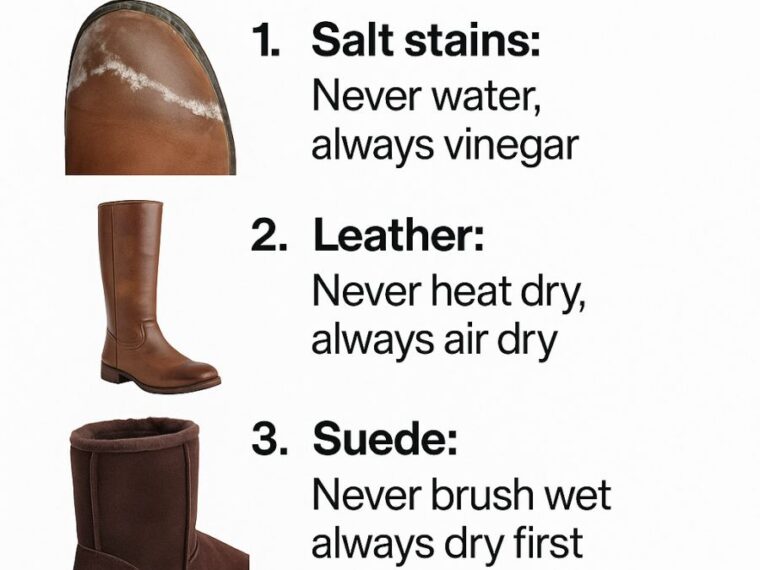
2. Salt Stains: Never Water, Always Vinegar
One of the most common mistakes is using water to clean salt stains off your boots. Water can actually set the salt stains, making them harder to remove. Instead, a solution of equal parts white vinegar and water is recommended. Vinegar neutralizes the salt and lifts it from the material.
Gently dab the solution onto the stained area with a soft cloth, taking care not to soak the material. Allow the boots to air dry completely before wearing them again. This method is both effective and safe for most boot materials.
3. Cleaning Leather Boots: Avoid Heat, Embrace Air Drying
Leather boots require special care, especially when wet. After cleaning, never place leather boots near a direct heat source like a radiator or fireplace, as this can cause the leather to crack. Instead, stuff the boots with newspaper to help them retain their shape and absorb moisture.
Allow them to air dry in a well-ventilated area. Once dry, apply a leather conditioner to keep the material supple and prevent it from drying out. This helps maintain the appearance and durability of your leather boots.
4. Suede Care: The Importance of Dry Brushing
Suede is a delicate material that requires careful handling. When cleaning suede boots, avoid using water as it can cause stains and ruin the texture. Instead, use a suede brush to gently remove dirt and surface stains. Brush in one direction to lift the nap and restore the suede’s natural finish.
For tougher stains, use a suede eraser to rub them out. Regular dry brushing helps maintain the look of suede boots and prevents dirt from embedding into the material.
5. The Right Way to Remove Dirt and Grime
Dirt and grime can accumulate quickly on winter boots. For general cleaning, start by using a soft-bristled brush to remove loose dirt from the surface. For deeper cleaning, use a damp cloth with a mild soap solution, avoiding excessive water.
Gently wipe the boots and rinse the cloth frequently to avoid spreading dirt. After cleaning, allow the boots to air dry completely before storing or wearing them again. This helps prevent moisture from getting trapped inside the boots, which can lead to odor and mold.
6. Deodorizing Your Winter Boots Effectively
Winter boots can develop odors due to moisture and sweat. To deodorize, sprinkle a small amount of baking soda inside each boot and leave it overnight. Baking soda absorbs moisture and neutralizes odors.
The next day, shake out any excess powder and place a dryer sheet inside each boot for a fresh scent. Regular deodorizing helps keep your boots smelling fresh and prevents the growth of bacteria.
7. Waterproofing: A Crucial Step for Longevity
Waterproofing your boots is essential for protecting them against snow and slush. Use a waterproof spray designed specifically for the material of your boots—whether leather, suede, or fabric. Apply the spray in a well-ventilated area, holding the can about 6 inches from the surface.
Ensure even coverage and let the boots dry completely before wearing them. Reapply the waterproofing spray every few weeks or after each cleaning to maintain the protective barrier.
8. The Dos and Don’ts of Using Household Cleaners
It’s tempting to reach for household cleaners when tackling tough stains, but many contain harsh chemicals that can damage boot materials. Avoid using bleach, ammonia, or detergents not specifically designed for footwear.
Instead, opt for gentle, boot-friendly cleaners available at shoe stores. Always test a small, inconspicuous area first to ensure there’s no adverse reaction. Following these guidelines helps preserve the integrity of your boots.
9. Why You Should Avoid the Washing Machine
While it might seem convenient, throwing your boots in the washing machine is a big no-no. The agitation and water exposure can ruin the shape and material of your boots. The machine’s harsh spin cycle can also cause irreparable damage.
Stick to hand cleaning methods for all types of boots to ensure they remain in good condition. Manual cleaning allows for more control and care, which is essential for maintaining the quality of your footwear.
10. Proper Storage: Utilizing Boot Shapers
Proper storage is vital when your boots are not in use. Invest in boot shapers or stuff your boots with newspaper to help them maintain their shape. This prevents creases and sagging, which can occur when boots are left slumped over.
Store them in a cool, dry place away from direct sunlight to avoid fading and material degradation. Proper storage extends the life of your boots and keeps them looking new season after season.
11. Regular Maintenance Tips to Keep Boots Looking New
Regular maintenance goes a long way in preserving the appearance of your winter boots. Wipe them down after each wear to remove surface dirt and apply a conditioner or protector as needed.
Inspect your boots regularly for signs of wear or damage and address issues promptly to prevent them from worsening. With consistent care, your boots can last for many winters, providing comfort and style year after year.