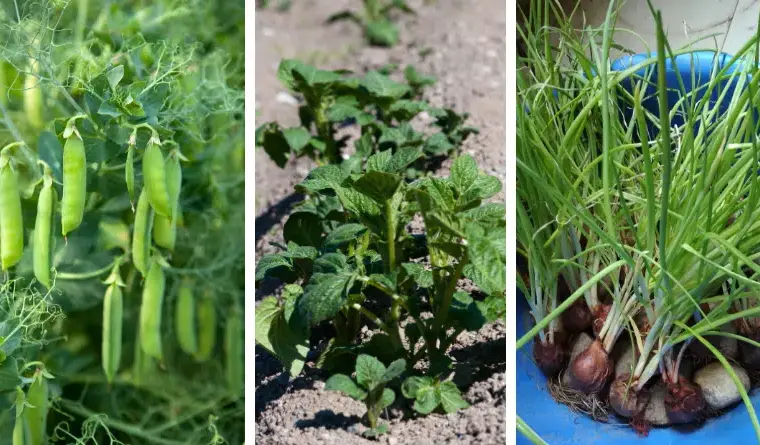
Spring is a season of renewal, growth, and fresh starts – and there’s no better time to kick off your vegetable garden.
As the weather warms and the days grow longer, it’s the perfect opportunity to sow seeds and plant starts that will yield bountiful harvests in the weeks and months ahead.
Whether you have a spacious backyard plot or a few raised beds, growing your own spring vegetables offers an abundance of flavor, nutrition, and satisfaction.
If you’re eager to make the most of your spring garden, here are 13 of the best vegetables to grow that will thrive in the cool, moist weather of early to mid-spring.
1. Lettuce
Lettuce is a fast-growing leafy green that thrives in cool spring temperatures. It can be harvested in as little as 30 days, making it one of the quickest crops to enjoy.
There are many varieties to choose from, including romaine, butterhead, loose-leaf, and crisphead.
Sow seeds directly into the soil as soon as it can be worked. Lettuce prefers well-drained, fertile soil and partial to full sun. To ensure a continuous harvest, plant new seeds every couple of weeks.
2. Spinach
Spinach is a nutritional powerhouse and one of the most cold-hardy vegetables, capable of germinating in soil temperatures as low as 35°F. Its tender leaves can be used fresh in salads or cooked in soups, stews, and sautés.
Plant spinach seeds directly in the garden 4 to 6 weeks before the last frost date. It matures quickly and can be harvested multiple times through a method called “cut and come again.”
3. Radishes
Radishes are among the easiest and fastest vegetables to grow, maturing in as little as 3 to 4 weeks. They add a peppery crunch to salads and are great for beginner gardeners.
Sow seeds directly in the soil and thin them as needed. Radishes grow best in cool temperatures and loose, well-draining soil. For a steady supply, plant a new batch every 7 to 10 days throughout spring.
4. Carrots
Carrots prefer cool weather and are best planted in early spring. Choose a sunny spot with deep, loose soil to allow the roots to grow long and straight.
Carrots come in a range of colors and flavors, from the classic orange to purple, yellow, and even white varieties.
Sow seeds directly into the soil and thin seedlings to allow space for root development. Carrots may take 60 to 80 days to mature, depending on the variety.
5. Peas
Peas thrive in the cool temperatures of spring and are one of the first vegetables you can plant. There are three main types: shelling peas, snow peas, and sugar snap peas.
Sow seeds directly into the ground about 4 to 6 weeks before your last expected frost. Provide a trellis or support for climbing varieties.
Keep the soil consistently moist and harvest pods regularly to encourage further production.
6. Beets
Beets are a dual-purpose crop, offering both edible roots and nutrient-rich greens. They do well in cool spring weather and can be planted as soon as the soil can be worked.
Direct sow beet seeds about 1/2 inch deep in rows. Thin seedlings to about 3 to 4 inches apart.
Beets typically mature in 50 to 70 days. Harvest early for baby beets or wait until they reach full size.
7. Kale
Kale is a hardy leafy green that actually improves in flavor after a light frost. It’s packed with vitamins and antioxidants and can be harvested leaf by leaf throughout the growing season.
Start seeds indoors or sow directly in the garden 4 to 6 weeks before the last frost. Space plants about 12 inches apart and provide full sun. Regular harvesting encourages continued growth.
8. Broccoli
Broccoli is a cool-season crop that benefits from the moderate temperatures of spring. It requires a bit more space and care but rewards with dense, flavorful heads rich in nutrients.
Start seeds indoors 6 to 8 weeks before the last frost or buy transplants. Broccoli prefers rich, moist soil and full sun. Harvest when the heads are firm and tight, before yellow flowers appear.
9. Cabbage
Cabbage is another cool-weather favorite, perfect for growing in spring. There are many varieties available, including green, red, and savoy types.
Start seeds indoors or buy young plants. Transplant to the garden 2 to 4 weeks before the last frost. Provide plenty of space (about 18 inches apart) and consistent moisture.
Cabbage is ready to harvest when the heads are firm and compact.
10. Swiss Chard
Swiss chard is a colorful, versatile green with a mild, earthy flavor. It tolerates cool weather well and can be harvested continuously throughout the season.
Sow seeds directly into the soil and thin seedlings as they grow. Swiss chard does best in full sun to partial shade and can be harvested as baby greens or full-sized leaves.
11. Turnips
Turnips are another dual-purpose vegetable, providing both tasty roots and nutritious greens. They grow quickly and thrive in the cool weather of spring.
Sow seeds directly into the ground and thin seedlings to about 4 inches apart. Turnips mature in 30 to 60 days depending on the variety. Harvest young for tender roots or wait until they are fully grown.
12. Arugula
Arugula is a fast-growing leafy green with a peppery flavor that adds zing to salads and sandwiches. It germinates quickly and is ready to harvest in just 20 to 40 days.
Sow seeds directly in the garden and provide light shade if temperatures rise. Harvest young leaves often to encourage continued growth.
13. Onions
Onions can be grown from seeds, sets, or transplants and are well-suited for spring planting. Green onions, or scallions, are ready in as little as 30 days, while bulb onions take longer to mature.
Plant onions in loose, fertile soil in a sunny spot. Keep the soil moist and weed-free. Harvest scallions when they are about the thickness of a pencil; wait longer for mature bulb onions.
Starting a vegetable garden in spring is one of the most rewarding ways to embrace the new growing season.
With the right planning and selection of crops, you can enjoy fresh, homegrown produce in as little as a few weeks.
These 13 vegetables are perfect for early-season gardening and will thrive in the cooler conditions of spring, giving you a head start on a successful harvest.