The peace lily (Spathiphyllum) is one of the most elegant and rewarding indoor plants you can grow. With its glossy green leaves and graceful white blooms, it brings a calm, refined look to any space.
But if your peace lily hasn’t bloomed in a while – or you want to encourage more flowers – April is the month to take action.
As daylight increases and indoor conditions shift with the seasons, peace lilies enter a more active growth phase.
This is the perfect time to adjust care and create the conditions that trigger stronger growth and more frequent blooms.
Why April Is a Key Month for Peace Lilies
Peace lilies don’t follow a strict outdoor growing cycle, but they still respond to seasonal changes.
In April:
- Light levels increase naturally
- Indoor temperatures become more stable
- Growth begins to accelerate
This combination creates an opportunity. If the plant receives the right signals now, it will shift energy toward producing flowers instead of just leaves.
Blooms don’t happen randomly – they are triggered by specific conditions, and April is when you can set those conditions correctly.
1. Increase Light (Without Direct Sun)
Light is the most important factor for peace lily blooms.
Many peace lilies survive in low light, but they rarely bloom there. If your plant is not flowering, insufficient light is often the reason.
In April, natural light becomes stronger, making it easier to improve exposure.
Place your peace lily in:
- Bright, indirect light
- Near a window with filtered sunlight
- A location where light is consistent throughout the day
Avoid direct sunlight, as it can scorch the leaves.
When light levels are right, the plant can photosynthesize more efficiently, producing the energy needed to form flowers.
You may notice:
- Faster leaf growth
- Richer green color
- Increased likelihood of blooms
Light doesn’t just support growth – it directly influences flowering.
2. Adjust Watering for Active Growth
Peace lilies are known for their dramatic response to water. When they need it, they droop – but they recover quickly after watering.
In April, as growth increases, so does water demand.
The goal is to keep the soil:
- Consistently moist
- Never soggy
- Never completely dry
Water deeply when the top layer of soil feels slightly dry.
Avoid frequent light watering. Instead, allow water to reach the roots fully, then let excess drain out.
Proper watering supports:
- Healthy root function
- Leaf development
- Flower formation
If the plant experiences stress from inconsistent watering, it will focus on survival rather than blooming.
3. Feed with a Natural Homemade Fertilizer (April Boost)
Instead of using synthetic fertilizers, you can give your peace lily a gentle, natural boost using simple kitchen ingredients.
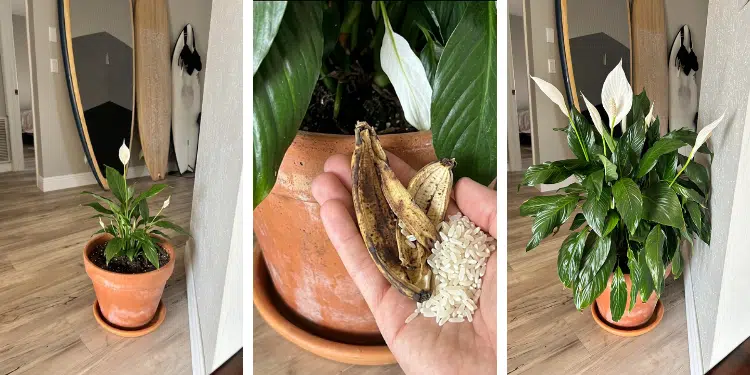
Natural Banana Peel + Rice Water Fertilizer
This combination provides potassium and mild nutrients that support both growth and flowering.
How to make it:
- Take 1 banana peel and cut it into small pieces
- Place it in a jar with 500 ml of water
- Let it sit for 24 hours
- Strain the liquid
Separately:
- Rinse rice and collect the cloudy water (do not use salted rice water)
Now mix:
- 1 part banana peel water
- 1 part rice water
How to use it:
Water your peace lily with this mixture once every 2 weeks in April.
Why it works:
- Banana peel provides potassium, which supports flower development
- Rice water contains mild nutrients and starches that support soil life
- The mixture is gentle and won’t overwhelm the plant
This natural feeding method encourages:
- Stronger roots
- Healthier leaves
- Increased chances of blooming
4. Increase Humidity for Healthier Growth
Peace lilies are tropical plants, which means they thrive in higher humidity.
Indoor air, especially after winter, can be dry. This can affect:
- Leaf health
- Growth rate
- Flower production
In April, improving humidity can make a noticeable difference.
You can:
- Place a tray of water near the plant
- Group plants together
- Lightly mist occasionally
Higher humidity helps leaves stay soft and healthy, allowing the plant to function more efficiently.
When environmental conditions feel more natural, the plant is more likely to produce blooms.
5. Repot or Refresh Soil If Needed
If your peace lily has been in the same pot for a long time, it may be struggling beneath the surface.
Old soil can become:
- Compacted
- Low in nutrients
- Poor at retaining moisture properly
April is an ideal time to refresh the soil or repot.
Choose a slightly larger pot if roots are crowded, and use fresh, well-draining potting mix.
Repotting provides:
- Better root space
- Improved nutrient availability
- Enhanced water absorption
When roots are healthy, the entire plant benefits – including its ability to bloom.
Additional Factors That Influence Blooming
While the five steps above are essential, a few additional elements also play a role.
Temperature Stability
Peace lilies prefer stable indoor temperatures. Sudden changes or drafts can stress the plant.
Clean Leaves
Dust on leaves reduces the plant’s ability to absorb light. Wiping leaves occasionally helps improve photosynthesis.
Patience
Even under perfect conditions, blooming takes time. The plant needs to build enough energy before producing flowers.
Common Reasons Peace Lilies Don’t Bloom
If your plant isn’t flowering, it’s usually due to one or more of the following:
- Insufficient light
- Overwatering or underwatering
- Lack of nutrients
- Old or compacted soil
Correcting these factors in April often leads to improved results later in the season.
What to Expect After Improving Care
When conditions are right, peace lilies respond gradually.
You may first notice:
- Stronger, upright leaves
- New growth emerging from the base
Then, over time:
- Flower stalks begin to form
- Buds develop and open
Blooms can last for weeks, adding a long-lasting decorative element to your space.
How to Maintain Blooms Longer
Once your peace lily starts flowering, proper care helps extend the display.
- Keep it in consistent light
- Maintain even moisture
- Avoid moving it frequently
Removing spent flowers also encourages the plant to focus on new growth.
Peace lilies are often considered low-maintenance plants, but if you want them to bloom consistently, they need the right conditions at the right time.
April is your opportunity to make those adjustments.