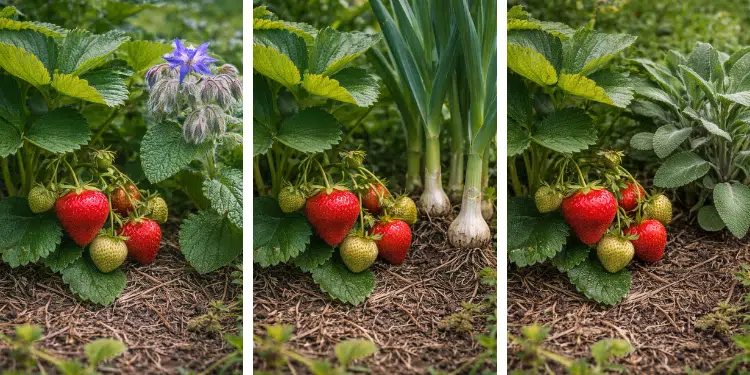
Growing strawberries can be incredibly rewarding – sweet, juicy fruits right from your garden. But if you’ve ever tried, you know they can also attract pests, develop diseases, or struggle in poor conditions.
What many gardeners don’t realize is this: you can protect strawberries naturally – just by planting the right companions around them.
This method, known as companion planting, uses plants that improve growth, repel pests, attract pollinators, and even enhance soil conditions – all without chemicals.
Why Companion Planting Works for Strawberries
Strawberries are low-growing, shallow-rooted plants. This makes them vulnerable to:
- Soil-borne diseases
- Slugs and insects
- Heat stress
- Poor pollination
Companion plants help solve these problems by:
- Attracting beneficial insects
- Repelling harmful pests
- Improving soil moisture and structure
- Acting as living mulch
The result is a healthier ecosystem where strawberries can thrive naturally.
1. Borage – Boost Pollination and Increase Yield
Borage is one of the most powerful companions you can grow near strawberries.
Why it works:
Borage produces bright blue flowers that attract bees and pollinators, which directly improves strawberry fruit set.
More pollinators = more flowers turning into fruit.
Benefits:
- Can increase yields by up to 20% or more
- Attracts beneficial insects
- Improves nearby plant vigor
How to plant:
- Place borage around the edges of strawberry beds
- Allow it to grow freely – it spreads naturally
Pro tip:
Borage self-seeds easily, so once planted, it often returns every year.
2. Garlic – Natural Defense Against Disease
Garlic is one of the best natural protectors against fungal issues.
Why it works:
Garlic contains sulfur compounds that help suppress botrytis (gray mold) – a common strawberry disease.
Benefits:
- Reduces fungal infections
- Repels pests
- Improves soil microbial balance
How to plant:
- Plant garlic between strawberry rows
- Space evenly for consistent protection
Pro tip:
Crushing a garlic clove releases more sulfur – some gardeners even make garlic sprays for extra protection.
3. Onion – Repels Aphids and Thrips
Onions act as a natural pest deterrent.
Why it works:
Their strong smell confuses and repels pests like:
- Aphids
- Thrips
Benefits:
- Reduces insect damage
- Protects leaves and fruit
- Easy to grow alongside strawberries
How to plant:
- Interplant onions between strawberry plants
- Keep spacing moderate to avoid crowding
Pro tip:
Onions and strawberries share similar growing conditions, making them ideal companions.
4. Sage – Aromatic Pest Confusion
Sage doesn’t just smell good – it protects your garden.
Why it works:
Its strong aroma disrupts how pests locate strawberry plants.
Benefits:
- Reduces pest activity
- Attracts beneficial insects
- Adds diversity to the garden
How to plant:
- Grow sage near the edges of beds
- Avoid overcrowding strawberries
Pro tip:
Sage prefers slightly drier soil, so keep it toward the outer areas of your strawberry patch.
5. Spinach – Living Mulch and Bonus Harvest
Spinach acts as a natural ground cover.
Why it works:
It shades the soil, reducing moisture loss and suppressing weeds.
Benefits:
- Keeps soil cool
- Retains moisture
- Provides an extra edible crop
How to plant:
- Plant spinach between strawberry rows
- Harvest regularly to prevent overcrowding
Pro tip:
Spinach grows quickly, making it perfect for early-season planting before strawberries fully spread.
6. Lettuce – Keeps Soil Cool and Fruit Clean
Lettuce is another excellent living mulch.
Why it works:
It forms a low canopy that protects soil and prevents splashing dirt onto fruit.
Benefits:
- Keeps strawberries clean
- Reduces soil temperature
- Helps prevent rot
How to plant:
- Space lettuce between strawberry plants
- Choose loose-leaf varieties for easier harvesting
Pro tip:
Lettuce grows shallow roots, so it won’t compete heavily with strawberries.
7. Chives – Sulfur Barrier Around the Bed
Chives provide protection similar to garlic but in a more compact form.
Why it works:
They release sulfur compounds into the soil and air, helping deter pests and disease.
Benefits:
- Acts as a protective “ring” around strawberry beds
- Repels insects
- Supports plant health
How to plant:
- Plant chives along the perimeter of your strawberry patch
Pro tip:
Chives also produce flowers that attract pollinators.
8. Thyme – Ground-Level Pest Control
Thyme is a low-growing herb with powerful protective properties.
Why it works:
It contains thymol, a compound that helps repel slugs and crawling pests.
Benefits:
- Protects fruit from ground pests
- Acts as a living mulch
- Adds fragrance to the garden
How to plant:
- Plant thyme around the base of strawberry beds
- Allow it to spread as a ground cover
Pro tip:
Thyme thrives in well-drained soil, making it perfect for raised beds.
9. Marigold – Root-Level Protection Against Nematodes
Marigolds are famous for their pest-fighting abilities.
Why it works:
Their roots release compounds that suppress nematodes, which can damage strawberry roots.
Benefits:
- Protects root systems
- Reduces soil pests
- Adds bright color to the garden
How to plant:
- Plant marigolds around and within strawberry beds
Pro tip:
French marigolds are especially effective for pest control.
How to Design a Strawberry Companion Planting Layout
To get the best results, combine these plants strategically.
Example layout:
- Center: Strawberries
- Between rows: Spinach and lettuce
- Around edges: Garlic, onions, thyme
- Outer border: Chives and sage
- Scattered throughout: Marigolds and borage
This layered approach creates:
- Pest protection at multiple levels
- Better pollination
- Improved soil conditions
Additional Benefits of Companion Planting
When you combine these plants, you create a system that:
- Reduces the need for pesticides
- Improves biodiversity
- Enhances soil health
- Produces multiple harvests from one space
It’s a natural, sustainable way to garden more efficiently.
Common Mistakes to Avoid
Overcrowding plants
Too many companions can compete for space and nutrients
Ignoring sunlight needs
All plants should still receive adequate light
Poor spacing
Airflow is essential to prevent disease
Mixing incompatible watering needs
Group plants with similar moisture requirements
USDA Zone Considerations
These companion plants are adaptable across many zones, but timing matters.
Zones 3–5
- Plant after last frost
- Start some plants indoors if needed
Zones 6–8
- Ideal for direct planting in spring
Zones 9–11
- Start earlier in the season
- Provide shade for cool-season companions like lettuce and spinach
Strawberries don’t have to struggle against pests and disease. By planting the right companions, you can create a self-protecting garden system that works with nature instead of against it.