Pruning is a critical horticultural practice that enhances the health and productivity of fruit trees. Understanding the right moment to prune can significantly impact the abundance and quality of blooms and fruit. Just as a sculptor chips away at marble to reveal an artwork, pruning shapes a tree to direct its energy towards fruitful growth.
Appropriate pruning not only aids in the removal of dead or diseased branches but also promotes airflow and sunlight penetration, essential for fruit development. By timing your pruning correctly, you align with the tree’s natural growth cycles, ensuring that it produces a bountiful harvest season after season.
1. Why Timing Your Pruning Makes or Breaks Next Season’s Harvest
The timing of pruning is pivotal to the health and productivity of fruit trees. Pruning at the wrong time can stunt growth or, worse, damage the tree’s ability to produce fruit. For instance, pruning too early in the winter can cause the tree to be susceptible to frost damage, while pruning too late can remove new buds, which are essential for the next season’s fruit.
Each species of fruit tree has its own ideal pruning window. For most deciduous fruit trees, late winter, just before bud break, is an ideal time to prune as the tree is dormant, making the pruning stress less impactful. Correct timing ensures that the tree’s energy is channeled into creating healthy buds rather than repairing unnecessary wounds.
2. Know Your Tree: Fruit Types That Demand Different Pruning Moments
Different types of fruit trees have varying pruning needs based on their growth habits and fruiting patterns. Apple and pear trees, for example, are typically pruned in late winter when they are dormant. Stone fruits like peaches and plums benefit from being pruned a bit later in the winter to avoid infection from silver leaf disease.
Citrus trees, on the other hand, are best pruned in early spring or late winter right after the threat of frost has passed but before the tree starts to bloom. Understanding these nuances allows gardeners to optimize their pruning strategy for each specific tree type, ensuring the best possible yield.
3. Winter Dormant Pruning To Build Strong Structure And Bigger Crops
Winter pruning is essential for shaping young trees and managing the structure of mature ones. During dormancy, the tree’s energy is concentrated in the roots, making it an ideal time to prune without causing undue stress. By removing crossing branches, dead wood, and any inward-growing shoots, you encourage a strong framework capable of supporting a heavy fruit load.
This period also allows for the correction of structural issues, such as weak crotches or unbalanced growth. This sets the stage for a robust bloom and fruiting phase once the tree awakens in the spring.
4. Summer Pruning To Control Size And Channel Energy Into Fruit
Summer pruning is often used to control the size of the tree and direct energy towards fruit production rather than excessive vegetative growth. By pruning in the summer, you reduce the tree’s leaf area, which can limit photosynthesis and, in turn, slow down growth.
This type of pruning also helps improve light penetration and air circulation, crucial factors in fruit ripening and disease prevention. It is particularly beneficial for vigorous trees that tend to produce more foliage than fruit.
5. Spotting Fruit Buds Versus Leaf Buds So You Don’t Cut Off Your Crop
Identifying fruit buds and distinguishing them from leaf buds is crucial to avoid cutting off potential fruit. Fruit buds are generally plumper and rounder than leaf buds, which tend to be slimmer and more pointed.
For trees like apples and pears, fruit buds are often found on short spurs, while leaf buds are located on the longer shoots. By carefully observing these differences, you can make precise cuts that preserve the fruiting potential of the tree.
6. The Right Age To Prune Young Trees For Faster Bloom And Fruit Set
Young trees require a different approach to pruning. In the first few years, the focus should be on establishing a strong framework. This involves selecting a central leader and evenly spaced lateral branches that form a balanced shape.
Pruning too aggressively in the early years can delay fruiting. Instead, light pruning to remove competing branches and promote a strong structure will set the stage for earlier bloom and fruit set as the tree matures.
7. Rejuvenating Old, Neglected Trees Without Sacrificing Next Year’s Fruit
Rejuvenating old or neglected trees is a delicate process that requires patience and precision. Drastic cuts can shock the tree, leading to reduced fruit production or even tree death.
Instead, a gradual approach over several seasons is recommended. Start by removing dead or diseased wood, followed by thinning out crowded branches to open up the canopy. This will improve light penetration and airflow, encouraging new growth and eventual rejuvenation without a significant loss of fruit.
8. Weather, Frost Risk, And Local Climate: Fine-Tuning Your Pruning Window
Local climate and weather patterns play a crucial role in the timing of pruning. In areas prone to late frosts, it’s prudent to delay pruning until the risk has passed to avoid frost damage to fresh cuts.
Conversely, in warmer climates, pruning might occur earlier to take advantage of the longer growing season. Monitoring local weather forecasts and understanding your region’s climate trends can help fine-tune your pruning schedule for optimal results.
9. Tools, Cuts, And Hygiene That Help Trees Heal And Bloom Better
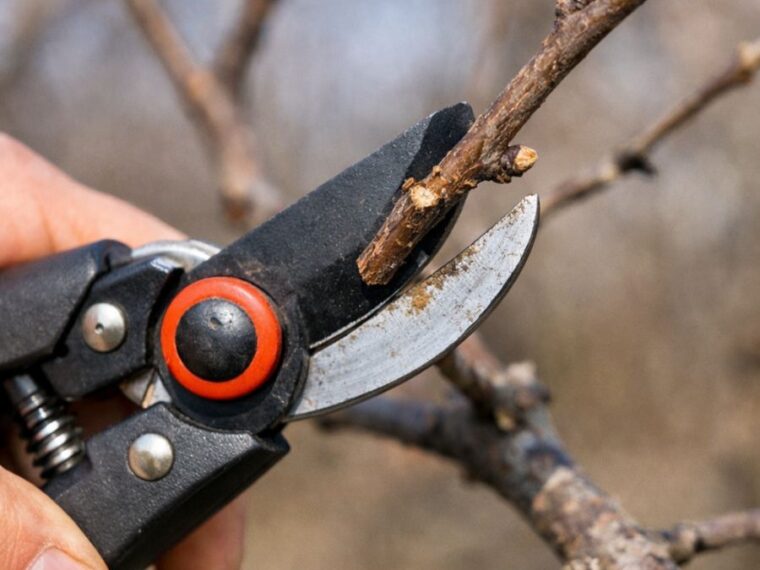
Using the right tools and maintaining their sharpness is vital for making clean cuts that heal quickly. Pruning shears, loppers, and saws should be regularly cleaned and disinfected to prevent the spread of disease.
When making cuts, aim for a 45-degree angle just above an outward-facing bud. This allows water to drain away from the cut surface, reducing the risk of rot and infection. Proper tool hygiene and technique ensure that trees recover swiftly and bloom profusely.
10. Common Pruning Timing Mistakes That Kill Blooms And How To Avoid Them
One common mistake is pruning too late in the spring, which can remove fruiting buds and drastically reduce the harvest. Another error is over-pruning, which can shock the tree and lead to diminished vigor.
To avoid these pitfalls, it is essential to understand the specific pruning needs of each tree species and adhere to recommended timelines. When in doubt, seek advice from local horticultural experts or extension services to tailor your pruning practices to your specific environment.
11. Simple Yearly Pruning Calendar To Maximize Flowers And Fruit
Creating a yearly pruning calendar can help ensure timely and effective pruning practices. For most deciduous trees, plan for major pruning in late winter, with summer trimming reserved for size control and light penetration.
For citrus and other evergreen fruit trees, early spring is a suitable time for pruning. By organizing your pruning schedule in advance, you can stay on track and make adjustments based on seasonal variations, ensuring a consistent and productive harvest year after year.