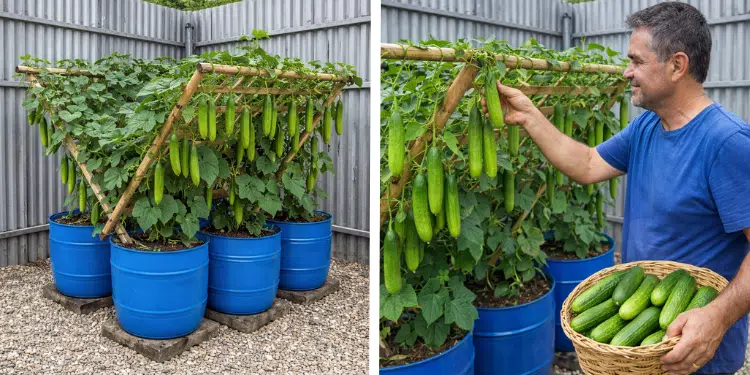
Growing cucumbers at home can be incredibly rewarding, but many gardeners struggle with the same problems every season: sprawling vines that take over the garden, fruit rotting on the soil, diseases spreading through dense foliage, and limited growing space.
A clever gardening system has emerged that solves all these issues at once: growing cucumbers in buckets combined with a vertical A-frame trellis.
This method allows gardeners to produce an impressive harvest from a very small space while keeping plants healthier and easier to manage.
Cucumbers, scientifically known as Cucumis sativus, are naturally climbing vines. When given the proper support structure, they grow upward rather than spreading across the ground.
By taking advantage of this natural growth habit, gardeners can turn a few containers and a simple trellis into a highly productive vertical garden.
Why This Method Works So Well
Traditional cucumber gardening often involves planting vines directly in the ground and letting them spread across the soil. While this works in large gardens, it has several disadvantages.
When cucumber vines grow on the ground:
- leaves overlap and block sunlight
- poor airflow encourages fungal diseases
- fruits touch the soil and may rot
- pests hide under dense foliage
- harvesting becomes difficult
The bucket trellis method eliminates these problems.
Instead of spreading across the soil, cucumber vines grow vertically on a support structure. This simple change dramatically improves the plant’s environment.
Benefits include:
Better sunlight exposure
More leaves receive sunlight, allowing the plant to produce more energy through photosynthesis.
Improved air circulation
Air moves freely through the plant canopy, reducing humidity and preventing diseases like powdery mildew.
Cleaner fruits
Cucumbers hang in the air rather than resting on the soil.
Higher productivity
Healthier plants produce more flowers and fruit.
Space efficiency
Several plants can grow in a very small area.
Understanding the Structure in the Image
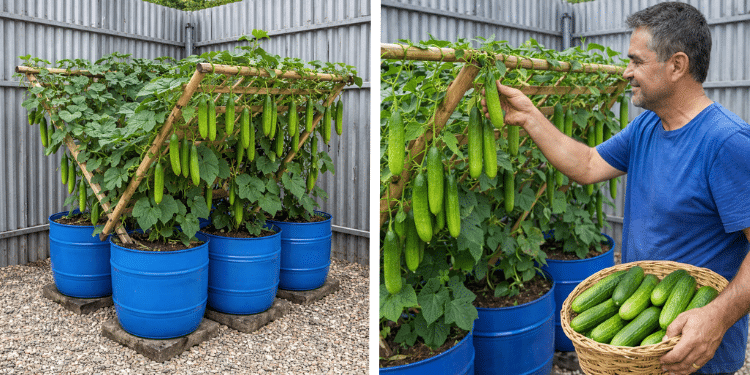
The system shown in the image consists of three key elements working together.
1. Large Containers (Buckets)
Each cucumber plant grows in a separate container filled with rich soil. The containers act as small, self-contained garden beds.
2. A-Frame Trellis
A triangular wooden frame sits above the buckets, creating a strong support structure for climbing vines.
3. Vertical Plant Training
Cucumber vines grow upward along the trellis, spreading across the frame and producing fruit that hangs beneath the structure.
This setup creates a highly efficient growing system where plants receive maximum light and airflow while using minimal ground space.
Step 1: Choosing the Right Buckets
The foundation of this system is the container.
Most gardeners use 5-gallon buckets, which provide enough soil volume for cucumber roots to develop properly.
Important container requirements:
- minimum depth: 12 inches (30 cm)
- capacity: 5 gallons or larger
- several drainage holes in the bottom
Drainage is extremely important because cucumbers do not tolerate waterlogged soil. Without proper drainage, roots may rot.
Many gardeners drill 6–8 holes in the base of the bucket.
Buckets are often placed on stones, bricks, or wooden blocks to improve drainage and airflow beneath the container.
Food-grade buckets are ideal because they avoid potential chemical contamination.
Step 2: Creating the Perfect Soil Mix
Cucumbers grow quickly and require nutrient-rich soil.
A good container mix should provide three key qualities:
- moisture retention
- good drainage
- plenty of nutrients
A reliable cucumber container mix contains:
• high-quality potting soil
• compost
• perlite or coarse sand
Compost adds organic nutrients that support plant growth throughout the season.
Perlite improves drainage and prevents soil compaction.
Avoid using heavy garden soil alone because it becomes dense inside containers.
Fill the bucket nearly to the top, leaving a few centimeters of space for watering.
Step 3: Planting Cucumbers
Cucumbers can be started from seeds or young seedlings.
Starting from seeds
Plant 2–3 seeds per bucket about 2–3 cm deep.
After germination, thin the seedlings and keep the strongest plant.
Using seedlings
If transplanting seedlings, gently place one plant in the center of the bucket and firm the soil around the roots.
It is best to grow only one cucumber plant per bucket to prevent competition for nutrients.
Step 4: Building the A-Frame Trellis
The trellis is the most important part of the system because it supports the climbing vines.
An A-frame trellis forms a triangular shape when viewed from the side. Two slanted panels meet at the top and create a stable climbing structure.
This design is strong and distributes plant weight evenly.
Common trellis materials include:
- bamboo poles
- wooden stakes
- metal rods
- garden netting
- wire mesh
The recommended height for cucumber trellises is:
1.5–2 meters (5–6 feet)
This height allows vines to climb comfortably and produce hanging fruit.
Horizontal bars or netting should be added so vines can easily attach themselves.
Step 5: Training the Cucumber Vines
Cucumber plants produce small curly tendrils that naturally grab nearby supports.
As the plant grows, gardeners guide the vines onto the trellis.
Methods include:
- gently wrapping vines around supports
- tying stems with soft twine
- using plant clips
It is important not to force the vines, as cucumber stems can break easily.
Training the vines regularly helps keep the plant organized and prevents tangled growth.
Step 6: Watering Container Cucumbers
Cucumbers contain a large amount of water and therefore require consistent moisture.
Because containers dry out faster than garden beds, watering must be monitored carefully.
General watering guidelines:
- water when the top inch of soil becomes dry
- water deeply to reach the root zone
- during hot weather, watering may be required daily
Mulching the surface of the soil with straw or dried leaves helps retain moisture and stabilize soil temperature.
Consistent watering prevents bitter cucumbers and promotes steady fruit production.
Step 7: Fertilizing for Maximum Production
Cucumbers grow rapidly and require plenty of nutrients.
Regular feeding ensures continuous flowering and fruit development.
Good fertilizer options include:
- compost tea
- organic vegetable fertilizer
- fish emulsion
- seaweed extract
Applying fertilizer every 2–3 weeks keeps plants vigorous and productive.
Balanced nutrients help support strong vines, healthy leaves, and abundant cucumbers.
Pollination and Flower Development
Cucumber plants produce two types of flowers:
Male flowers
These appear first and produce pollen.
Female flowers
These develop into cucumbers after pollination.
Female flowers can be identified by the tiny cucumber behind the blossom.
Bees usually handle pollination naturally. However, if pollinators are scarce, gardeners can assist by transferring pollen with a small brush.
Proper pollination is essential for producing well-formed cucumbers.
Harvesting Cucumbers
Once plants begin producing fruit, cucumbers grow very quickly.
Most varieties mature 50–70 days after planting.
Harvest cucumbers when they reach their ideal size:
- slicing cucumbers: 15–20 cm
- pickling cucumbers: smaller size
Frequent harvesting encourages the plant to continue producing more fruit.
Leaving overripe cucumbers on the vine signals the plant to slow production.
Using scissors or garden snips prevents damage to the vine.
Expected Yield From This System
With proper care, a single cucumber plant can produce 20–40 cucumbers during one season.
In the image system, there appear to be several buckets surrounding the trellis.
For example:
5 buckets × 30 cucumbers = 150 cucumbers
This level of productivity explains why the bucket trellis method is becoming popular among gardeners.
Common Problems and How to Avoid Them
Although cucumbers are relatively easy to grow, a few issues may appear.
Powdery mildew
Improved airflow from vertical growing helps prevent it.
Bitter fruit
Usually caused by inconsistent watering.
Poor pollination
May occur if bees are absent.
Weak trellis
Heavy vines require strong support structures.
Monitoring plants regularly helps prevent most problems.
Why This Method Is Becoming So Popular
The bucket trellis cucumber system combines several modern gardening trends:
• vertical gardening
• container gardening
• space-efficient food production
Gardeners appreciate the system because it:
- works in small spaces
- produces large harvests
- reduces plant diseases
- makes harvesting easier
Urban gardeners, balcony growers, and backyard gardeners all use this method successfully.
The vertical bucket trellis system is a brilliant example of efficient gardening. By growing cucumbers in containers and training them upward on a sturdy trellis, gardeners can produce large harvests in limited space.